A fresh pool surface can look finished on day one, but the first month is when its long-term appearance is being shaped. This plaster care example shows what a thoughtful 28-day startup looks like after a new plaster or resurfaced pool is filled. The goal is not simply clear water. It is to help the new finish cure evenly while keeping the water safe, balanced, and free of the scale, staining, and algae problems that can take hold during this sensitive period.
New plaster is not the same as an established pool finish. It releases material into the water as it cures, which can push pH upward and leave fine plaster dust on the floor and walls. That is why a new surface needs closer attention than a normal weekly maintenance visit.
Why the first 28 days matter
Pool plaster needs time to hydrate and harden. During that process, water chemistry, circulation, brushing, and debris removal all affect how the surface develops. If the water is allowed to drift out of balance, a homeowner may later notice roughness, discolouration, scale, streaking, or uneven color.
Some variation in a new plaster finish can be normal. Plaster is a hand-applied material, and color can look different as the surface cures and dries. Still, early care makes a meaningful difference. Consistent brushing removes plaster dust before it can harden onto the finish, while frequent testing allows chemistry adjustments to be made before a small imbalance becomes a visible problem.
The exact plan depends on the surface type, the fill water, weather, equipment, and any instructions provided by the pool builder or resurfacing contractor. In western Palm Beach County, warm temperatures, bright sun, rain, and heavy pool use can all change how quickly water chemistry moves. A professional startup should respond to what the pool is actually doing, rather than following a calendar without testing.
A 28-day plaster care example
This example reflects the rhythm of a carefully managed new-plaster startup. It is not a substitute for the specific requirements of your pool builder or resurfacing contractor, especially if they have provided written curing instructions.
Days 1 through 3: Start clean and keep water moving
Once the pool is filled, the water level should not be stopped partway through if it can be avoided. A paused fill can leave a noticeable line on a fresh surface. After the pool is full and the system is ready, circulation begins so the water can be filtered and treated consistently.
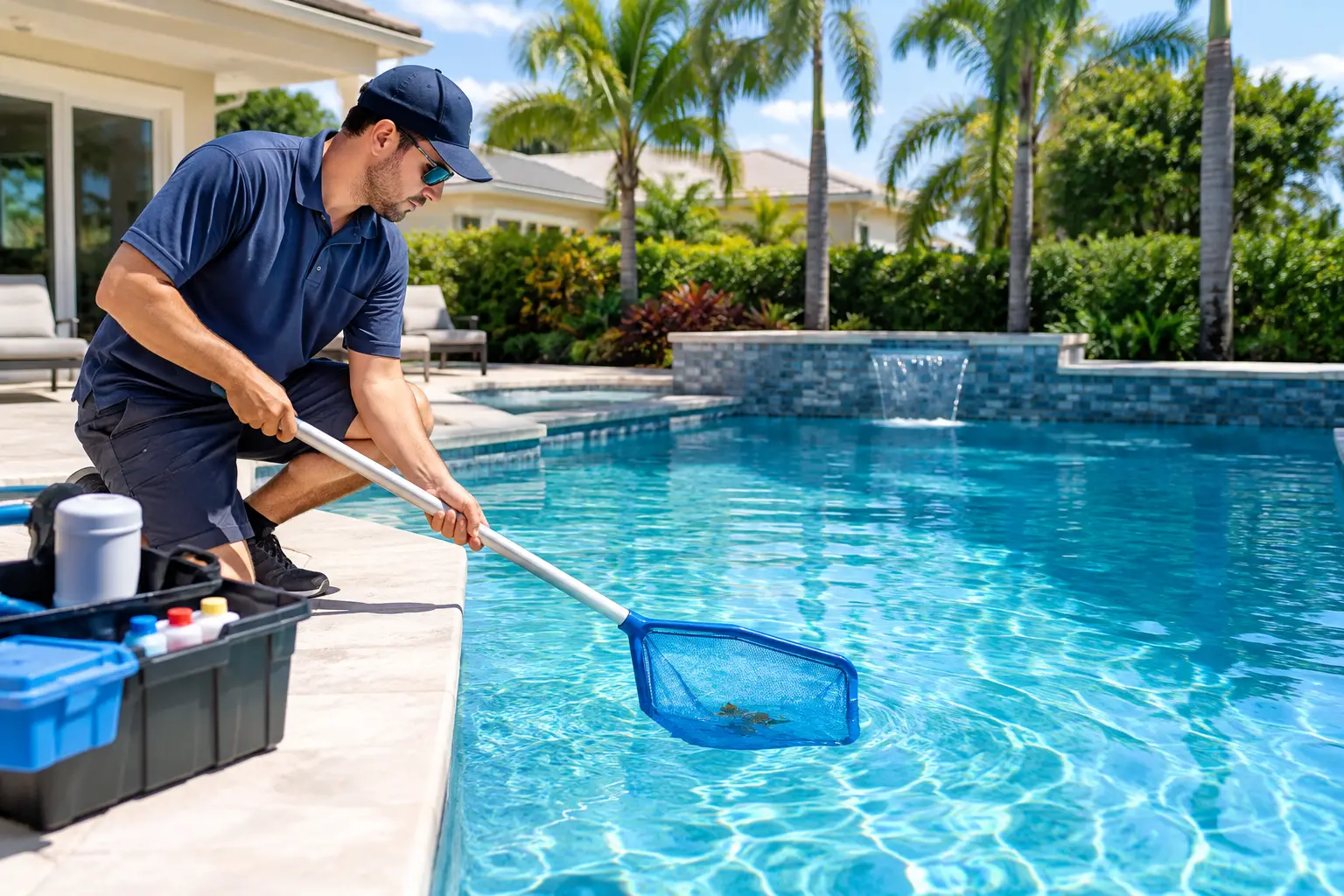
During these first days, brushing is usually the headline task. The walls, steps, benches, shallow end, deep end, and tight areas around fittings need careful attention. Fine dust may appear after brushing, and that is expected with many fresh plaster surfaces. The filter and circulation system help collect it, while vacuuming may be needed as material settles on the floor.
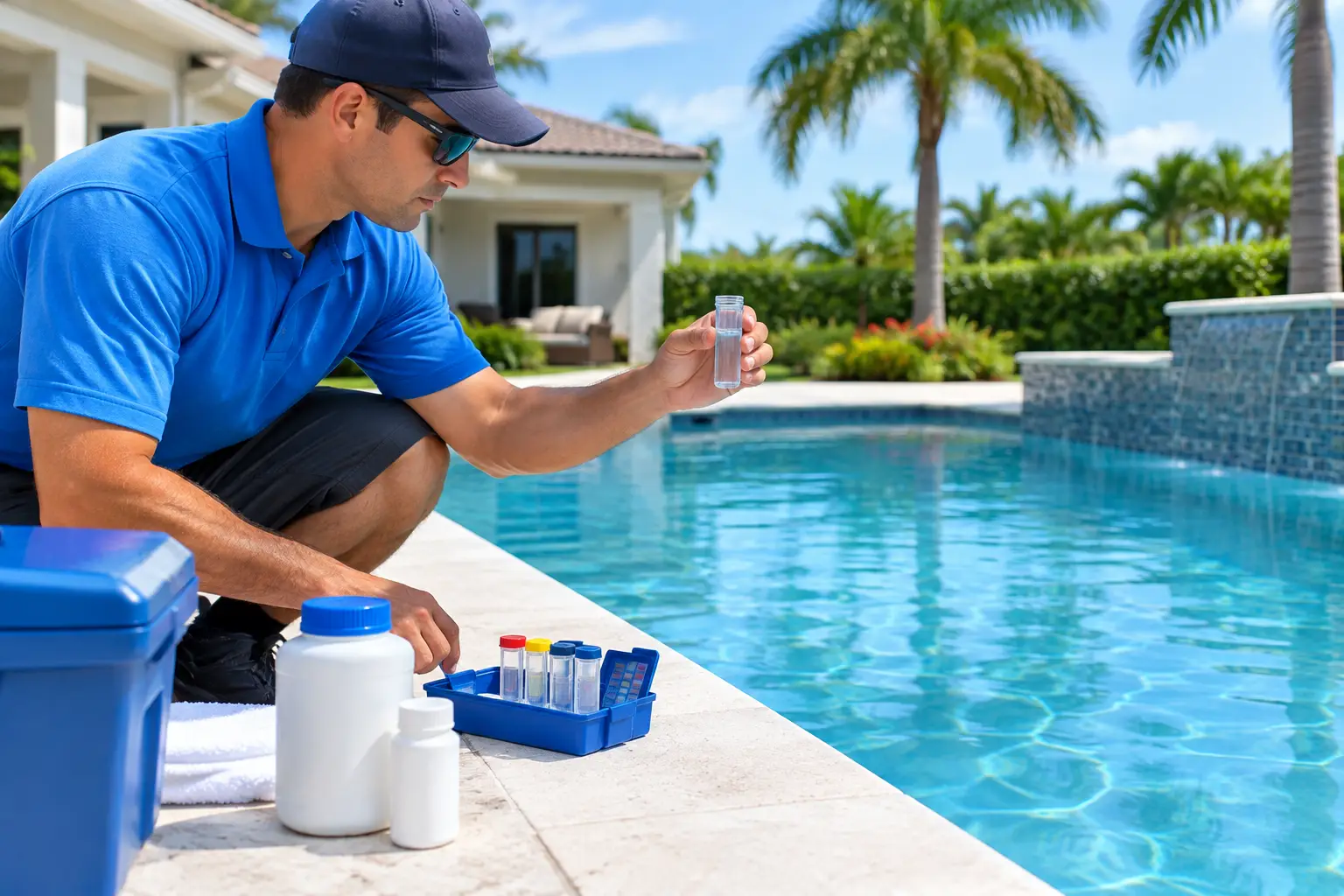
Water is tested frequently because new plaster commonly drives pH upward. The technician reviews pH, alkalinity, sanitizer, calcium hardness, and other conditions that influence the water balance. Chemical adjustments should be measured and handled by a trained pool professional. Adding products casually or in the wrong order can create localized staining, etching, or other avoidable surface issues.
Days 4 through 7: Control plaster dust and rising pH
By the end of the first week, the water may look inviting, but that does not mean the startup work is finished. Brushing remains frequent, and the technician continues to watch for plaster dust, scale-forming conditions, and debris that could stain the new finish.
A good service visit also includes a visual equipment check. Strong circulation matters during startup, so it helps to catch issues such as weak return flow, a full skimmer basket, air in the pump basket, or a filter condition that needs attention. Homeowners should not attempt electrical or internal equipment repairs themselves. A small circulation problem can quickly become a water-quality problem when a new surface is curing.
Sanitizer is managed carefully as well. The pool still needs protection against algae and bacteria, but a new surface should not be treated like a pool that has been operating unchanged for years. The right approach depends on the pool's readings and startup guidance, not a one-size-fits-all chemical routine.
Week 2: Settle into a consistent care routine
During the second week, dust production often begins to slow, though brushing is still a regular part of care. The pool may need brushing once or twice daily early in the process, then less often as the surface stabilises. The right frequency depends on the amount of dust and the condition of the finish.
This is also a period when homeowners may be tempted to turn on every feature or let the pool take on a full weekend of use. It is wise to follow the resurfacing contractor's guidance on swimming, automatic cleaners, heaters, saltwater systems, and water features. Some of these systems may need to remain off or be introduced gradually while the finish cures.
Leaves, mulch, metal objects, and other debris should not be left sitting on new plaster. Organic debris can leave tannin stains, while metal items may leave marks that are harder to remove than they are to prevent. Prompt skimming and careful vacuuming protect both the surface and the water.
Week 3: Watch for the details that affect the finish
By week three, the pool often looks more settled, but testing and brushing continue. Chemistry is now about more than keeping the water clear. It is about maintaining water that is neither scale-forming nor aggressive toward the new plaster.
This is where consistency matters more than dramatic corrections. Trying to force readings into place with large, rushed adjustments can be harder on a young surface than patient, tested corrections. A service professional can track trends across multiple visits and adjust based on the pool's actual response.
Homeowners should also pay attention to anything unusual: persistent cloudy water, a new stain, rough patches, poor circulation, a tripped breaker, or a heater that is not operating as expected. Taking a photo and reporting the concern early gives the service team a better chance to diagnose the issue before it becomes more involved.
Week 4: Transition to normal maintenance thoughtfully
At the end of 28 days, a pool is usually ready to move from intensive startup care into a normal maintenance routine, provided the surface and water are progressing as expected. That transition should still be thoughtful. The pool's chemistry needs to remain balanced, and equipment settings should support the pool's specific needs.
If a saltwater system, heater, automation system, or cleaner is being added back into operation, the timing should follow the relevant startup instructions. There is no advantage in rushing a feature at the expense of a finish that is meant to last for years.
Common mistakes a good startup helps prevent
The most common issue is treating fresh plaster like mature plaster. Skipping brushing because the water looks clear, waiting too long to address high pH, or allowing debris to remain on the floor can affect the finish even when the pool appears fine from the patio.
Another mistake is assuming every mark is a permanent defect. Some mottling, color variation, and curing changes may improve as the surface matures. On the other hand, persistent stains, visible scale, roughness, or recurring water problems deserve prompt professional evaluation. The right response depends on the cause, and aggressive DIY treatments can make a new surface worse.
Finally, do not overlook communication. A dependable startup includes clear records of testing, brushing, cleaning, and any chemistry adjustments made along the way. Digital service reports and visit photos give homeowners a useful record of how their new surface was cared for from the beginning.
When professional plaster startup care is worth it
A new finish is a major investment, and the first month is not the time to guess at water balance or hope the dust clears on its own. Professional care brings regular testing, proper brushing, equipment awareness, and a trained set of eyes on changes that may be easy to miss.
For homeowners who want their pool turtly clean without taking on the daily demands of a startup, Turtle Pool Care can provide structured care and clear service documentation during this important curing period. A calm, consistent first 28 days gives your pool finish the best possible start - and lets you look forward to enjoying the water rather than managing it.