A pool can look perfectly clear while its equipment is working far harder than it should. A pump that suddenly sounds louder, a heater that stops holding temperature, or a filter pressure gauge that keeps climbing can turn into a bigger issue if it is left alone. This pool equipment repair comparison helps homeowners decide when a targeted repair makes good sense, when replacement is the more practical route, and what information should guide the call.
The right answer is rarely simply “repair is cheaper” or “new is better.” Equipment age, the condition of related components, energy use, availability of parts, and the pool’s day-to-day needs all matter. A careful diagnosis protects both your water quality and your budget.
Start With the Actual Problem, Not the Symptom
Pool equipment works as a system. Low circulation may be caused by a pump issue, but it can also come from a dirty filter, a blocked skimmer line, a closed valve, an air leak, or a timer setting. Likewise, green water is not automatic proof that the pump has failed. Poor circulation, unbalanced water, a salt system issue, or inadequate filtration can all contribute.
That is why a visual inspection and basic testing should come before a repair decision. A technician can check water flow, filter pressure, visible leaks, electrical operation, seals, plumbing connections, and equipment settings. The goal is not to replace the most obvious part. It is to identify the component that is actually preventing the pool from operating properly.
For homeowners, a few observations are useful to share: when the problem began, whether it is constant or intermittent, any unusual sounds or error messages, and whether the pool has had changes in water level or water clarity. There is no need to take apart electrical equipment or handle unfamiliar chemicals. A clear description is often enough to speed up diagnosis.
Pool Equipment Repair Comparison: The Main Decision Factors
A repair is generally worth considering when the equipment is otherwise in good condition, the failed part is clearly identified, and the repair restores safe, reliable operation. Replacement becomes more compelling when failures repeat, parts are difficult to obtain, the unit is near the end of its practical service life, or a new system would solve several ongoing problems at once.
Age and repair history
One isolated repair on a well-performing unit is different from a pattern of service calls. For example, replacing a worn pump seal or a failed capacitor may be a sensible, focused repair if the pump motor and housing are in good shape. If the same pump has recurring leaks, motor trouble, and declining circulation, putting more money into individual parts may only postpone replacement.
The same thinking applies to heaters, filters, saltwater systems, and automation controls. Age alone does not decide the outcome, but it provides context. Older equipment can have more wear in places that are not visible during a quick look.
Cost beyond the immediate repair
The initial repair cost matters, but it should not be the only number in the comparison. A less efficient single-speed pump, for instance, may continue to cost more to operate than a properly selected variable-speed replacement. A heater that requires repeated attention may also create avoidable disruption when the pool is meant to be ready for family time or guests.
Replacement is not automatically the value choice, either. If a straightforward repair returns dependable operation and the equipment is compatible with the rest of the pad, it may be the most sensible option. The goal is to avoid both extremes: replacing equipment prematurely or continuing to repair a unit that is no longer dependable.
Compatibility with the rest of the equipment pad
Pool equipment is interconnected. A new pump must be properly matched to the pool’s plumbing, filter, water features, and circulation needs. A new heater or heat pump needs appropriate flow and electrical support. Automation upgrades may require compatible equipment or additional configuration.
This is where a comparison should look beyond one failed part. If an upgrade will require changes to surrounding equipment anyway, homeowners may prefer to plan the project as a coordinated improvement rather than address problems one piece at a time. On the other hand, replacing a perfectly functional filter or control system just because one component needs attention is not always necessary.
Pump Repair Versus Pump Replacement
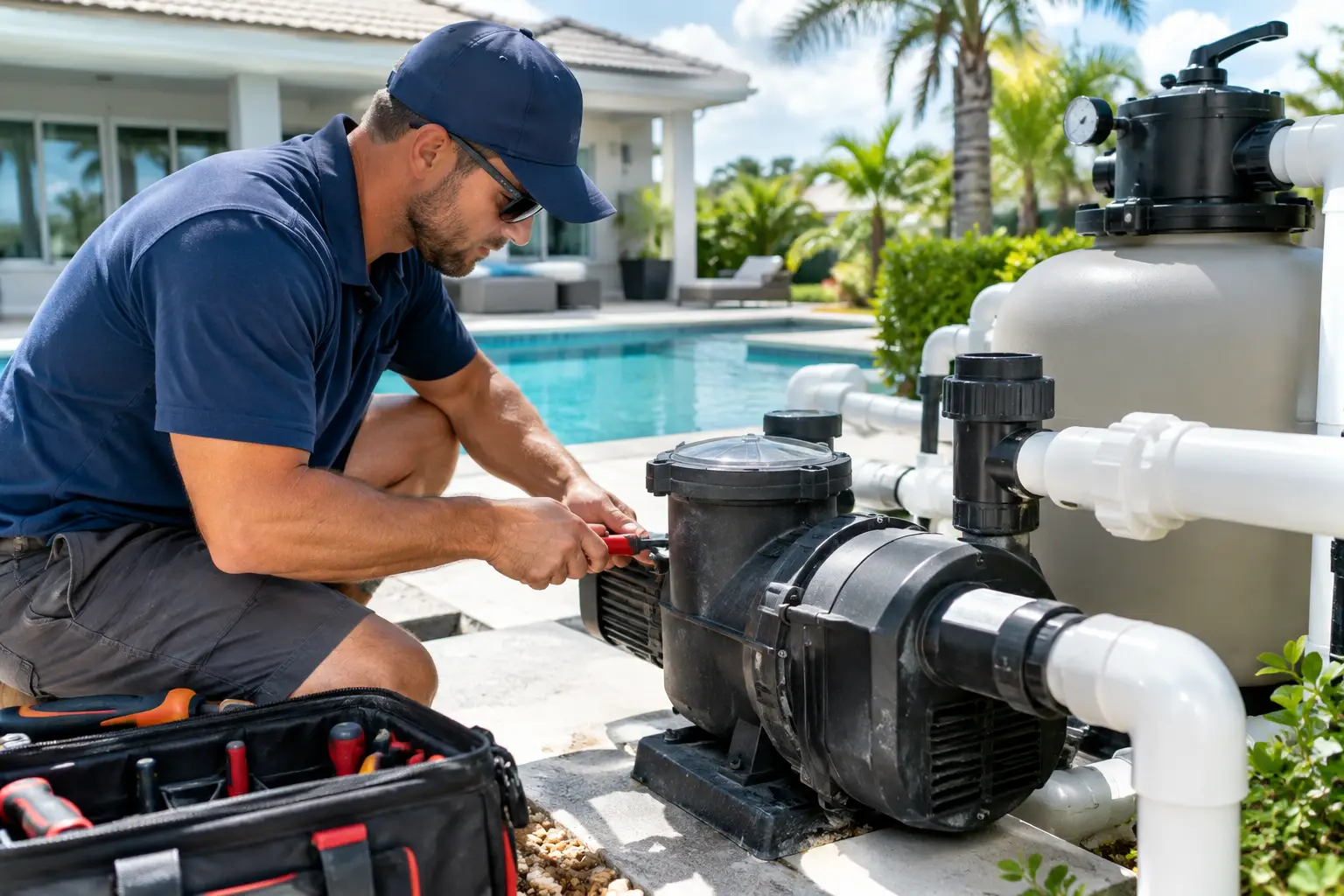
The pool pump is often the first piece of equipment homeowners notice because it runs frequently and has a direct effect on circulation. Humming, grinding, screeching, leaking, tripping breakers, weak flow, or air bubbles returning through the pool can all point to a concern, but the cause varies.
Repairs can make sense for a failing seal, lid O-ring, pressure-side fitting, capacitor, switch, or another serviceable component. These issues may affect performance without meaning the entire pump is finished. Repair is especially reasonable when the motor runs smoothly, the housing is sound, and circulation returns to normal after the issue is corrected.
Replacement deserves a closer look when a motor is repeatedly failing, the pump is noisy and inefficient, parts are no longer practical to source, or the pool would benefit from better speed control. Variable-speed pumps can offer more flexible circulation scheduling, quieter operation at lower speeds, and potential operating savings. They need to be selected and programmed for the specific pool, not treated as a one-size-fits-all swap.
Heater, Heat Pump, and Cooling Decisions
A heater or heat pump problem can be frustrating because the pool may still circulate normally while comfort disappears. Error codes, poor heating performance, cycling on and off, or a unit that will not start all call for professional assessment. Water flow, controls, sensors, electrical components, and the condition of the unit can influence the diagnosis.
A repair may be appropriate when the issue is isolated and the system has otherwise delivered reliable performance. Replacement may be the stronger long-term choice if the unit has repeated breakdowns, cannot maintain the desired water temperature, or no longer fits how the household uses the pool.
For some homeowners, the comparison also includes cooling. In western Palm Beach County, summer pool water can become warmer than expected. A pool cooling solution or heat pump with cooling capability may be worth discussing when comfort is the real concern, rather than simply restoring the status quo.
Filter and Saltwater System Considerations
Filters are usually repair-friendly when the tank, plumbing, and internal structure are sound. A damaged pressure gauge, worn valve component, leaking connection, or needed filter-media service does not necessarily justify a new filter. Consistently high pressure, poor water clarity, leaks, or damaged internal parts should be evaluated in context with the filter’s overall condition and whether it is properly sized for the pool.
Saltwater systems also benefit from a measured approach. A low chlorine reading may stem from water chemistry, cell condition, settings, flow, or the cell itself. Replacing a cell without checking the complete system can be wasteful. Proper testing helps separate a true equipment failure from an operating or chemistry issue.
Why Documentation Makes Repair Decisions Easier
Repair conversations are easier when homeowners can see what was found and what was done. Visit notifications, detailed digital service reports, and photos can create a useful record of equipment condition over time. This is particularly helpful when a small issue becomes a recurring one, because repair history makes the repair-versus-replace decision less of a guess.
Routine weekly service adds another advantage: early warning. Changes in pressure, flow, water level, equipment noise, or chemistry often appear before an equipment failure becomes urgent. Addressing them early can prevent a minor leak or circulation issue from becoming a green-pool recovery project.
A family-owned provider such as Turtle Pool Care can pair that regular attention with practical equipment guidance, helping homeowners understand what is urgent, what can be monitored, and what investment is likely to provide the best peace of mind.
Choose the Option That Restores Dependability
The best repair decision is the one that leaves your pool safe, balanced, and ready to use without creating a new problem around the corner. Sometimes that means replacing a small part and keeping reliable equipment in service. Sometimes it means choosing an upgrade that reduces recurring trouble and better supports the way your family enjoys the pool.
If equipment starts behaving differently, do not wait for a complete shutdown or cloudy water to force the issue. A timely inspection gives you more options, clearer information, and a much better chance of keeping the pool turtly clean.