A Florida storm can turn a sparkling pool into a leaf-filled, cloudy mess in a single afternoon. Effective storm pool cleanup is about more than restoring the view from the patio. It protects water chemistry, helps your equipment avoid unnecessary strain, and gets your family back to enjoying a safe, turtly clean pool.
The best response depends on what the storm left behind. A light rainstorm may only call for skimming and a chemistry check. High winds, overflowing water, damaged landscaping, or a power outage can require a more careful recovery plan. The goal is not to rush chemicals into the water or run equipment that may be compromised. Start with a safe inspection, then clean and rebalance methodically.
Start With a Safe Post-Storm Inspection
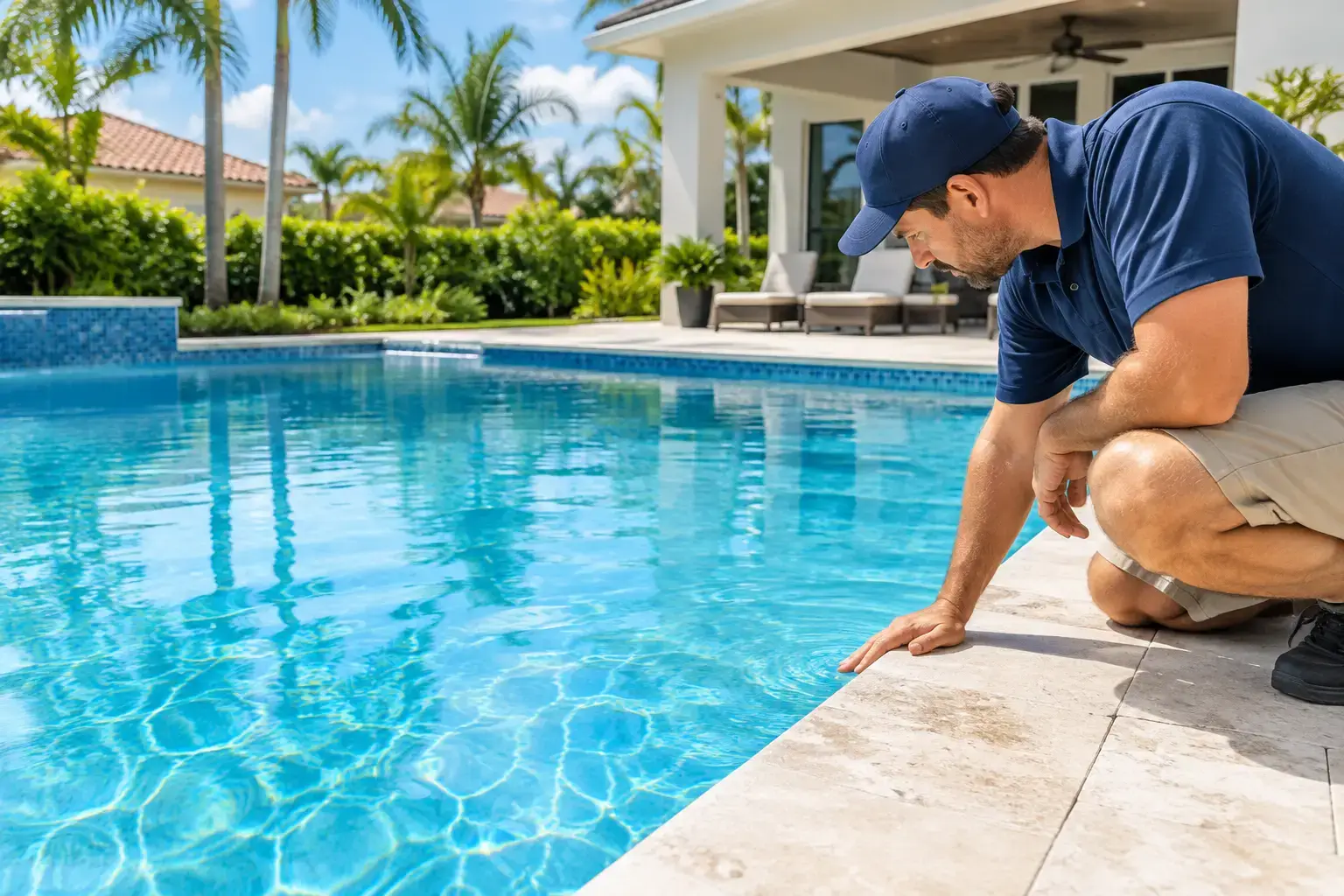
Before reaching for the net or turning on the pump, take a quick walk around the pool and equipment pad. Look for downed branches, loose screens, standing water around electrical equipment, damaged pool accessories, and anything unusual near the pump, heater, or automation controls.
If power is still out, leave the equipment off. If the breaker has tripped, there is visible equipment damage, or water has reached electrical components, do not attempt a repair yourself. Pool equipment combines water and electricity, which makes professional assessment the smart choice when anything looks questionable.
Also look at the water level. Heavy rain can push the level too high, reducing skimmer performance and allowing contaminated water to enter through the deck area. If the water is above the midpoint of the tile line or skimmer opening, it may need to be lowered before normal circulation can do its job. This is especially common after prolonged summer rain in Wellington, Royal Palm Beach, Loxahatchee, and nearby communities.
Remove Debris Before It Sinks
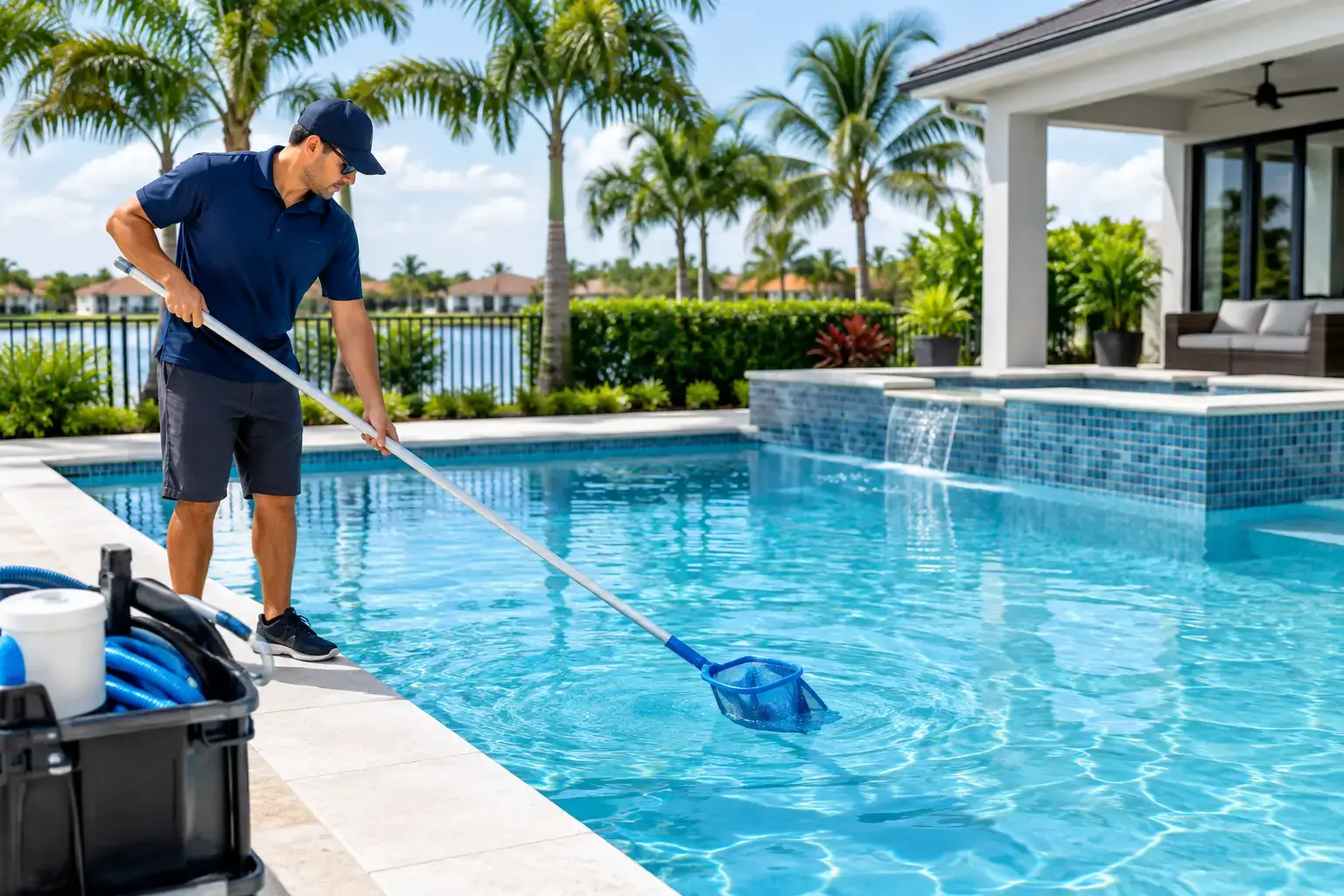
Leaves, seed pods, palm fronds, mulch, and small branches are easiest to remove while they are floating. Skim the surface first, then empty the skimmer and pump baskets once the equipment can safely run. Large debris left in the pool creates several problems at once: it consumes sanitizer as it breaks down, stains surfaces, clogs baskets, and can place extra load on the circulation system.
Do not rely on the skimmer alone after a heavy storm. If the pool is covered with debris, manually removing the bulk of it keeps material from traveling farther into the plumbing. Brush steps, benches, corners, and the waterline as well. Fine dirt and pollen often settle in these areas before making their way onto the floor.
Vacuuming may be needed once larger debris is out. Whether the pool can be vacuumed through the system or needs a different approach depends on the amount and type of debris. Fine silt can quickly overload a dirty filter, while heavy organic debris can make a pool look clear on the surface but continue affecting water quality below it.
Check the Filter, But Avoid Overcorrecting
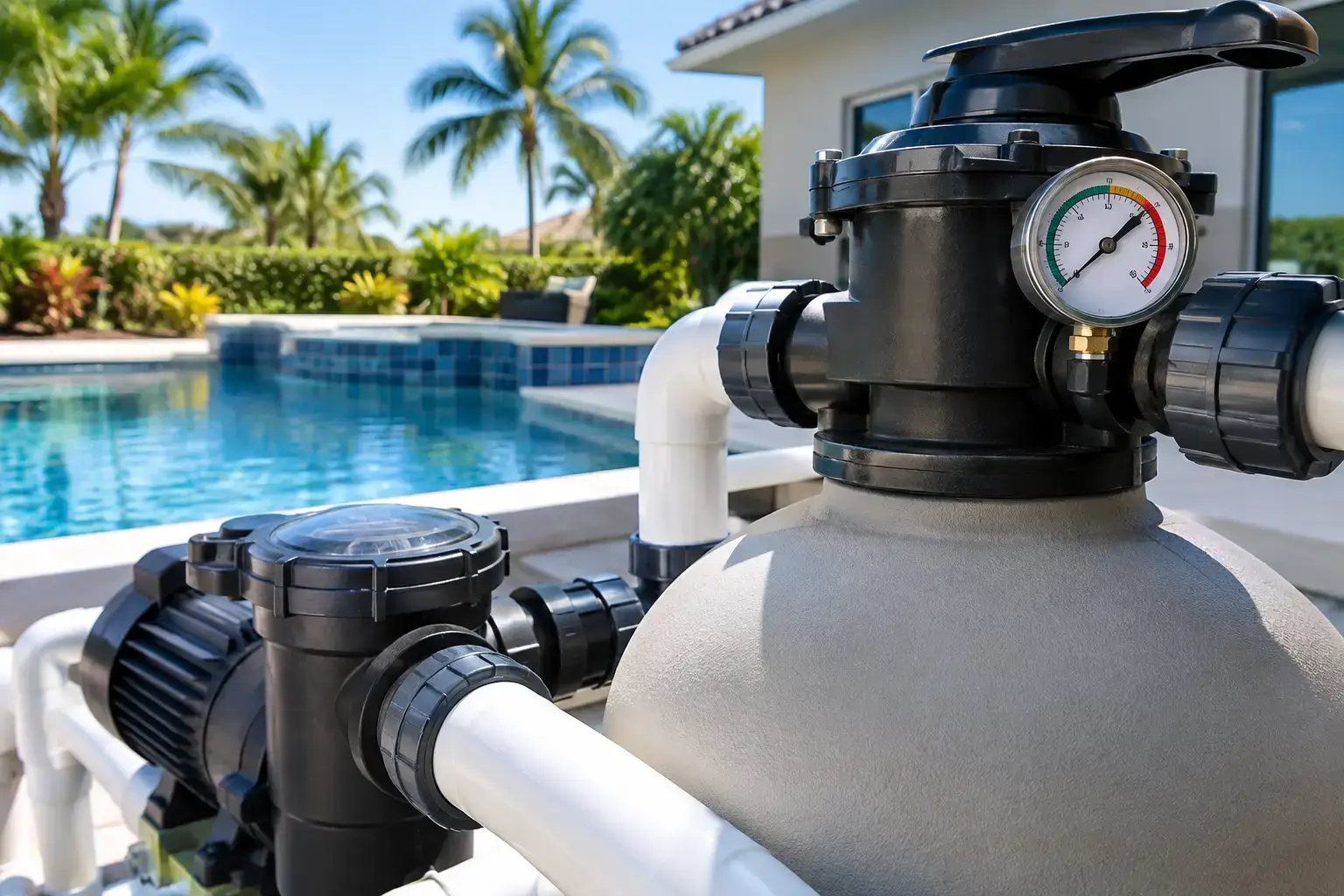
A storm cleanup often requires extra circulation and filtration, yet that does not mean every filter should be cleaned immediately. The right timing depends on the filter type and its pressure or flow condition. A cartridge filter, for example, may need attention when flow drops or pressure rises noticeably. A sand or DE filter has its own maintenance requirements.
Cleaning a filter too aggressively or too often can be counterproductive in certain situations. What matters is whether circulation is strong enough to clear suspended debris and keep sanitizer moving throughout the pool. If the return flow is weak, the pressure is abnormal, or the pump is making unfamiliar noises, it is time to investigate rather than simply letting the equipment run longer.
Test Water Chemistry After the Cleanup
Rainwater changes pool chemistry, but not always in the same way. Heavy rainfall can dilute sanitizer, alter pH and alkalinity, introduce phosphates and organic contaminants, and fill the pool with runoff from the surrounding deck or landscape. Wind-driven debris adds another layer of demand because leaves and dirt consume chlorine as they decompose.
A proper post-storm test should assess sanitizer, pH, total alkalinity, stabilizer, calcium hardness, and other factors appropriate to the pool's water system. Saltwater pools still need this attention. Their salt chlorine generators produce sanitizer, but storm debris and diluted water can leave the system unable to keep up without correction.
Cloudy water after rain does not automatically mean algae, and green water does not always have one simple cause. It could be an early algae bloom, very fine suspended material, metals, inadequate filtration, low sanitizer, or a combination of conditions. Adding a large amount of chemicals without accurate testing can make recovery more difficult and can create a new chemistry imbalance.
For homeowners, the safest approach is to remove debris, maintain normal circulation when equipment is operating properly, and arrange professional water testing and balancing if the water is cloudy, discolored, or developing a slick feel. Keep swimmers out if visibility is poor, if debris remains on the floor, or if the water has not been tested and balanced after a major event.
Watch for Early Signs of Algae
Warm weather, rainfall, and reduced sanitizer create favorable conditions for algae. It can begin on walls, steps, and shaded areas before the whole pool appears green. A light dusting of green or yellow material, persistent cloudiness, slippery surfaces, or a sanitizer reading that keeps falling can all indicate that the pool needs more than routine cleaning.
Early action makes a difference. A pool caught at the first sign of algae may need focused cleaning, circulation, and chemistry correction. A pool left for several days can become a larger green-to-clean recovery, often requiring more labour, more filtration attention, and more time before it is ready for normal use.
This is one reason weekly service is valuable during Florida's rainy season. Regular brushing, skimming, water testing, and equipment checks give problems less time to grow. Detailed service reporting also helps homeowners know what was found after a storm and what was done to address it.
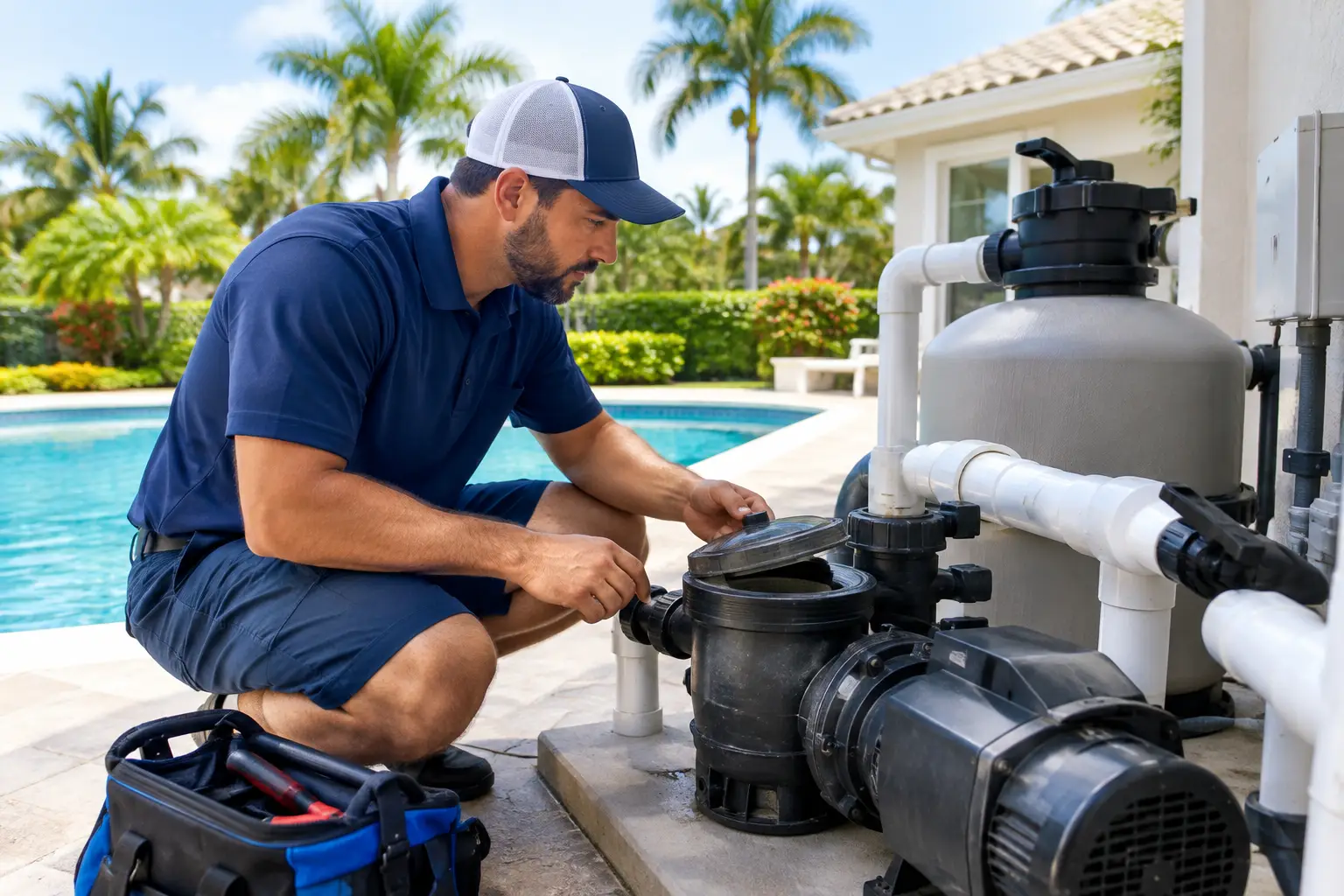
Storms can expose equipment issues that were already developing. A pump that struggles to prime, a clogged impeller, air bubbles at the returns, a heater error message, or an automation system that does not resume its schedule may all become noticeable after a power interruption or heavy debris load.
Check that the pump basket lid is secure, the water level supports skimming, and valves appear to be in their usual positions. Beyond that, avoid disassembling equipment or attempting electrical troubleshooting. A small issue with circulation can quickly become a water-quality issue, particularly when the pool is recovering from rain and organic debris.
If your pool has a heat pump, heater, salt system, variable-speed pump, or automation controls, a post-storm inspection is a practical way to protect the investment. The equipment does not need attention after every passing shower, but it should be checked after significant wind, flooding around the pad, power loss, or a noticeable change in operation.
When a Professional Storm Pool Cleanup Makes Sense
Some post-storm cleanups are straightforward. If the water is clear, the equipment is running normally, and the storm left a manageable amount of debris, basic cleanup and testing may be enough. Other situations call for professional help sooner rather than later.
Consider scheduling service when the pool is green or cloudy, debris has overwhelmed the baskets or filter, water level is excessively high, circulation is weak, equipment is not restarting correctly, or you are unsure how to restore balanced water safely. The same applies when a storm leaves visible staining, mud, landscape runoff, or damaged equipment around the pool.
Turtle Pool Care approaches storm recovery with the same careful process used in dependable weekly service: inspect the equipment, remove debris, assess water conditions, and address the actual problem rather than guessing. Digital service reports and photos give homeowners a clear record of what was found and completed, which is especially reassuring after a messy weather event.
A few minutes of attention after the skies clear can prevent days of cloudy water and avoidable equipment strain. Keep large debris out, pay attention to water level and circulation, and let accurate testing guide the next step. Your pool should be ready for the next sunny afternoon, not still recovering from the last storm.