A pool can look perfectly fine on Monday and turn noticeably green after a hot, rainy Florida weekend. The top causes of green pools usually come down to algae getting the upper hand, but the reason it happened is not always as simple as “not enough chlorine.” Water chemistry, circulation, filtration, weather, and equipment condition all work together.
The good news is that green water is usually recoverable. The key is identifying whether you are seeing an algae bloom, a circulation problem, or a different water-quality issue before adding chemicals blindly. A careful diagnosis helps protect your pool finish, equipment, and family’s swim time.
Top Causes of Green Pools: Algae and Low Sanitizer
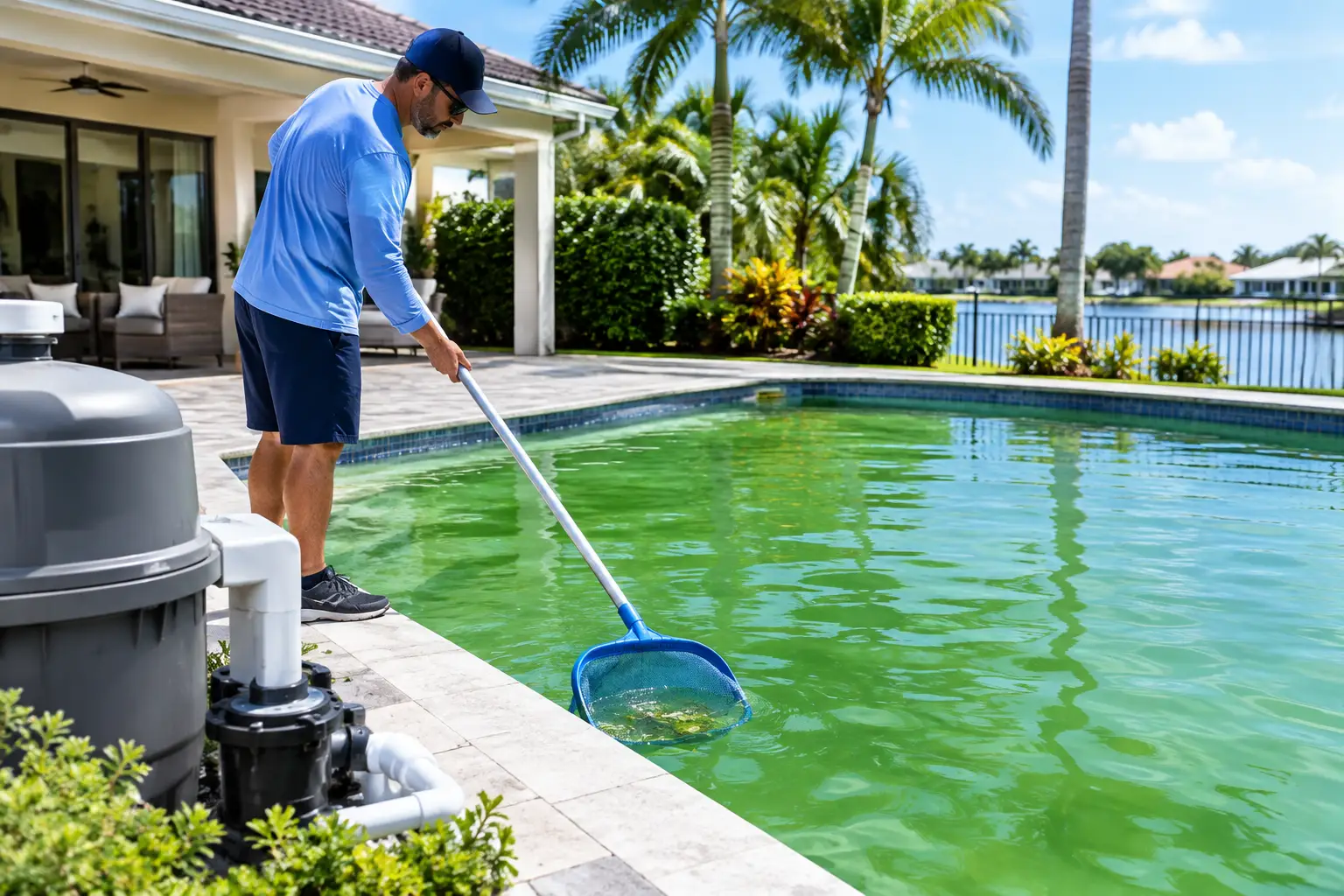
Most green pools have an active algae bloom. Algae spores are always finding their way into pool water through wind, rain, swimmers, landscaping debris, and even pool toys. When sanitizer levels are too low for the conditions, those spores can multiply quickly.
Chlorine is the most common sanitizer, including in saltwater pools. A saltwater system makes chlorine gradually, but it still depends on correct settings, clean equipment, balanced water, and enough daily run time. A pool can turn green when the salt cell is scaled, the output is set too low, the cell has reached the end of its useful life, or the system is not running long enough during warmer weather.
Low sanitizer is not always caused by neglect. Heavy rain can dilute water and introduce contaminants. A backyard gathering adds sunscreen, body oils, and bather waste that use up chlorine. Several bright, hot days can increase chlorine demand. In Wellington, Royal Palm Beach, and nearby communities, summer heat and afternoon storms can turn a minor chemistry imbalance into visible green water surprisingly fast.
Water Balance That Makes Chlorine Less Effective
A test may show chlorine in the pool, yet the water can still turn green. That is why total water balance matters.
If pH is too high, chlorine becomes less effective at sanitizing. If stabilizer, also called cyanuric acid, is too low, sunlight burns through chlorine quickly. If it is too high, chlorine can become less responsive and harder to manage. Alkalinity, calcium hardness, and salt level can also influence water comfort, surface protection, and how reliably the system operates.
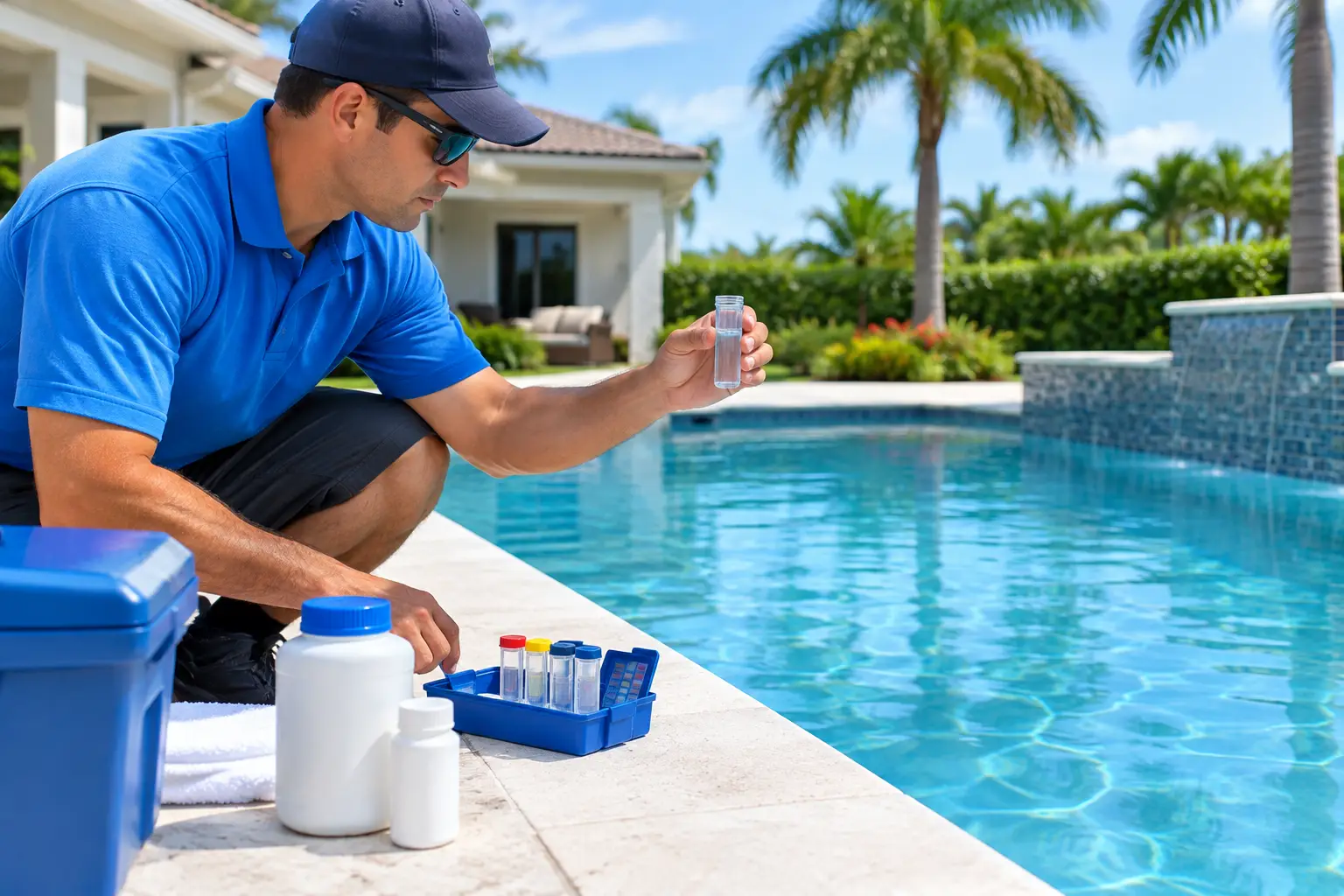
This is one reason random chemical additions can create more work later. A treatment that helps one number may push another out of range. Professional water testing looks at the full picture, then makes measured adjustments based on the pool’s volume, sanitizer type, surface, and current condition.
Rain, Heat, and Heavy Pool Use
Florida pools face a steady stream of algae-friendly conditions. Warm water supports faster growth, while rainwater can alter chemistry and wash pollen, leaves, soil, and fertilizer residue into the pool. High use adds contaminants that consume sanitizer before it can do its main job.
These factors do not mean a green pool is unavoidable. They mean weekly testing and adjustment matter more during periods of heat, storms, or frequent swimming. A pool that was balanced last week may need attention sooner than expected after a major weather event.
Poor Circulation and Filtration Problems
Chemically balanced water still needs to move. Circulation distributes sanitizer throughout the pool and sends fine debris through the filter. When water is not circulating well, algae often starts in quiet areas first: steps, corners, behind ladders, around fittings, and along the waterline.
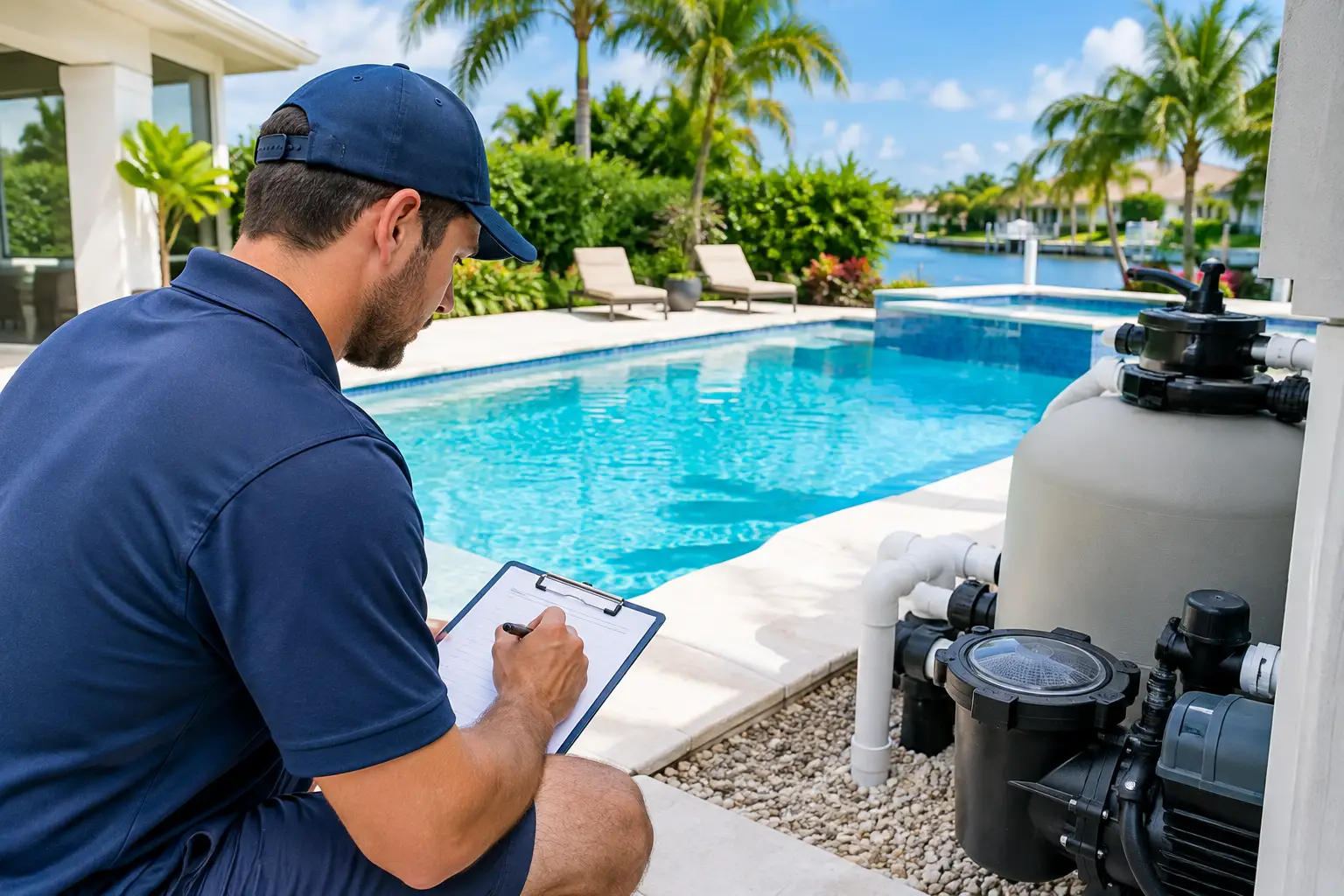
A dirty or overloaded filter can reduce flow and allow contaminants to remain in the water. So can a clogged skimmer basket, a full pump basket, a blocked cleaner line, a partially closed valve, or a worn pump component. A pump that is losing prime, making unusual noise, or delivering weak returns deserves prompt attention.
The filter type matters, too. Cartridge, sand, and DE filters each need proper cleaning and maintenance. Cleaning too infrequently can restrict flow. Cleaning too aggressively or reassembling components incorrectly can create different performance issues. The goal is not simply a clean-looking filter. It is dependable circulation and effective removal of debris and suspended particles.
A green pool that clears near the return jets but stays green elsewhere is a strong clue that circulation needs to be evaluated. A pool professional can check flow, equipment operation, filter condition, and potential restrictions without asking a homeowner to take on electrical or equipment repairs.
Organic Debris Gives Algae a Head Start
Leaves, grass clippings, pollen, mulch, and small branches do more than make a pool look untidy. As organic debris breaks down, it increases the sanitizer demand in the water. It can also settle into corners where algae begins to establish itself.
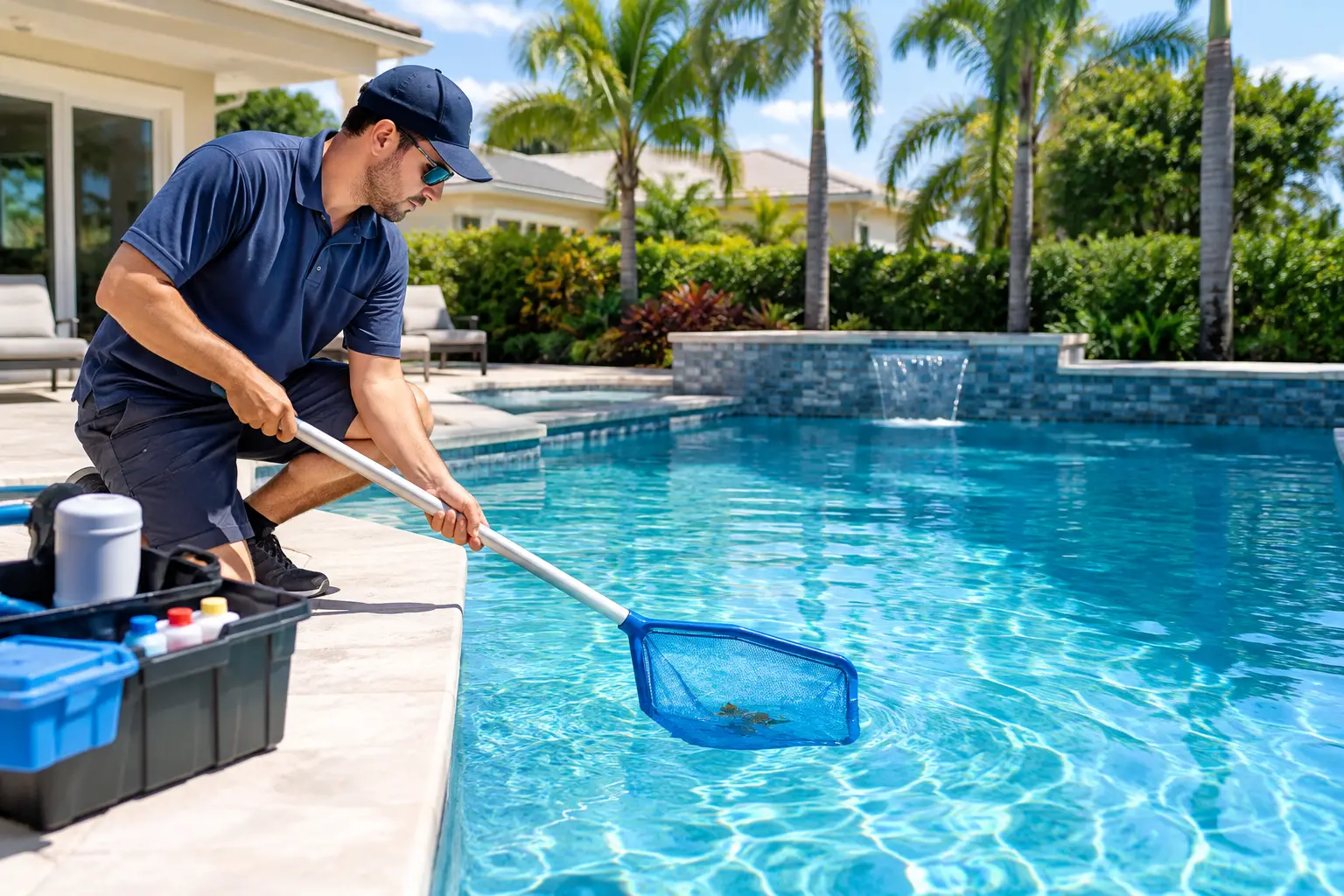
Skimming helps, but brushing is just as valuable. Algae clings to walls and floors before the water turns visibly green. Regular brushing disrupts early growth and exposes it to properly balanced sanitizer. Vacuuming removes settled debris before it has a chance to feed water-quality problems.
This is why weekly service is more than a quick skim. Consistent brushing, vacuuming as needed, basket cleaning, water testing, and a visual equipment inspection give small concerns less time to become a full recovery project.
Is It Really Algae? Green Water Can Have Other Causes
Not every green-looking pool is an algae bloom. Algae typically creates cloudy green water, green dust on surfaces, slippery walls, or visible patches in shaded areas. The color may range from a light green haze to a deep pea-green appearance.
Metals, particularly copper, can also produce a green or blue-green tint. In some cases, the water remains relatively clear rather than cloudy. Metal-related discoloration may appear after adding certain products, using water with metal content, or dealing with equipment and chemistry conditions that allow metals to show up in the water.
The treatment for metal discoloration is different from the treatment for active algae. Treating the wrong issue can waste time and chemicals, and it may worsen staining or cloudiness. Accurate testing is the sensible first step whenever the cause is unclear.
What a Proper Green Pool Recovery Involves
A true green-to-clean recovery is a process, not a single product. The exact approach depends on how green the water is, whether algae is active, the pool’s finish, the filter type, and the condition of the circulation system.
First, the water and equipment should be assessed. That includes checking sanitizer, pH, stabilizer, and other relevant chemistry, along with confirming that the pump and filter can circulate and capture debris effectively. The pool is then cleaned of leaves and debris, brushed thoroughly, and treated with an appropriate recovery plan.
As algae is killed, the water may become cloudy before it becomes clear. That is normal because the filter must remove the fine particles left behind. Continued filtration, cleaning or servicing the filter as needed, follow-up brushing, and repeat testing are often necessary. Skipping those steps can leave enough algae behind for the pool to turn green again.
For homeowners, the safest role is observation. Keep children and pets out of visibly green water, avoid mixing or guessing at chemicals, and note any equipment changes such as poor flow, leaks, error messages, or unusual pump sounds. Those details help a technician diagnose the problem faster.
Keeping Your Pool Turtly Clean Between Visits
Prevention is less disruptive than recovery. Maintain a consistent service schedule, keep the water level where it should be, and remove large debris after storms when practical. If you notice a faint green tint, cloudy water, slippery steps, or a sudden drop in return flow, address it early rather than waiting for the next convenient moment.
For families who prefer not to manage chemistry and equipment week after week, Turtle Pool Care provides detailed service reports and photographic documentation after completed visits. That visibility makes it easier to understand what was checked, what was adjusted, and whether a small equipment concern needs attention.
A clear pool is not just a better-looking backyard feature. It is a sign that sanitation, circulation, filtration, and routine care are working together. When those basics stay on track, your pool is far more likely to stay safe, balanced, and turtly clean when the next warm afternoon calls for a swim.