A pool should smell clean, not like a chemical factory, a damp basement, or a pond after a Florida rainstorm. When homeowners ask why pool water smells, the answer is often not “too much chlorine.” In many cases, the odour points to chlorine that is no longer doing its job effectively, organic material building up in the water, or a circulation issue that needs attention.
The good news is that a pool smell is usually an early warning sign, not a permanent problem. Identifying the type of odour and checking the water chemistry promptly can keep a small imbalance from turning into cloudy water, algae, staining, or an uncomfortable swimming experience.
Why Pool Water Smells Like Strong Chlorine
The sharp “public pool” smell many people associate with chlorine is usually caused by chloramines. Chloramines form when free chlorine combines with contaminants in the water, such as sweat, body oils, sunscreen, cosmetics, leaves, pollen, and other organic debris.
Free chlorine is the active sanitizer that helps keep pool water safe. Once it binds to contaminants, it becomes combined chlorine. That combined chlorine is far less effective at sanitising and is often responsible for the strong odour, as well as eye and skin irritation.
This is why adding a little more chlorine without testing first is not always the right answer. The pool may need to be properly oxidised to break apart chloramines, while pH, stabiliser, and circulation are also checked. The correct treatment depends on the test results and the pool’s recent use, weather exposure, and sanitizer system.
A strong chlorine smell can become more noticeable after a busy weekend of swimming, after heavy rain, or when the pool has gone too long without enough active sanitizer. In warm western Palm Beach County weather, water chemistry can change quickly, especially when the pool receives plenty of sun and regular use.
A Musty, Earthy, or Pond-Like Smell
A musty or earthy odour often suggests organic material in the pool or the early stages of algae growth. The water may still look mostly clear, which can make this problem easy to miss. Algae does not always begin as a bright green pool. It may first appear as a slight haze, dull walls, slippery steps, or a smell that becomes more noticeable when the pump is running.
Leaves, grass clippings, pollen, insects, and debris trapped in skimmer baskets can also contribute. If debris stays in the water, it consumes chlorine as it breaks down. That leaves less sanitizer available to protect the pool.
The filter and circulation system matter here. A pool with poor circulation can develop low-flow areas where debris settles and sanitizer does not distribute evenly. Corners, steps, tanning ledges, and behind ladders are common places for buildup. Brushing those areas and maintaining a clean filter help prevent small problems from becoming a green-to-clean recovery.
If the water has a swampy odour, visible algae, or persistent cloudiness, avoid treating it as a simple fragrance issue. It needs a full assessment of sanitizer levels, pH, filtration, circulation, and debris load.
Not every pool odour is related to chloramines. A metallic, sharp, or unusual chemical smell can have several causes, and the details matter.
Low pH can make water more aggressive and may contribute to corrosion around metal components. Metals in the water, such as copper or iron, can create staining and discolouration, although they do not always produce a noticeable smell on their own. Old or improperly stored pool chemicals can also create unpleasant odours, particularly if containers are open, damp, or stored near one another.
Chemical handling is not a trial-and-error task. Never mix pool chemicals, pour one product into another container, or use a product simply because the pool smells off. Some combinations can create dangerous fumes or reactions. If there is a strong chemical odour around stored products rather than the water itself, keep people away from the area and arrange for qualified help.
A chemical smell may also come from nearby sources, including lawn treatments, mulch, drainage runoff, or a pool deck that has recently been cleaned with household products. Checking when the odour began can help narrow down the cause.
Saltwater Pools Can Smell Too
A saltwater pool is still a chlorine pool. Its salt system uses dissolved salt to generate chlorine, so it can develop chloramines and algae-related odours just like any other pool.
When a salt pool smells strongly of chlorine, the issue may be inadequate chlorine production, a dirty salt cell, a cell nearing the end of its useful life, high stabiliser, or a pump schedule that is too short for the season. The water can look acceptable while the actual free chlorine level is lower than it should be.
Salt cells also need periodic inspection and cleaning when conditions call for it. Excess scale can reduce production, but over-cleaning a cell with acid can shorten its lifespan. This is one of those situations where the right maintenance is better than more maintenance.
What to Check Before Assuming the Worst
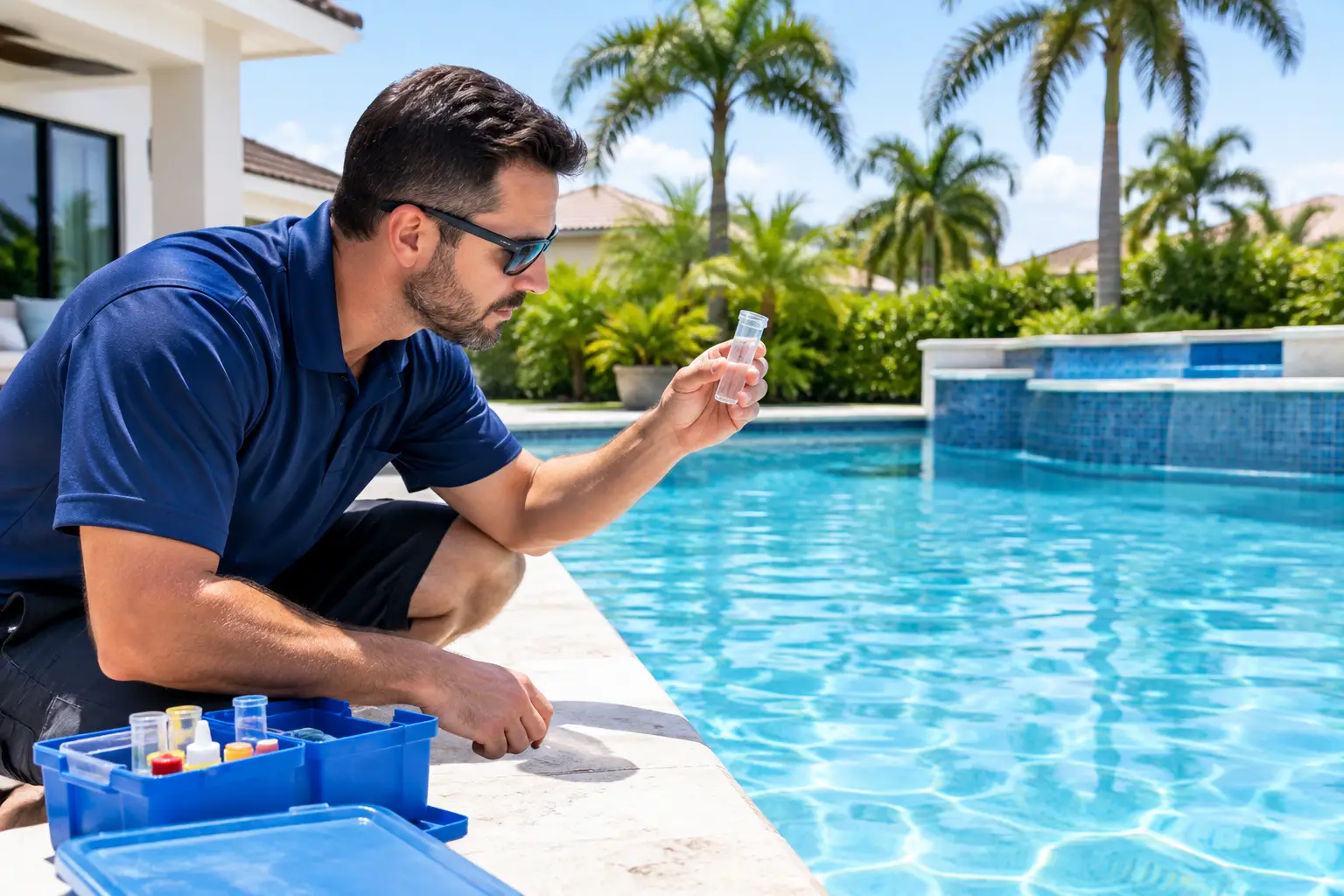
A brief visual check can provide useful clues, but water testing tells the real story. Look at the water in daylight. Is it clear and blue, slightly hazy, dull, greenish, or foamy? Notice whether the walls and steps feel slippery. Check skimmer and pump baskets for leaves or organic debris, and make sure the return jets are creating visible movement on the surface.
Then consider what has changed recently. A pool party, afternoon storms, extended heat, construction dust, lawn work, a failed pump timer, or a filter that needs cleaning can all affect water quality. If the pool was recently shocked, the odour may change temporarily as contaminants are oxidised, but it should not remain harsh or irritating.
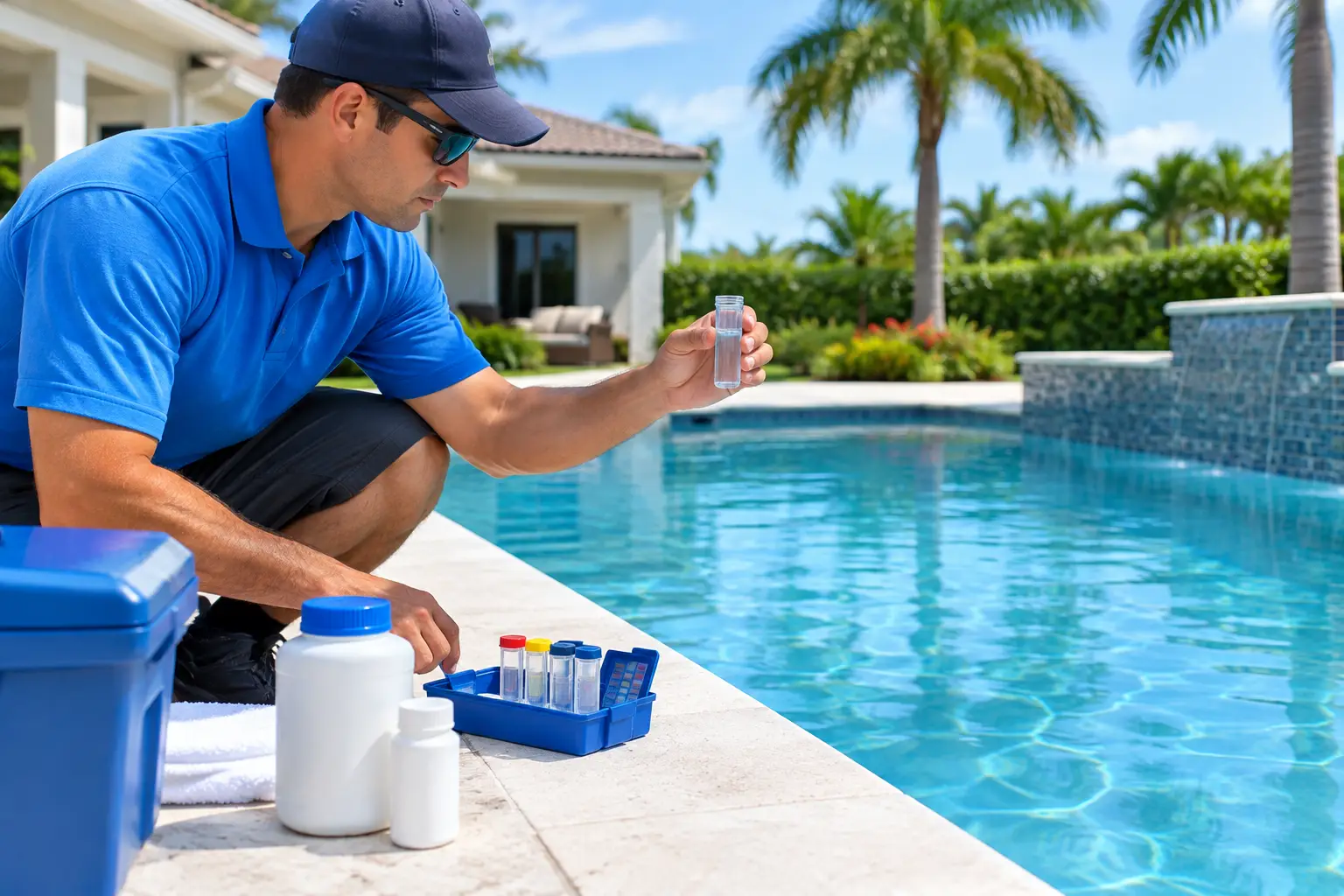
A complete test should evaluate more than chlorine alone. Free chlorine, combined chlorine, pH, total alkalinity, stabiliser, calcium hardness, and salt level for saltwater pools all affect how well the water behaves. In some cases, phosphates, metals, or water temperature may also help explain a recurring issue.
How Regular Service Prevents Pool Odours
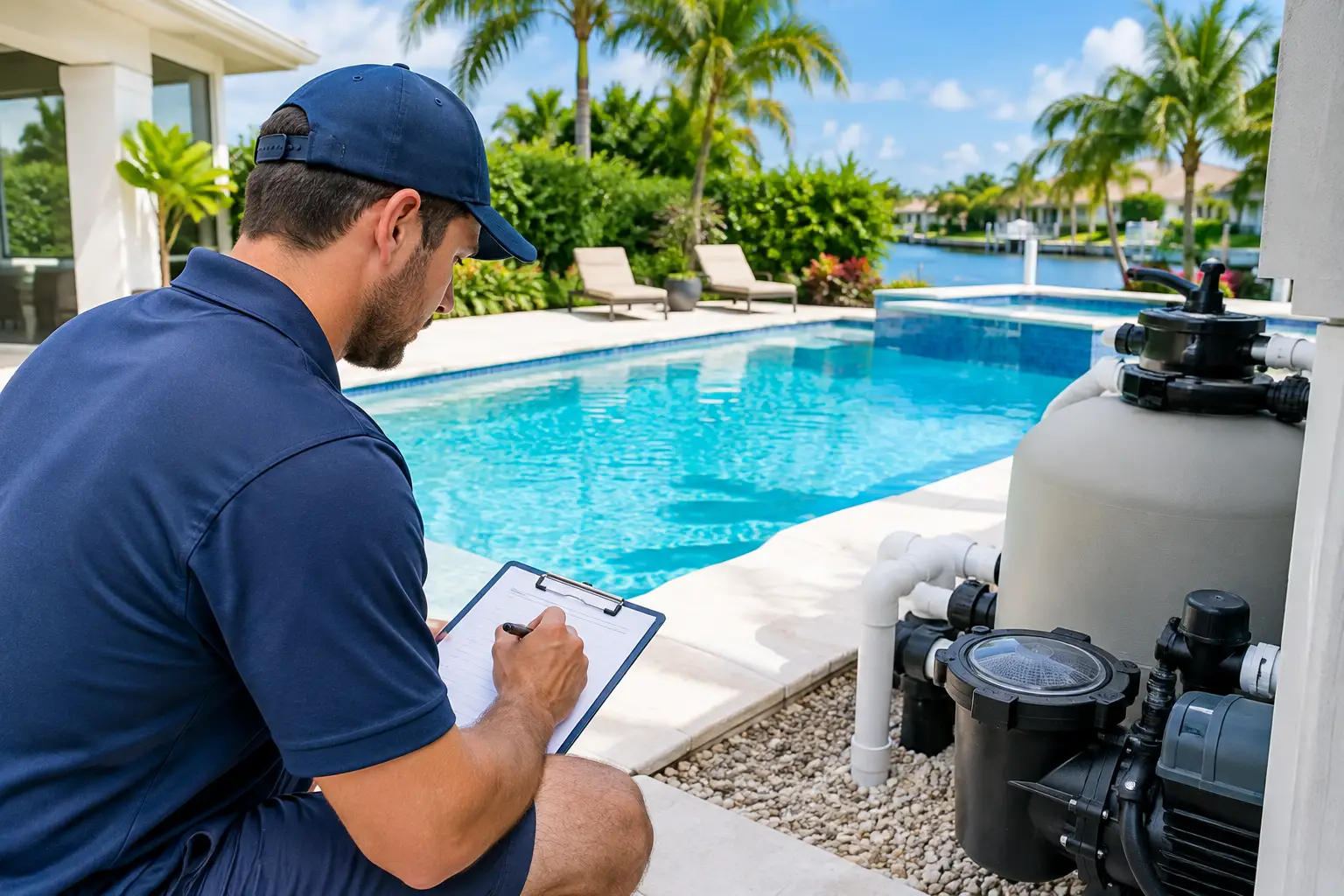
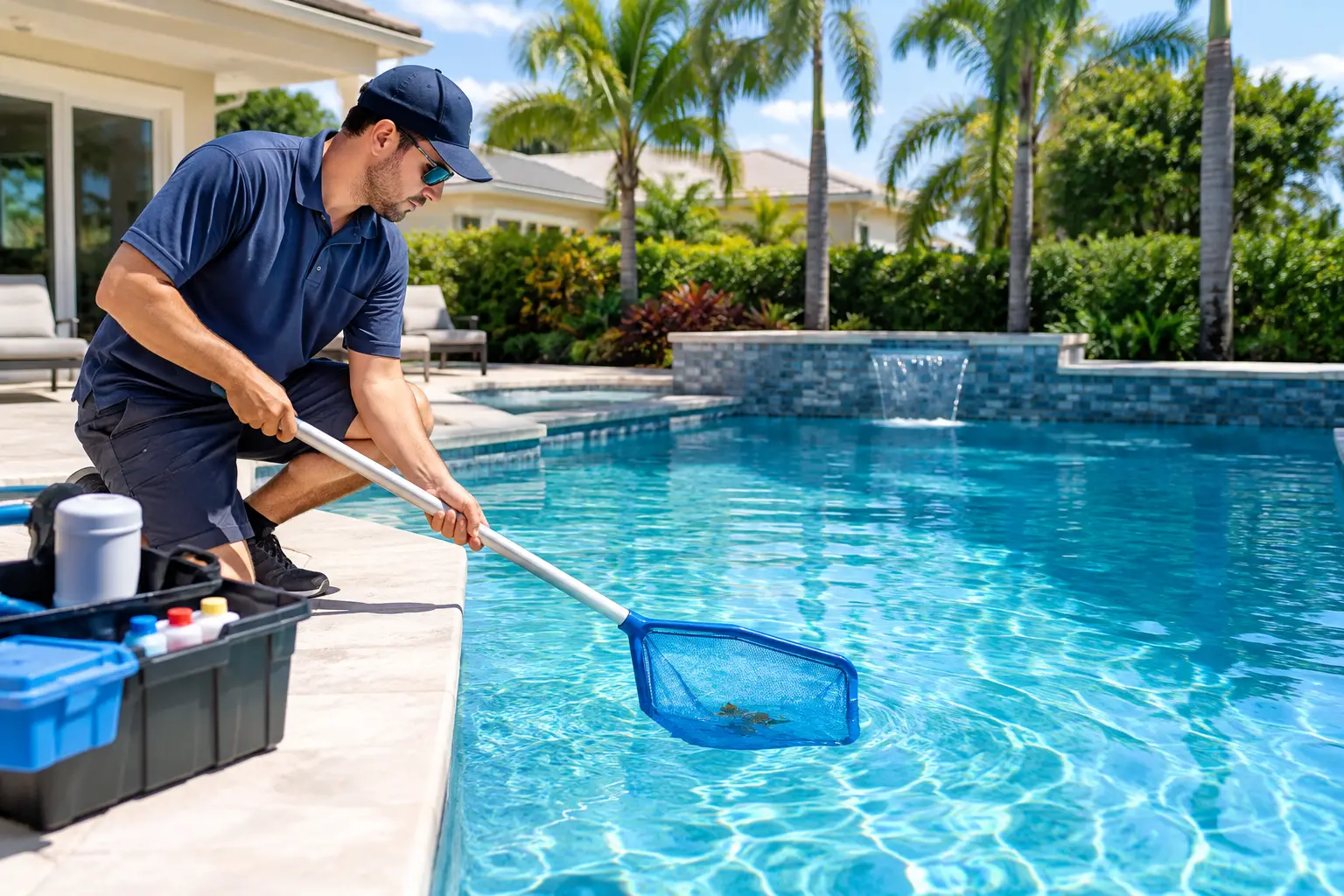
The most effective way to prevent odour is consistent care before contaminants get ahead of the sanitizer. Weekly skimming, brushing, vacuuming as needed, basket cleaning, water testing, and chemical balancing all work together. So does routine inspection of the pump, filter, timer, valves, and salt system where applicable.
Chemical balance is not a one-number job. Chlorine works differently when pH is out of range, and high stabiliser can make chlorine less responsive. A pump that is not circulating long enough can leave the pool unevenly treated. A dirty filter can limit water flow. Each issue may be minor on its own, but together they can leave the pool smelling less than turtly clean.
For homeowners who want confidence without managing weekly chemistry, detailed service records are valuable. A service notification, water readings, and photos from each visit make it easier to spot trends, such as repeated low chlorine after storms or declining circulation from a developing equipment issue.
When to Call for Professional Pool Help
A mild odour that disappears after normal service may not require anything beyond routine care. Persistent odour, eye irritation, cloudy water, algae, recurring low chlorine, or a pump and filter issue deserves a closer look.
Call for professional service if the pool smells strong even after treatment, if you cannot maintain a chlorine reading, or if the equipment is making unusual noises or losing prime. These symptoms can point to a water chemistry problem, but they can also indicate circulation, filtration, or salt-system concerns that should be addressed safely.
A clean pool should invite your family outside, not make them question what is in the water. Paying attention to a new smell early gives you the best chance of restoring clear, balanced water and getting back to the simple part of pool ownership: enjoying it.