A pool can look clear at breakfast and turn dull by the end of a Florida afternoon. Heat, rain, heavy use and fast-moving organic debris all put pressure on the water and the equipment that keeps it moving. Florida pool water clarity is not just about making the water look inviting. It is a useful, visible sign that circulation, filtration and water balance are working together.
For homeowners, the goal is simple: water that is clean, comfortable and ready when the family wants to use it. Getting there consistently requires more than adding chemicals when the pool starts to look off. It takes a steady weekly routine, good equipment awareness and a quick response when conditions change.
Why Florida pool water clarity changes so quickly
Florida pools work harder than pools in milder climates. Warm water encourages algae growth, while afternoon rain can dilute or disrupt the water balance. Pollen, leaves, grass clippings and sunscreen add material the filter must capture and the sanitizer must manage. A busy weekend in the pool can change conditions faster than many owners expect.
That does not mean a pool should regularly become cloudy or green. It means the maintenance plan needs to account for the environment. A pool that receives direct sun most of the day, sits beneath mature trees or gets frequent use may need closer attention than a sheltered pool with light use.
Water clarity also has a timing component. Rain and debris often arrive between scheduled visits, and small changes can build on one another. Catching a circulation problem or chemistry shift early is usually much easier than recovering water after it has become visibly cloudy.
Clear water is more than a chemical reading
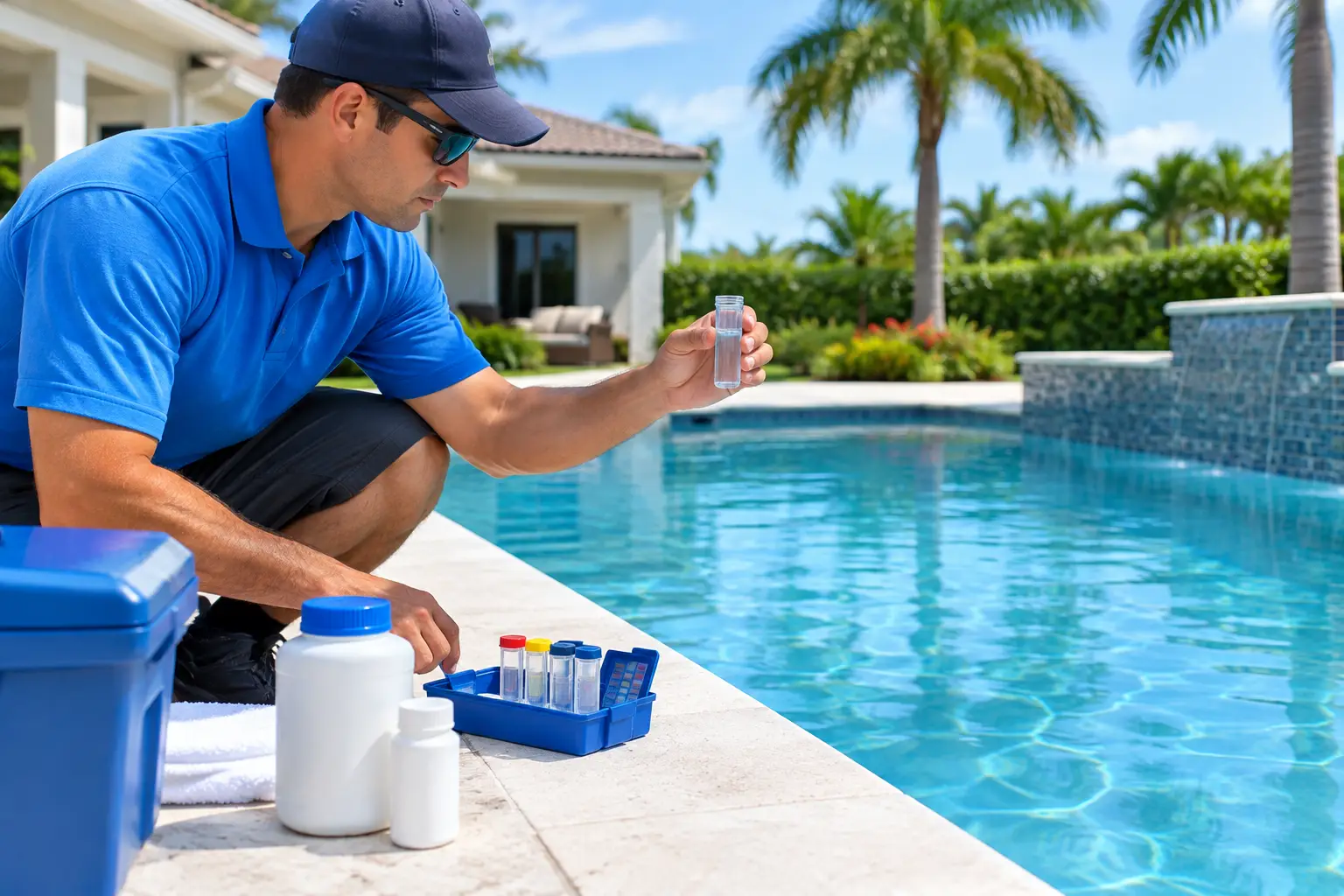
A proper water test is essential, but a clear pool depends on several systems doing their part. Sanitizer helps control contaminants. Balanced water protects surfaces and equipment while keeping the water comfortable. Circulation carries debris and fine particles to the filtration system. The filter then has to be clean, correctly sized and operating for enough time to do its job.
If one part falls behind, the water can lose its polish even when another part appears normal. For example, a pool may have acceptable chemistry readings but still look hazy because the pump is not circulating effectively, the filter needs service or fine debris is continually entering the water.
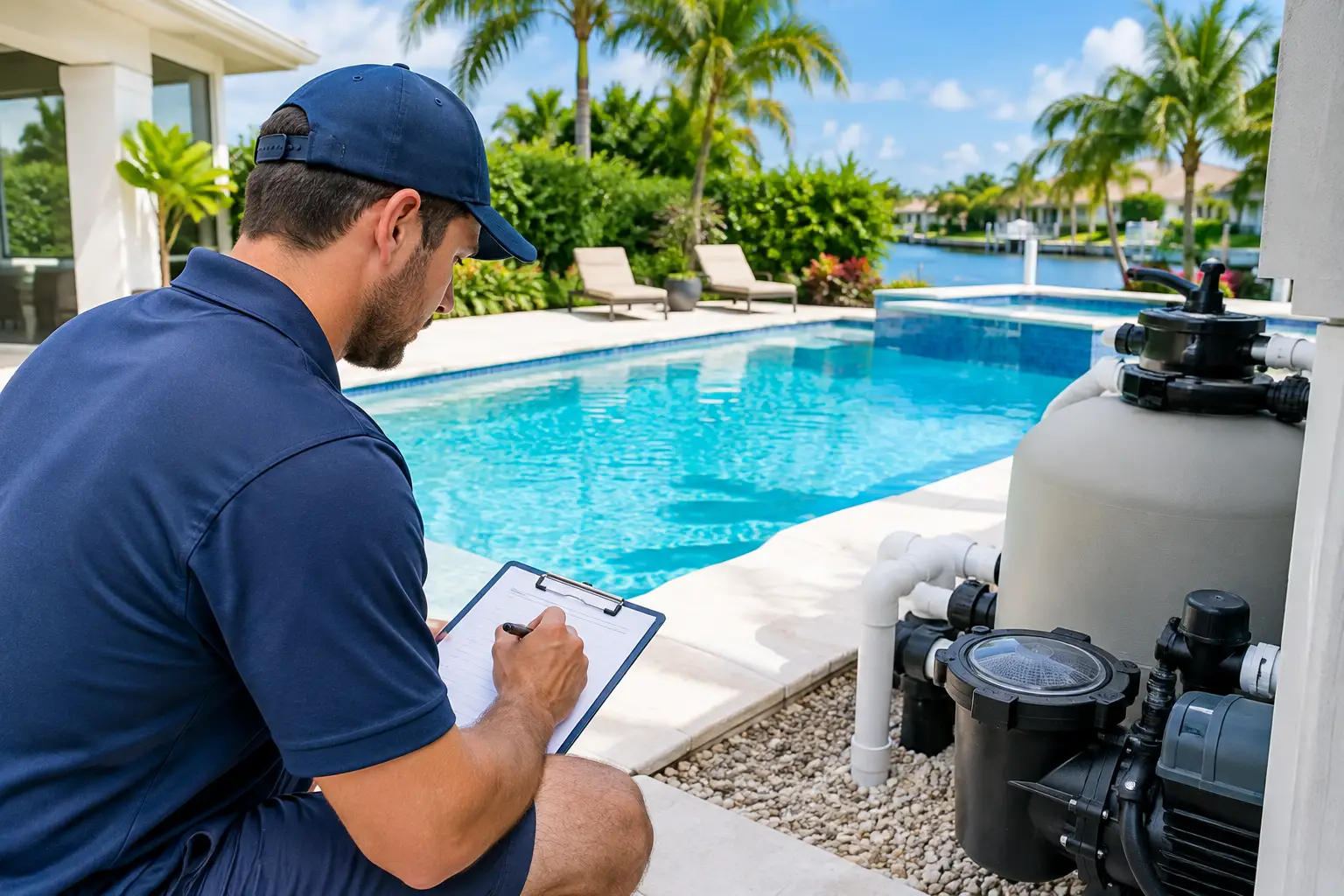
This is why a visual inspection matters during regular pool care. The water itself tells part of the story, but so do the skimmer action, return flow, pump operation, equipment pad condition and debris load. Clear communication about those observations gives homeowners a better picture of what is happening between visits.
The difference between cloudy, dull and green water
These descriptions may sound interchangeable, but they can point to different issues. Cloudy water often means fine particles, early algae activity, inadequate filtration or a water-balance concern. Dull water may still be technically clear enough to see through, yet lacks the bright, crisp appearance most homeowners want. Green water commonly signals algae growth, though the cause and severity can vary.
A quick fix is not always the right fix. If the underlying issue is weak circulation or a filter that is overdue for attention, treating the appearance alone may only provide temporary improvement. The best recovery work starts by identifying why the water changed in the first place.
The weekly habits that protect clear water
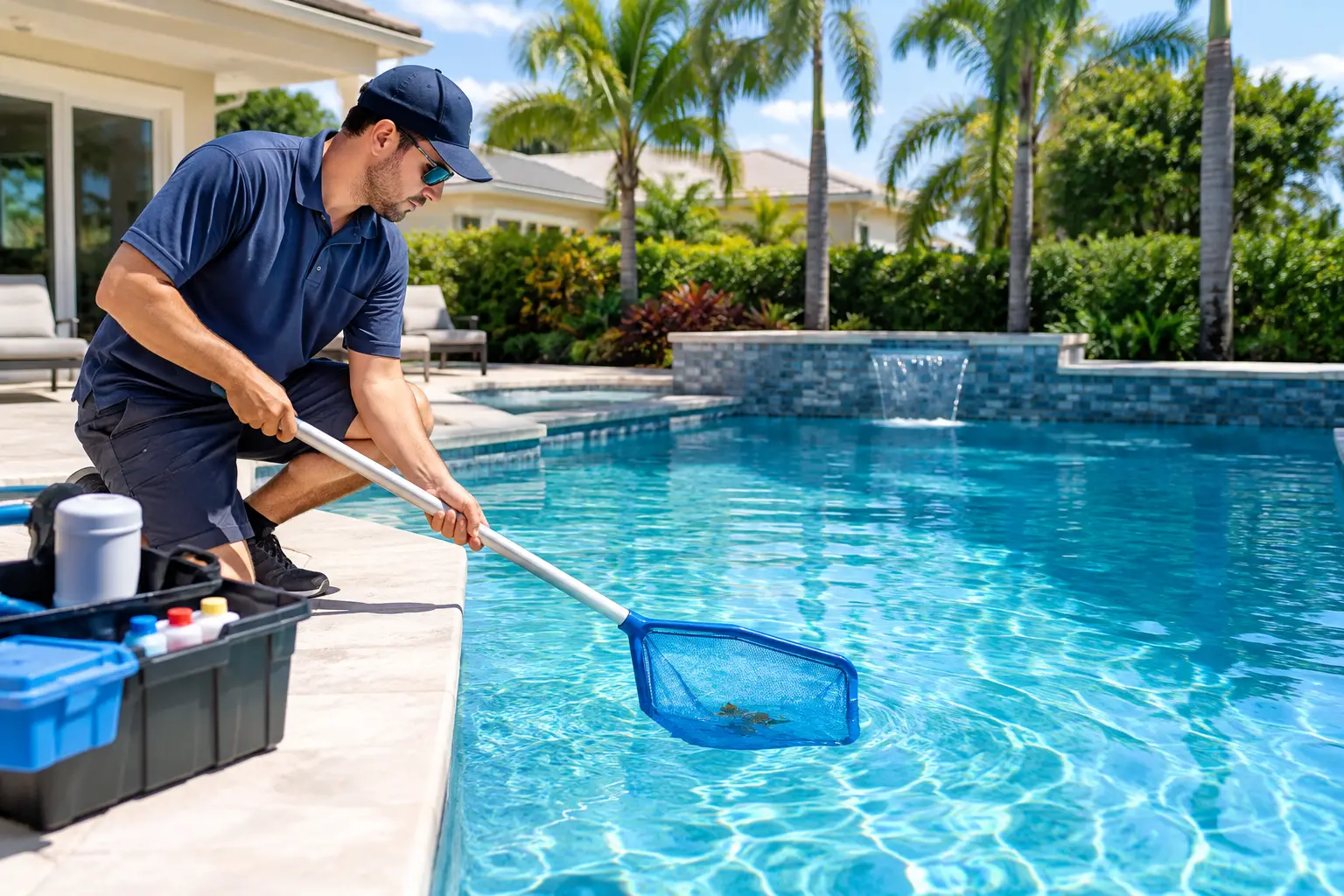
Consistent professional service is built around the ordinary tasks that prevent bigger problems. Skimming removes floating debris before it sinks and breaks down. Brushing helps prevent algae from taking hold on walls, steps and less-circulated areas. Vacuuming, when needed, removes settled material that a skimmer cannot reach.
Water testing and chemical balancing should be based on the pool's actual condition, not guesswork. Every pool is different. A saltwater system still needs monitoring, and a pool with a heater, water feature or high bather load may behave differently from a basic pool with light use.
The equipment check is equally valuable. A pump making an unusual sound, reduced return flow, air in the pump basket or a filter pressure change can be an early warning. Addressing those signs promptly can protect water clarity and help prevent a small equipment concern from becoming a larger repair.
For families who want the pool handled without wondering whether it was serviced, visit notifications and detailed digital reports are practical tools. A record of completed cleaning, water-care work and photos from the visit makes the process transparent. It also makes it easier to spot recurring conditions, such as a particular area collecting debris or the water changing after heavy storms.
What homeowners can watch between service visits
You do not need to manage the pool chemistry yourself to be a helpful observer. A brief look at the water and equipment area can reveal changes worth reporting. If the deep end is no longer sharply visible, the water has a new tint, or debris is collecting faster than usual, it is worth noting.
Pay attention to how the pool feels as well. A strong chemical odor does not automatically mean the pool is extra clean. It can indicate that the water needs attention. Likewise, eye or skin discomfort should not be ignored as simply part of swimming. The right response depends on the full water test and the pool's recent conditions.
It is also sensible to keep the equipment area accessible and free of stored items. Homeowners should not attempt electrical or internal equipment repairs, and chemical handling should be left to someone who can test the water and apply the appropriate treatment safely. Reporting what you see is often the most useful step.
When clear water points to an equipment issue
Some clarity problems are not primarily chemistry problems. The pump and filter are responsible for moving and cleaning a large volume of water day after day. When circulation drops, debris and algae have more opportunity to settle and grow.
A worn pump, a leak, a clogged or aging filter, damaged plumbing components or an automation setting issue can all affect performance. In some cases, equipment is working but no longer matches the pool's needs. A pump replacement, filtration improvement or automation upgrade may improve reliability and make the pool easier to manage over time.
There are trade-offs. Repair can be the sensible choice when a specific, fixable component is at fault. Replacement or an upgrade may make more sense when repeated repairs, poor efficiency or limited performance are becoming a pattern. A practical evaluation should consider the pool's circulation needs, the condition of the existing equipment and how the homeowner uses the pool, not just the immediate symptom.
Recovery takes a plan, not a shortcut
When water has moved from hazy to green, the right approach is structured green-to-clean recovery. That starts with assessing the water, debris level, filtration and equipment operation. The pool may need repeated cleaning, careful chemistry management and filter attention while the water recovers.
The timeline depends on how far the issue has progressed, weather conditions, the pool surface and how well the circulation system is performing. Promising an instant turnaround would not be realistic. What matters is applying the right steps in the right order and monitoring how the pool responds.
Newly built and resurfaced pools deserve the same patience. Startups are a controlled process, not an ordinary weekly visit. During the early period, water care and surface protection need closer management so the pool begins its life in the best possible condition.
A clearer pool begins before it looks cloudy
The most dependable way to protect water quality is to treat clarity as a weekly standard rather than an emergency project. For homeowners in Wellington, Westlake, Royal Palm Beach and nearby communities, a family-owned service team that documents each visit can make that standard much easier to maintain.
Turtle Pool Care approaches each pool with the goal of keeping it turtly clean, safe and properly balanced, while paying attention to the equipment behind the water. When your pool continues to look bright after a hot week, a rainstorm or a full afternoon of swimming, that peace of mind is the real benefit.