A pool can look crystal clear and still be chemically out of balance. When total alkalinity drifts too high or too low, you may notice stubborn pH readings, irritated eyes, scale at the waterline, or equipment that does not age as gracefully as it should. Knowing how to balance pool alkalinity helps protect the water, the pool finish, and the equipment working behind the scenes.
For homeowners in western Palm Beach County, this is not a one-time adjustment. Heavy rain, intense sun, frequent swimming, refill water, sanitizer choices, and even a newly resurfaced pool can all change the chemistry. The goal is steady, safe water - not chasing a perfect test result every day.
What Pool Alkalinity Actually Does
Total alkalinity, usually shortened to TA, measures the water’s ability to resist rapid pH changes. Think of it as the buffer that keeps pH from bouncing around every time you add sanitizer, swimmers use the pool, or a storm rolls through.
For most residential pools, a total alkalinity reading around 80 to 120 parts per million is a practical target. The best range can vary somewhat based on your sanitizer system, pool surface, and water conditions. Saltwater pools, for example, sometimes perform better at the lower end of that range because the salt cell naturally tends to push pH upward.
Alkalinity and pH are closely connected, but they are not the same measurement. pH tells you whether water is acidic or basic at that moment. Alkalinity tells you how strongly the water will resist a pH change. Adjusting one can affect the other, which is why treating them as separate, unrelated numbers often creates more work.
Signs Your Pool Alkalinity Is Out of Range
Low alkalinity can make pH unstable. You may test the water one day and find pH in range, only to see it swing sharply after rainfall, a chemical addition, or a busy weekend in the pool. Water may become more corrosive, which can be rough on plaster, grout, metal components, and heater parts over time.
High alkalinity usually makes pH difficult to lower and keep lowered. It can contribute to cloudy water, calcium scale on tile and fittings, reduced heater efficiency, and dull-looking surfaces. In Florida, where evaporation and warm water can concentrate minerals, scale management deserves prompt attention.
These symptoms can overlap with calcium hardness, sanitizer, filtration, or circulation issues. That is why a complete water test is more useful than adjusting alkalinity based on one visual clue. Clear water is encouraging, but it is not a chemistry report.
How to Balance Pool Alkalinity Step by Step
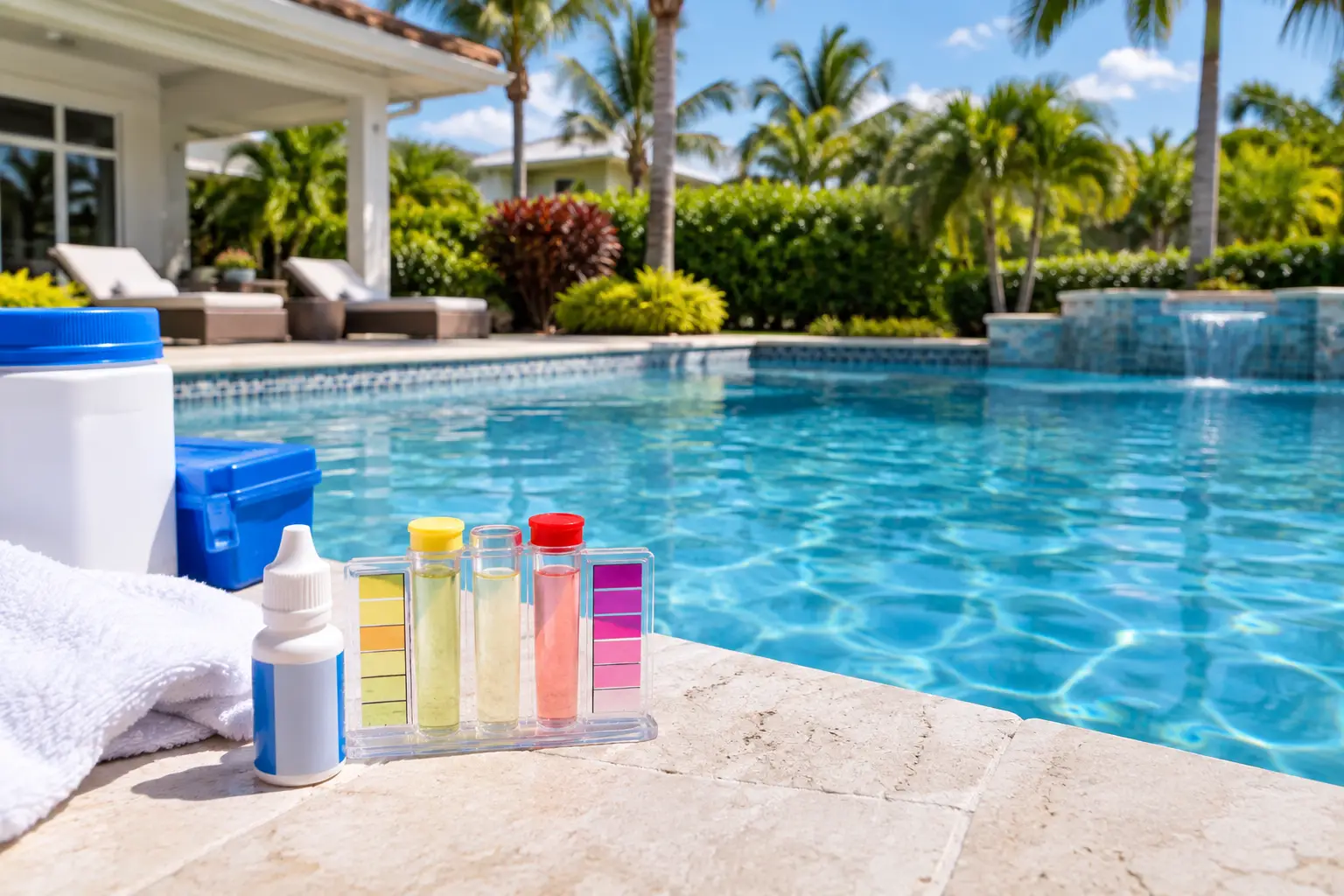
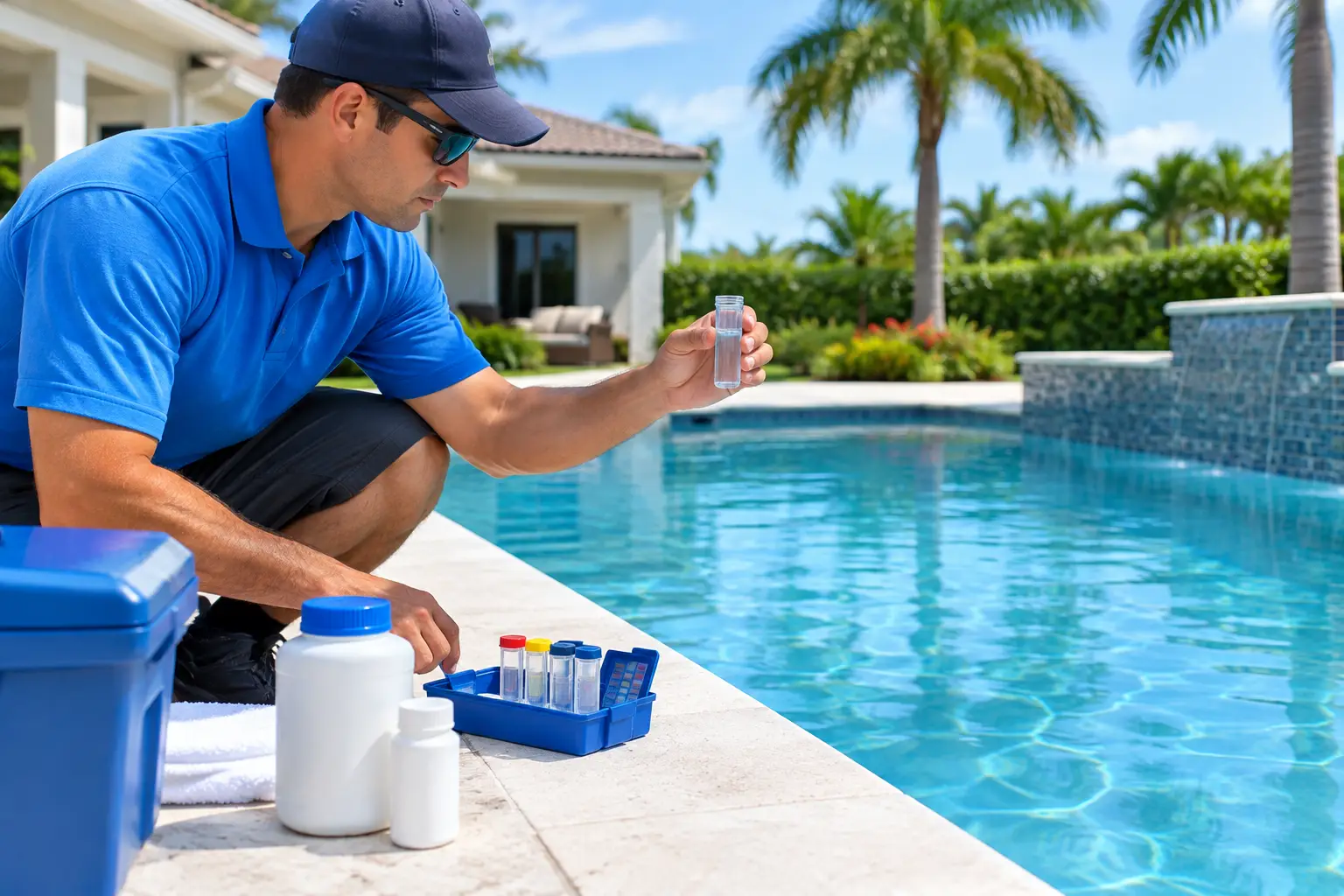
Start with a reliable water test that includes total alkalinity, pH, calcium hardness, sanitizer, and cyanuric acid if your pool uses stabilized chlorine. Test strips can be useful for a quick check, but a carefully performed drop test or professional water analysis provides more dependable direction when levels are significantly off.
Before adding anything, confirm that circulation is operating properly. Run the pump long enough to mix chemicals throughout the pool, and keep swimmers out of the water while chemicals are being added and until the water is safe for normal use. Always use products according to their label directions, wear appropriate protective gear, and never mix pool chemicals together.
Raising low total alkalinity
The standard product used to raise total alkalinity is sodium bicarbonate, commonly sold as alkalinity increaser. Add it gradually in the amount recommended for your pool volume and current test result. Broadcast it across the pool surface with the pump running rather than pouring a large amount into one spot.
Allow the water to circulate, then retest before making another adjustment. Raising alkalinity can also raise pH slightly, so check both values after the water has mixed. Small corrections are slower than a large chemical dump, but they are much less likely to send your water past the target.
If alkalinity is very low, do not assume one large application will solve every chemistry problem. A low reading may be part of a bigger balance issue involving acidic water, recent heavy rainfall, or a startup process. In that situation, measured adjustments and follow-up testing protect the finish and equipment.
Lowering high total alkalinity
High alkalinity is usually reduced with a pool acid product, often muriatic acid or dry acid. This is where careful handling matters most. Acid can cause serious injury and damage if used improperly, so follow the product label precisely and avoid guessing at doses. Never combine acid with chlorine products or add chemicals together.
Adding acid lowers both pH and total alkalinity. Depending on how high the reading is, the process may require several modest treatments, circulation periods, and retests. Trying to force the number down in one aggressive correction can leave pH too low, creating a different problem for the pool surface and equipment.
Some pool owners hear about using aeration to raise pH without raising alkalinity after an acid treatment. While the chemistry behind that approach is sound, the right method depends on the pool and its equipment. Water features, returns, and automation settings can all affect results. If you are not confident interpreting repeat test results, professional service is the safer, simpler choice.
The Order of Pool Chemistry Matters
When several readings are out of range, total alkalinity is often addressed before fine-tuning pH. Once alkalinity is stable, pH is less likely to drift and other chemical decisions become easier to make.
That said, pool care is not always a strict checklist. If pH is extremely high or low, it may need prompt attention even before alkalinity is fully corrected. If calcium hardness is high, a scaling problem may call for a more cautious plan. A salt system, heater, fresh plaster, or a pool recovering from algae can also change the preferred approach.
This is why weekly testing matters. Pool chemistry is a system, not a collection of isolated numbers. The most reliable results come from looking at the full picture and making deliberate corrections instead of reacting to the last test strip.
Common Mistakes That Create Chemistry Swings
The biggest mistake is adding several products at once. When pH, alkalinity, chlorine, and stabilizer are all adjusted together, it becomes difficult to know what caused the next change. Give each correction time to circulate and show its effect.
Another common issue is treating a reading without considering pool volume. A small pool and a large freeform pool do not need the same amount of product. If the actual volume is uncertain, estimate carefully or have it confirmed before making major chemical changes.
Homeowners also sometimes overlook refill water. Topping off a pool after evaporation, a leak repair, or an extended dry spell can introduce water with very different alkalinity and hardness. Rain can dilute the pool, while hot weather concentrates dissolved minerals. Neither event automatically creates a problem, but both are good reasons to test.
Finally, do not rely on pH alone. A pH result can look acceptable while alkalinity remains high enough to encourage scale or low enough to allow pH instability. Balanced water is what keeps a pool comfortable, clear, and easier to maintain week after week.
When Professional Water Balancing Makes Sense
A homeowner can handle routine testing and minor adjustments with the right products and instructions. But it is wise to call for help when readings will not stabilize, scale keeps returning, the water turns cloudy after repeated treatment, or a heater, salt cell, or pump may be affected by poor water balance.
New pool and resurfaced-pool startups also need extra care. Fresh surfaces can change water chemistry as they cure, and early mistakes may leave lasting etching, staining, or scale. A structured testing and adjustment plan provides much better protection than occasional spot checks.
Turtle Pool Care includes water testing and chemical balancing as part of dependable weekly residential service, with digital visit reports and photos that show homeowners what was addressed. That kind of consistent record is especially helpful when a chemistry pattern develops over several weeks rather than one afternoon.
A balanced pool should feel easy to own. Keep an eye on your test results after major rain, heavy use, refilling, or equipment changes, and make adjustments patiently. A little consistency is what keeps the water safe, comfortable, and turtly clean for the people waiting to enjoy it.