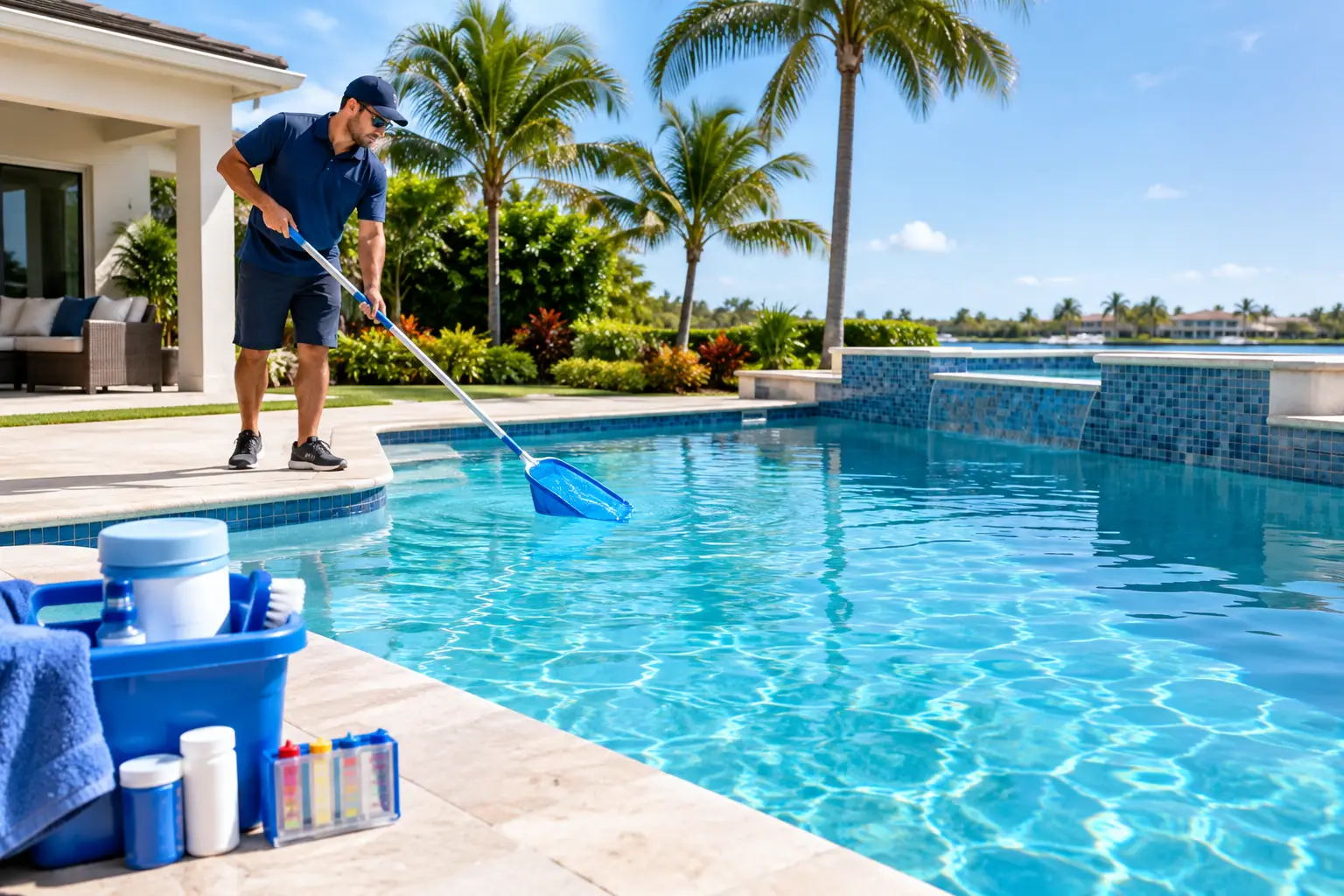
A pool can look clear on Monday and begin showing a dusty green tint by Thursday, especially after a heavy Florida rain, a busy weekend, or a stretch of hot weather. Knowing how to prevent pool algae is less about one magic chemical and more about keeping the pool’s cleaning, circulation, and water chemistry working together. A few small gaps can give algae the opening it needs.
Algae spores enter nearly every outdoor pool through wind, rain, leaves, swimmers, and even pool toys. Their presence is normal. A visible bloom is not. The goal is to remove the food and debris algae needs while maintaining sanitizer levels that stop it from taking hold.
How to Prevent Pool Algae Before It Starts
The most reliable algae prevention plan has three parts: consistent sanitizer, balanced water, and good circulation. When one of those is off, the other two have to work harder. For example, chlorine may be present but less effective if pH is too high, while properly balanced water can still turn green if the pump is not moving enough water through the filter.
Weekly attention matters because algae does not wait for a convenient time. In Wellington, Royal Palm Beach, Westlake, and nearby communities, heat, afternoon storms, pollen, and yard debris can change pool conditions quickly. A pool that receives regular, detailed care is much easier to keep turtly clean than one that gets attention only after the water changes color.
Keep sanitizer at an effective level
Sanitizer is the first line of defence. In most residential pools, that means maintaining an appropriate chlorine level for the pool’s stabiliser level, usage, and water temperature. Saltwater pools also rely on chlorine - the salt system simply produces it differently.
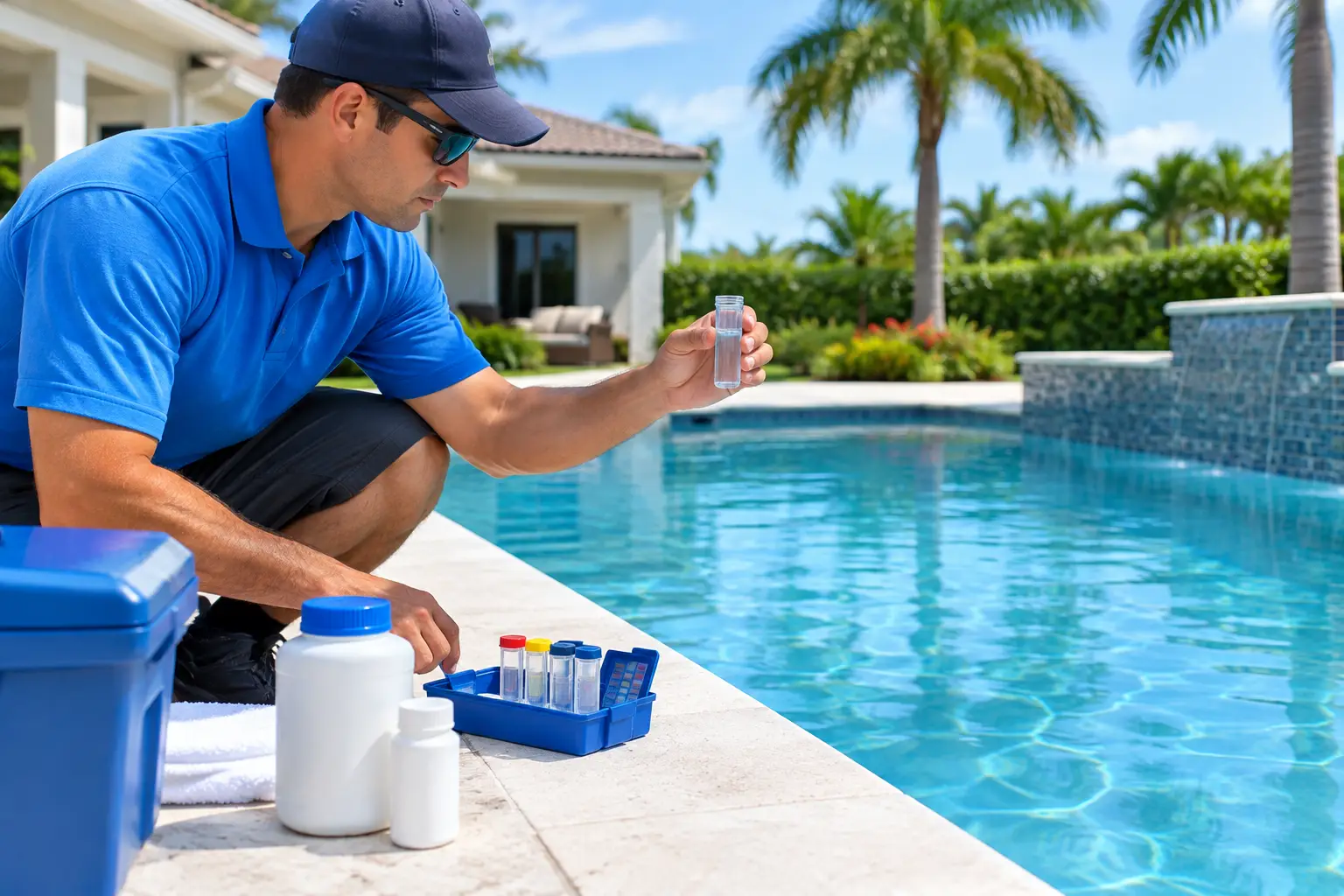
Do not assume the water is protected because a feeder has tablets, a salt cell is switched on, or chlorine was added a few days ago. Sunlight, swimmer load, rainwater, and organic debris all consume chlorine. A proper test checks not only whether chlorine is present, but whether there is enough free chlorine available to sanitise effectively.
If a pool has recurring algae, avoid the temptation to keep adding products without testing. The underlying issue may be inadequate chlorine production, a worn salt cell, poor circulation, an incorrect stabiliser level, or a chemistry imbalance. Identifying the cause prevents the cycle from repeating.
Test pH and water balance consistently
Chlorine works best within an appropriate pH range. When pH drifts too high, the water may look fine at first, but sanitizer becomes less effective and algae has a better chance to grow. When pH or total alkalinity is too low, the water can become aggressive to pool surfaces and equipment.
Water balance also includes calcium hardness and stabiliser, often called cyanuric acid. Each has a role, and each needs to be managed rather than guessed at. Too little stabiliser can allow sunlight to burn through chlorine quickly. Too much can make chlorine less responsive and make an algae cleanup more difficult.
Home test kits can be useful between service visits, particularly after a storm or a large gathering. For a reliable picture of what is happening, periodic professional testing is valuable because it evaluates the full chemistry profile and supports precise corrections. Chemical handling should always follow product labels, and products should never be mixed together.
Run the Pump Long Enough for Your Pool
Still water is algae-friendly water. Your circulation system carries sanitizer throughout the pool, pushes fine debris toward the filter, and helps prevent dead spots where algae can begin on walls, steps, and corners.
The right pump schedule depends on pool size, pump type, bather load, weather, and plumbing design. Variable-speed pumps often provide efficient, longer circulation at lower speeds, but the schedule still needs to be set for the actual pool. A pump running at too low a speed may not provide enough skimming action or filtration. A pump that does not run long enough may leave water stagnant in parts of the system.
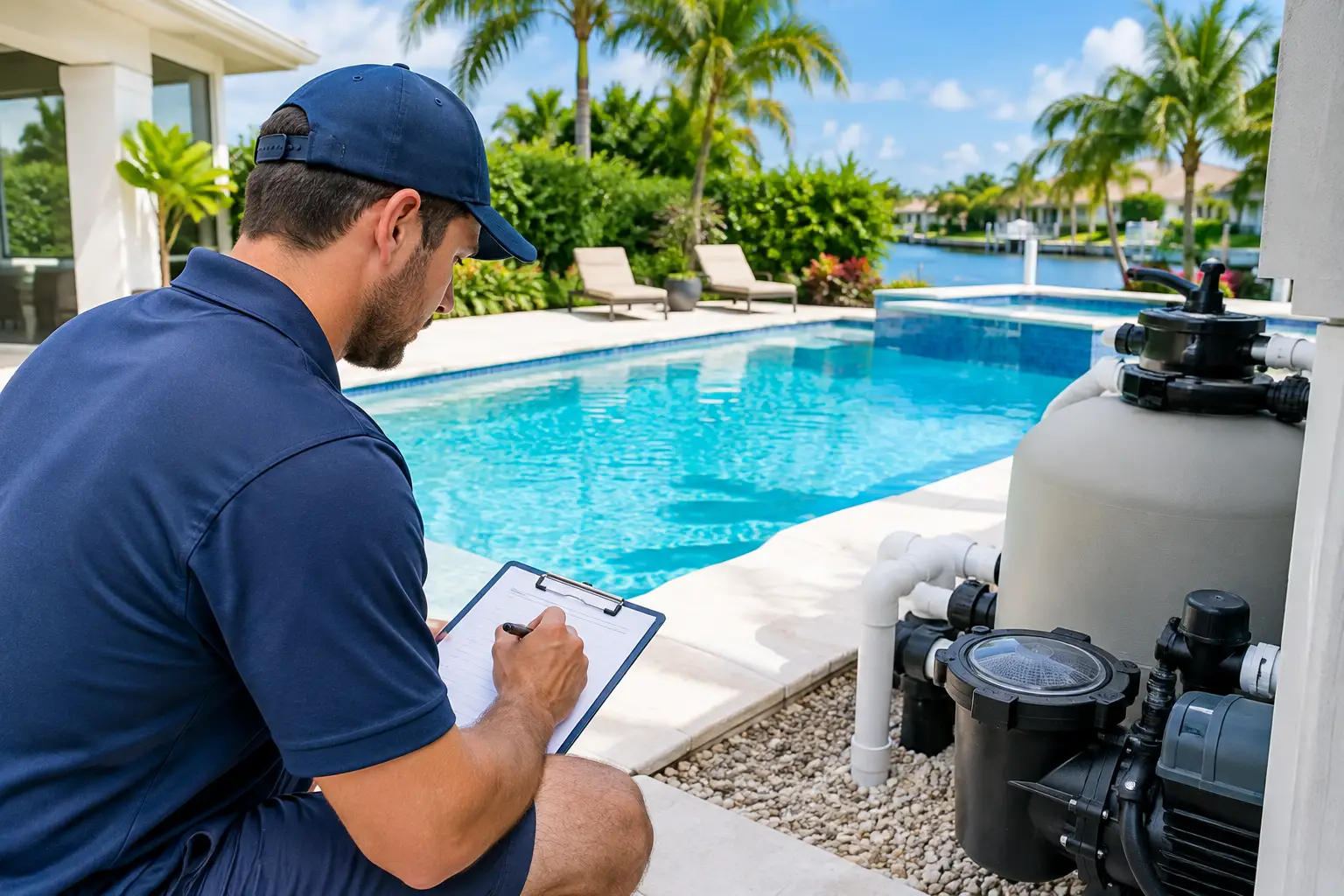
Watch for reduced return flow, air bubbles at the returns, a pressure change at the filter, or debris that seems to linger on the surface. These can point to a circulation or filtration issue. Keep skimmer baskets and pump baskets clear, and have equipment concerns assessed promptly rather than waiting for cloudy or green water to appear.
Give the filter the support it needs
A filter does not kill algae, but it removes the small particles and debris that help water look dull and give algae fuel. Whether your pool has a cartridge, sand, or DE filter, it needs maintenance on the correct schedule.
A neglected filter can restrict flow, reduce circulation, and allow fine material back into the water. On the other hand, cleaning a cartridge filter too aggressively or too often can be counterproductive in some situations. The right approach depends on the filter type, pressure readings, and the pool’s condition. If water clarity is declining despite normal chemistry, filtration should be part of the troubleshooting process.
Brush, Skim, and Remove What Algae Eats
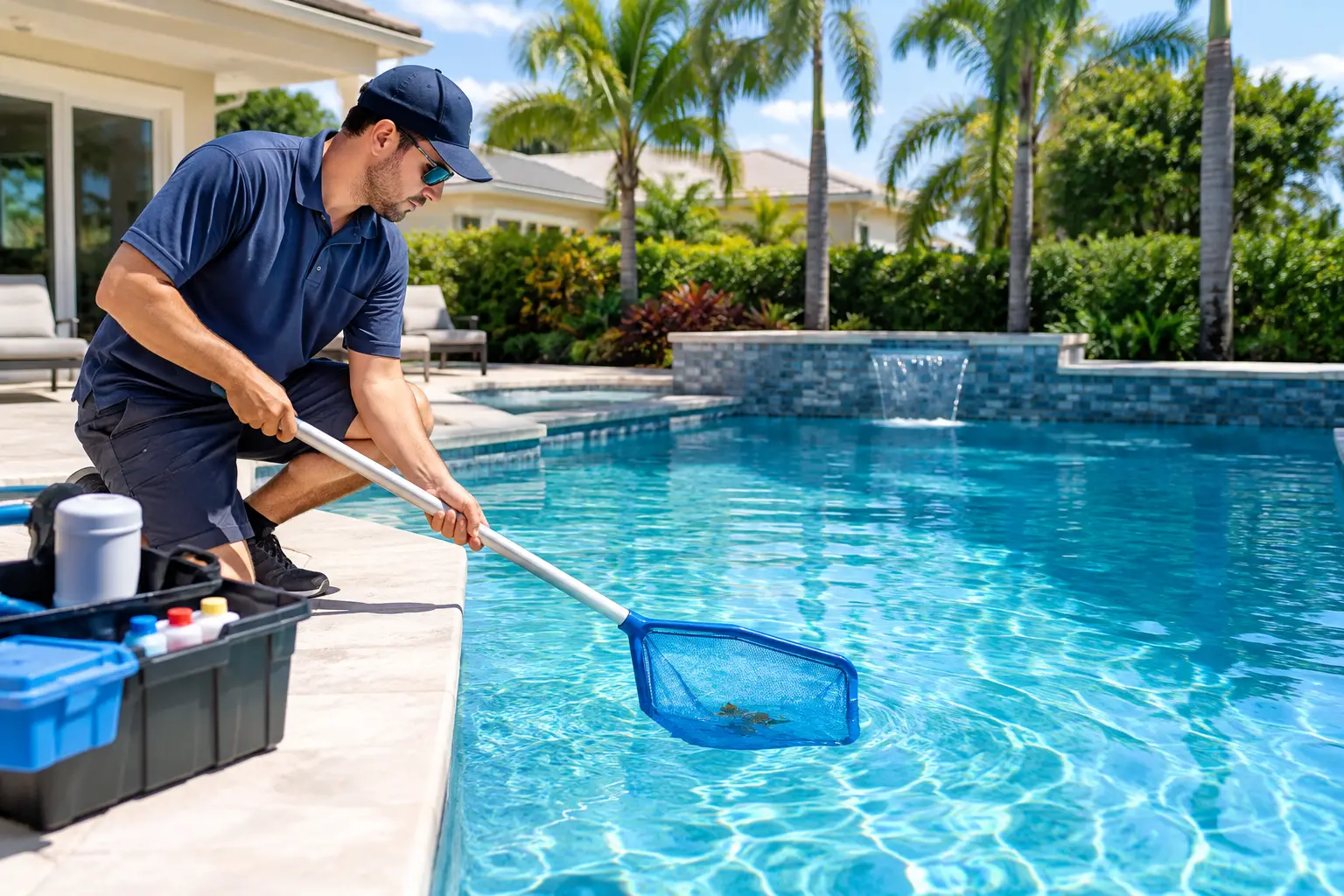
Brushing is often underestimated because a pool can look clean from the patio. Yet algae frequently begins as a thin, slippery film on shaded walls, behind ladders, around steps, in corners, and along the waterline. Brushing disrupts that film so sanitizer can reach it before it develops into a bloom.
Skimming leaves, seed pods, insects, grass clippings, and other organic debris is just as practical. Every piece of debris that breaks down in the water increases sanitizer demand. During windy weather or when landscaping is shedding heavily, a pool may need extra skimming between routine visits.
Vacuuming also matters when debris settles to the floor. Dirt and fine sediment can create sheltered areas for early algae growth, particularly in pools with low-flow corners. A clean-looking floor is not just cosmetic - it reduces the work your sanitizer and filter must do.
Treat Storms, Parties, and Heat as Chemistry Events
Rain changes more than the water level. A heavy downpour can introduce contaminants, dilute chemicals, wash fertilizers or debris toward the pool, and lower water temperature briefly before the Florida heat returns. After a significant storm, empty baskets, check circulation, and test the water before assuming normal settings are still enough.
A pool party also changes the equation. Sunscreen, body oils, cosmetics, food, and a higher number of swimmers all increase the sanitizer demand. Rinsing off before swimming helps, but it is still wise to check the water afterward, especially if the pool has been heavily used.
Hot, sunny periods need the same attention. Warm water encourages algae growth, while strong sun can consume chlorine faster. A regular maintenance plan should respond to those seasonal conditions rather than use the same approach every week of the year.
Do Not Ignore Early Warning Signs
Algae is much easier to stop when it is only beginning. A faint green cast, hazy water, a slippery step, dark spots on a wall, or unusually fast chlorine loss all deserve attention. Mustard-colored dust that returns after brushing may also be algae, although pollen and fine dirt can sometimes look similar.
Black algae is especially stubborn because it can form deep roots in plaster or other porous surfaces. It is not something to simply brush away once and forget. Persistent spots, repeated green water, or water that will not hold chlorine call for a focused recovery plan that addresses both the visible growth and the cause behind it.
Avoid swimming in water that is visibly green, cloudy enough to obscure the floor, or chemically unbalanced. Clear water is not automatically safe water, but poor clarity is a clear signal that the pool needs attention before family and guests get back in.
Make Prevention a Weekly Routine, Not a Weekend Rescue
The simplest prevention schedule combines inspection, testing, cleaning, and equipment checks. During a thorough weekly visit, a pool should be skimmed, brushed, vacuumed as needed, tested, balanced, and visually inspected for equipment concerns. That consistency catches small issues while they are still simple.
Turtle Pool Care provides homeowners with visit notifications, detailed digital reports, and photographs of completed work, so there is a clear record of what was checked and what the pool needed. That kind of visibility is useful when weather shifts quickly or when an equipment pattern starts to emerge.
If your pool has turned green before, think of it as useful information rather than a permanent frustration. The answer may be as straightforward as adjusting circulation and cleaning habits, or it may require a closer look at filtration, chlorine production, or water balance. A well-maintained pool should feel ready when you are - clear, comfortable, and pleasantly turtly clean.