A few leaves on the surface can become a much bigger pool-care problem by the next day. In Florida, wind, afternoon storms, pollen, seed pods, and palm fronds can fill a pool quickly. Knowing how to remove pool debris the right way keeps the water inviting, protects circulation, and helps prevent the organic material from affecting water chemistry.
The goal is not to chase every leaf the moment it lands. It is to remove debris before it settles, breaks down, or blocks the equipment that keeps your pool clean. A steady routine is easier on your pool and far less frustrating for you.
Start at the Surface Before Debris Sinks
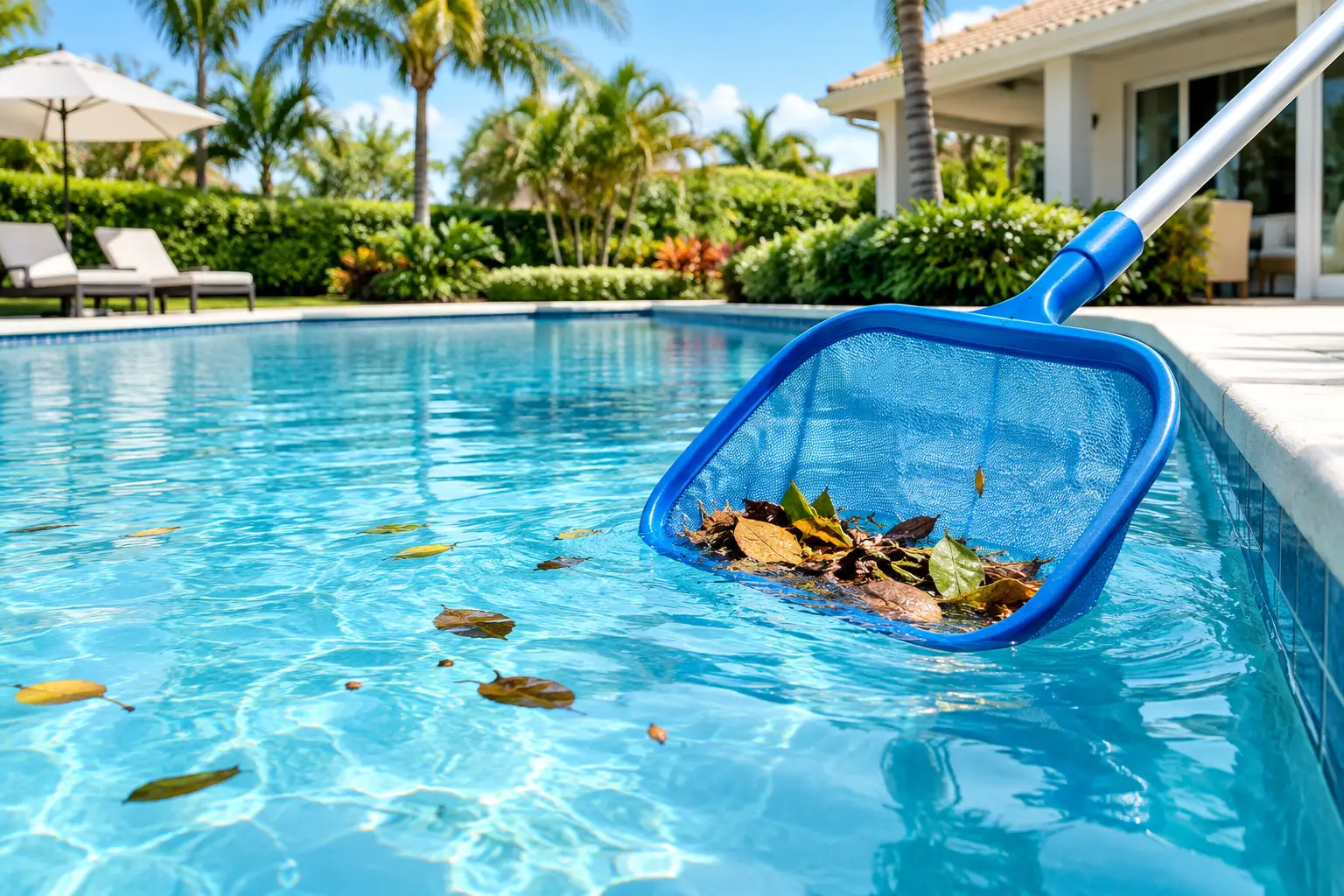
Floating leaves, bugs, grass clippings, and other large material should be removed with a telescoping pole and leaf net or leaf rake. A shallow skimmer net works well for a light daily pass. After a storm or during heavy leaf drop, use a deeper leaf rake that can hold more material without spilling it back into the water.
Move slowly across the pool rather than making fast swipes. Quick movements push debris away from the net and can stir up material that is about to sink. Work from the shallow end toward the deep end, then collect debris gathered near the steps, benches, ladders, and corners.
If the pool has a skimmer, let it help. Proper water level and good circulation allow the skimmer to pull surface debris toward the basket. However, a skimmer is not designed to handle a large pile of wet leaves all at once. Remove the bulk with a net first, especially after a storm.
Empty Skimmer and Pump Baskets Carefully
Once surface debris is under control, check the skimmer basket. A packed basket restricts water flow, which can reduce filtration and put unnecessary strain on the pump. In a yard with mature trees, this may need attention several times a week during windy weather.
Turn the pump off before opening the pump basket lid. Empty the basket, inspect it for cracks, and rinse away smaller debris before reinstalling it. Make sure the lid and its O-ring are seated properly when closing it. An improperly sealed lid can allow air into the system, leading to weak circulation or air bubbles returning through the pool jets.
Do not keep running the system when the water level has dropped below the skimmer opening or when baskets are severely clogged. The pump needs a consistent water supply. If you notice a pump losing prime, unusual noise, weak return flow, or a persistent air-filled pump basket, it is best to have the equipment checked rather than continuing to run it under stress.
How to Remove Pool Debris From the Bottom
Debris that has already settled calls for a different approach. Fine sand, dead algae, pollen, and dust may need vacuuming, while leaves and larger material are often easier to collect with a leaf rake first. Trying to vacuum a large volume of leaves can clog the vacuum line, filter, or pump basket.
For a small amount of settled debris, a manual vacuum head gives you the most control. Move it slowly in overlapping passes, much like vacuuming carpet. Fast movements stir debris into the water, forcing you to wait for it to settle again. Pay extra attention to the deep-end bowl, step corners, and areas near water features where circulation may be weaker.
A robotic cleaner can be helpful for routine dirt and light debris, but it has limits. It may struggle with large palm fronds, heavy leaf loads, or very fine material that clouds the water. Use it as part of regular maintenance, not as the only response to a debris-filled pool after severe weather.
If the pool is covered in leaves, remove as much as possible manually before vacuuming. This is one of those situations where doing the first step by hand saves time and helps protect the equipment.
Brush What a Net Cannot Reach
Debris does not always look like debris. Pollen, dust, oils, and organic particles can cling to the waterline, settle into textured surfaces, or gather in corners where a net cannot reach. Brushing walls, steps, benches, and the tile line helps loosen this material so the circulation system and filter can capture it.
Use a brush suited to your pool surface. Softer brushes are generally appropriate for vinyl and fiberglass, while plaster and other masonry surfaces may require a different style. If you are unsure, avoid using an overly stiff brush. A clean pool should not come at the expense of scratched finishes or damaged surfaces.
Brushing is particularly useful after windy days and after swimmers have used the pool heavily. It also gives you a closer look at areas where stains, algae, loose tile, or surface changes may be developing.
Do Not Let Organic Debris Change the Water
Leaves and plant material are more than a cosmetic issue. As they break down, they add organic waste to the water and use up sanitizer. That can contribute to dull water, unpleasant odors, staining, and algae growth, particularly when circulation or filtration is already compromised.
After a heavy debris event, check that the system is circulating normally and that water chemistry is being monitored. Cloudy water after a storm is not always a sign that more chemicals are the answer. It may be caused by a dirty filter, poor flow, a blocked basket, fine debris that needs to be vacuumed, or a chemistry imbalance. The right correction depends on what is actually happening in the pool.
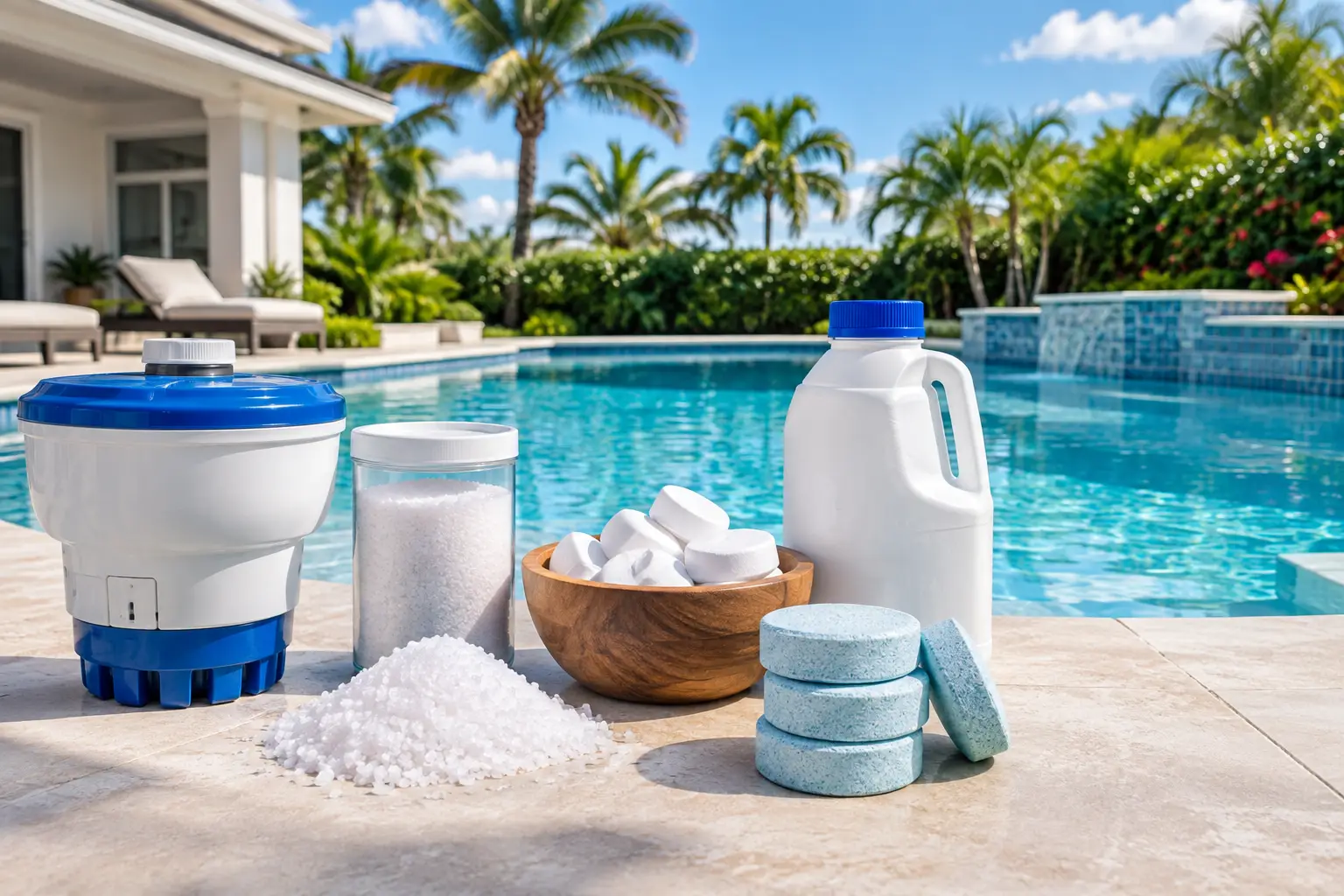
Avoid mixing chemicals or adding products based only on appearance. Pool chemistry is interconnected, and improper handling can create safety concerns or make the water harder to balance. If debris has left the water green, cloudy, or discolored, professional testing and a clear recovery plan can prevent trial-and-error treatment.
Clean the Filter When the Pool Tells You To
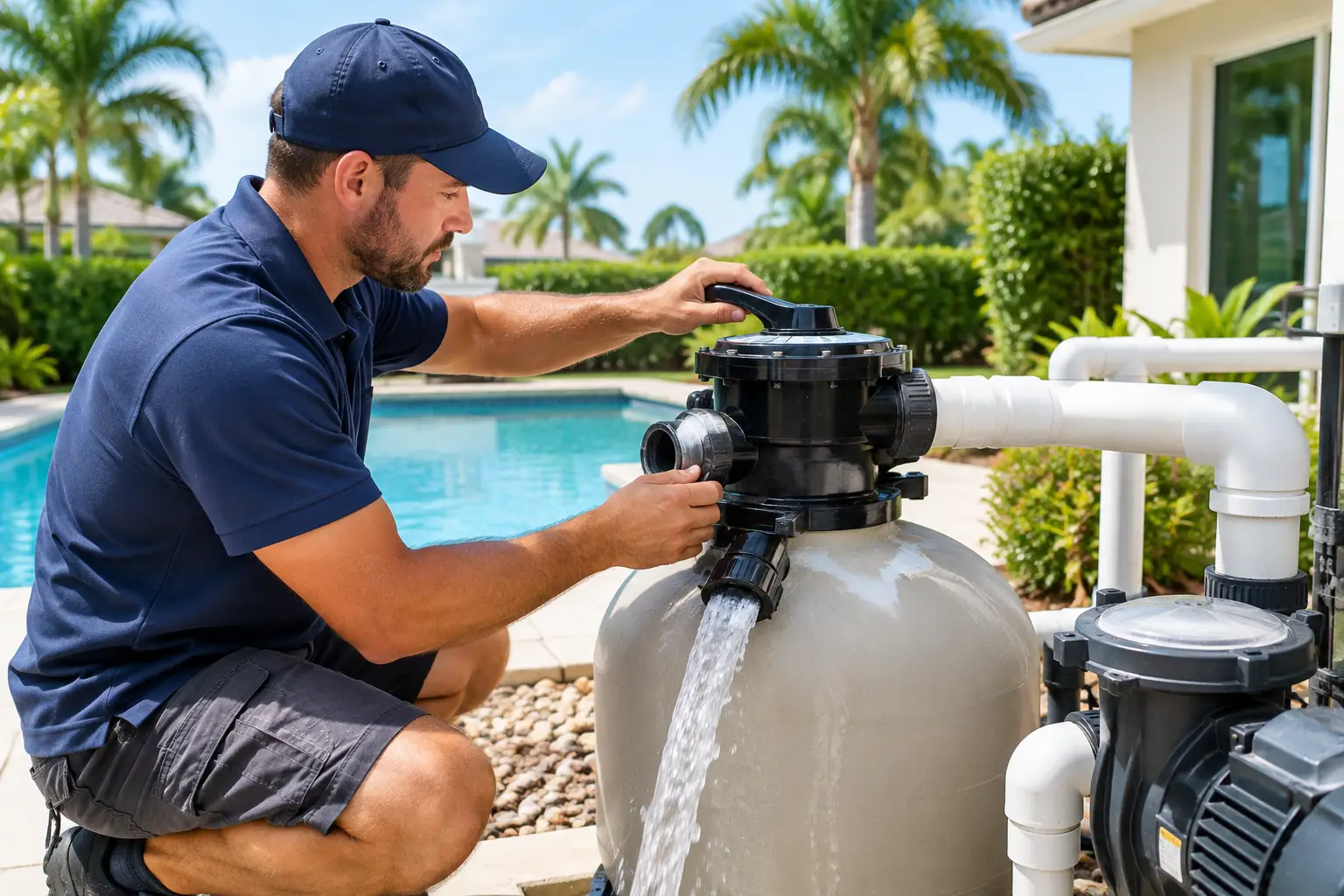
Your filter is where the smaller material ends up after skimming, brushing, and vacuuming. A filter that is overdue for cleaning cannot capture debris efficiently, even if the pump is running. Keep an eye on filter pressure, water return strength, and overall water clarity.
The correct cleaning method depends on whether you have a cartridge, sand, or DE filter. Cartridge filters need periodic removal and cleaning. Sand filters are typically backwashed when pressure rises above their normal operating range. DE filters require more specific handling and should be serviced with care. If you do not know your filter type or normal pressure reading, it is worth getting familiar with it before debris season arrives.
A clean filter is helpful, but overcleaning can be counterproductive in some systems. The best schedule depends on the pool's debris load, bather use, equipment setup, and water conditions, not simply the calendar.
Reduce the Amount of Debris Before It Reaches the Water
You cannot stop every leaf, but a few property habits can make cleanup much easier. Keep nearby landscaping trimmed back from the pool where practical, especially branches that regularly drop leaves or seed pods into the water. Avoid blowing lawn clippings toward the pool, and rinse off deck areas after yard work so loose material does not wash in later.
A pool cover can reduce debris when the pool will not be used for several days, although it also needs regular cleaning. Do not allow standing water and leaves to build up on top of the cover. When it is removed, that material can end up in the pool or create an unpleasant cleanup job around it.
After a forecasted storm, it can also help to make sure the water level is appropriate and the skimmer basket is not already full. That small bit of preparation gives your pool a better chance of maintaining circulation through the weather.
When Debris Is a Sign You Need More Than Cleaning
If debris keeps collecting in the same area despite regular skimming, the issue may be circulation rather than cleanup. Return jets may need adjustment, the pump may not be moving water as it should, or an equipment problem could be limiting flow. Repeated debris buildup alongside cloudy water, algae, weak jets, or a noisy pump deserves attention.
For homeowners who would rather spend the weekend in the pool than maintaining it, weekly professional service creates a dependable rhythm: surface skimming, brushing, vacuuming as needed, water testing, chemical balancing, and a visual equipment check. Turtle Pool Care pairs that hands-on work with visit notifications and detailed digital reports, so you can see what was done and what your pool may need next.
A pool does not have to look perfect every minute to be well cared for. Remove the leaves before they decay, keep the baskets and filter able to do their jobs, and address unusual water or equipment changes early. That is how a busy backyard stays turtly clean and ready when your family is.