A pH reading can tell you that your pool water is too high. Pool acid demand tells you something more useful: how much correction the water is likely to need. That distinction matters because two pools can show the same high pH while requiring very different amounts of acid to bring the water back into a safe, comfortable range.
For homeowners, acid demand is one of those behind-the-scenes chemistry details that helps explain why a careful service visit is more than adding a standard amount of product each week. Water changes with rain, swimmer activity, heat, circulation, sanitizer type, and the condition of the pool surface. The goal is not to chase a single test number. It is to keep the entire water balance stable, safe, and thoroughly clean.
What Is Pool Acid Demand?
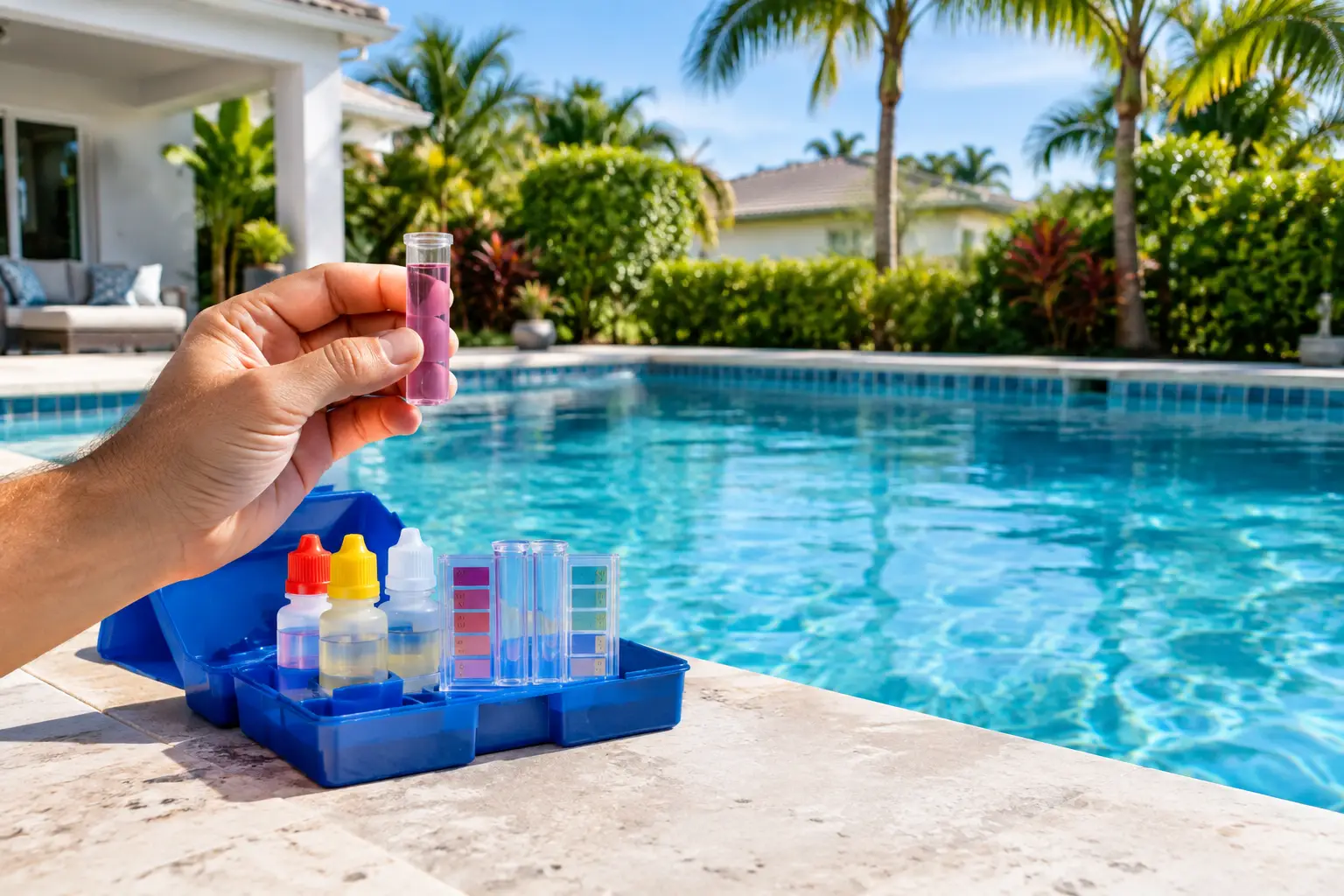
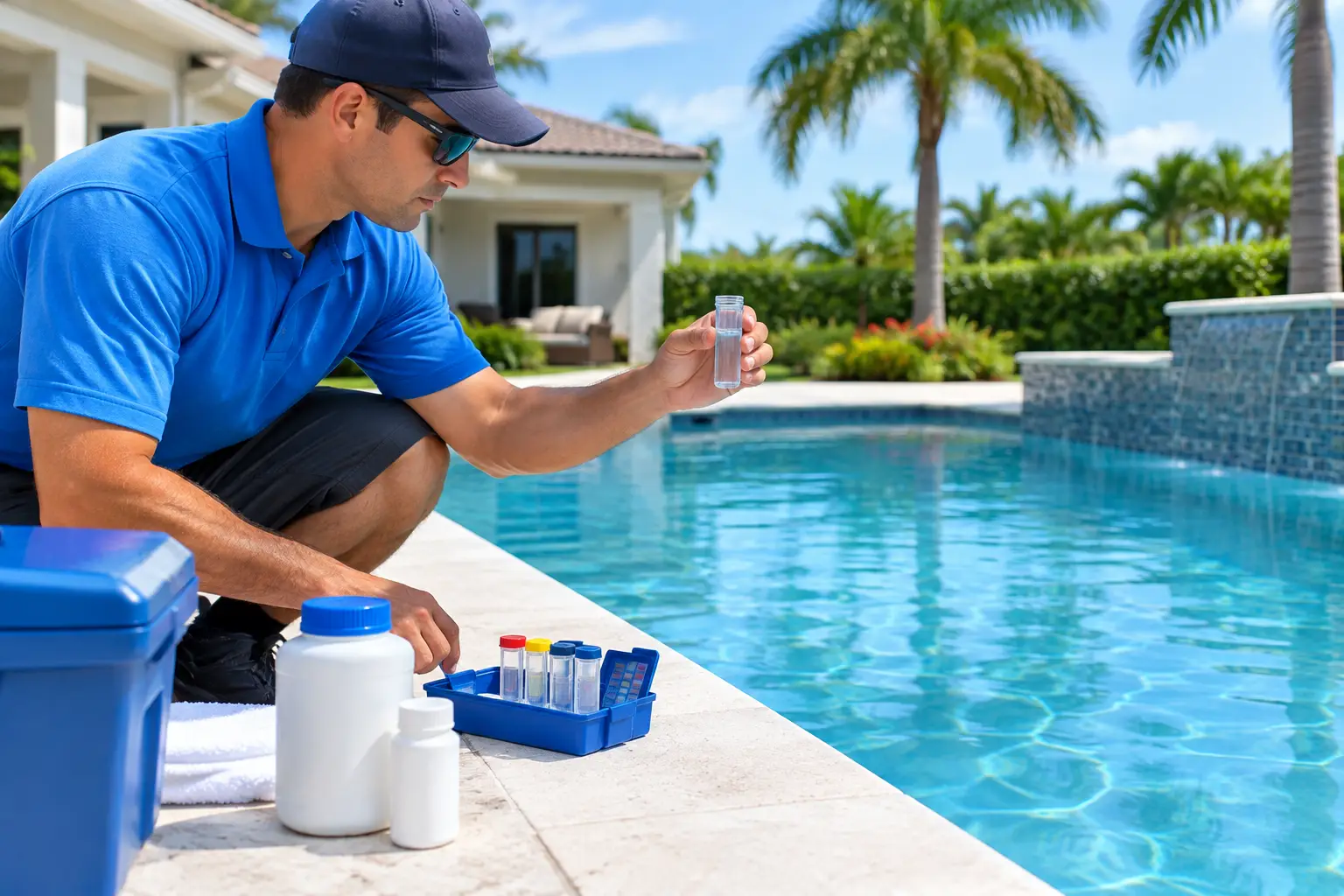
Pool acid demand is a test-based measurement used to estimate how much acid is needed to lower pH to a target level. A technician starts with a water sample, checks its current pH, then uses a demand-testing method to see how the sample responds to a controlled addition of acid reagent. The result helps guide the appropriate treatment for the pool's actual volume and chemistry.
This is different from simply noticing that pH is high and applying a one-size-fits-all dose. Acid affects pH, but the amount needed depends heavily on total alkalinity, water volume, and other conditions in the pool. A large pool with high alkalinity can resist pH movement. A smaller pool or one with lower alkalinity may respond much faster.
That resistance is useful up to a point. Alkalinity acts as a buffer that keeps pH from swinging wildly. But when alkalinity is excessive, pH may stay elevated even after routine adjustments. Acid demand testing helps a pool professional make a measured correction without creating a larger imbalance.
Why High pH Is Not a Minor Issue
Pool water with elevated pH is not always visibly cloudy or obviously unpleasant at first. Still, it can make sanitising less efficient, encourage scale formation, and leave surfaces or fixtures looking dull over time. Swimmers may also notice dry skin, irritated eyes, or a rougher feel to the water.
In Florida pools, persistent high pH is common enough to deserve attention. Warm weather, frequent use, evaporation, rain patterns, water features, and spillovers can all influence chemistry. Saltwater pools can also see pH rise because the chlorine-generation process introduces aeration at the cell.
The right response depends on the cause. If pH climbs occasionally after a storm or a busy weekend, a normal chemistry adjustment may be all that is needed. If it rises week after week, the technician should look more closely at alkalinity, calcium balance, sanitizer system operation, aeration, and the pool's recent maintenance history.
pH and Alkalinity Work Together
A common misunderstanding is that pH and total alkalinity are the same thing. They are connected, but they answer different questions. pH shows whether water is acidic or basic at that moment. Total alkalinity reflects the water's ability to resist pH change.
When alkalinity is too high, bringing pH down can take more acid than expected. When alkalinity is too low, pH may move too easily and become difficult to hold steady. That is why acid demand is useful as part of a complete water test, not as an isolated number.
A knowledgeable technician also considers calcium hardness and saturation balance. Water that is technically within range on one test may still have a tendency toward scale or corrosion when the full chemistry picture is considered. Good pool care is about balance, not just passing one reading.
What Can Change Acid Demand?
Acid demand is not a fixed trait of your pool. It can shift from one service visit to the next, sometimes for perfectly ordinary reasons. Rain can dilute water and introduce contaminants. Heavy swimming adds organic load. Hot, sunny weather increases evaporation and sanitizer consumption. Fresh fill water may carry a different mineral profile than the water already in the pool.
Equipment and pool design can play a role, too. Waterfalls, fountains, spa spillovers, bubblers, and strong returns create aeration, which can encourage pH to rise. Saltwater systems may need regular pH attention even when they are producing chlorine correctly. New plaster and resurfaced pools are another special case, because curing surfaces can affect water chemistry for an extended start-up period.
This is also why a pool should not be treated from a test strip alone. Strips can be useful for a quick homeowner check, but they do not replace accurate, consistent testing and an informed review of what has changed in the pool. When readings are unusual or recurring, a professional test provides a clearer basis for treatment.
Why “Just Add Acid” Can Create Problems
Acid is a valuable pool chemical when handled and applied correctly. It is also one that deserves care. Adding too much can drive pH down too far, reduce alkalinity excessively, and make the water more aggressive toward surfaces and equipment. Pouring or storing chemicals improperly also creates real safety risks.
For that reason, homeowners should not rely on guesswork, internet dosing charts, or a repeated habit of adding acid whenever the water looks off. Cloudiness, scaling, algae, eye irritation, and poor chlorine performance can have several causes. Acid may be part of the solution, but it is not automatically the solution.
A dependable service approach uses test results, documented adjustments, and follow-up observations. If a pool has a chronic pH issue, the best answer may involve adjusting alkalinity over time, reviewing water features, checking salt system operation, or improving circulation rather than making one large chemical correction.
Signs Your Pool May Need a Chemistry Review
A single high pH reading is not necessarily an emergency. Recurring patterns are more meaningful. It is worth requesting a closer review when you see stubborn white scale at the waterline or on tile, cloudy water despite regular chlorine readings, frequent pH rebound, rough-feeling surfaces, or a salt cell that appears to accumulate scale quickly.
New pool owners should also ask questions during the first few months of ownership. A pool may look crystal clear while its chemistry is slowly moving out of balance. Understanding the readings in your service report gives you a better sense of what is being maintained and why.
How Weekly Service Keeps Chemistry Steady
The best use of pool acid demand testing is preventive, not reactive. During weekly care, water testing helps catch chemistry movement before it turns into staining, scale, algae, or uncomfortable swimming conditions. Cleaning matters here as well. Skimming, brushing, vacuuming as needed, and maintaining circulation reduce the debris and organic load that can complicate water balance.
At Turtle Pool Care, detailed service reports and photos help homeowners see that care is being documented, not assumed. If chemistry requires attention, clear notes can show what was tested, what was adjusted, and whether the pool needs monitoring on the next visit. That level of communication is especially reassuring after heavy rain, a pool party, equipment changes, or a green-to-clean recovery.
For pools in Wellington, Westlake, Royal Palm Beach, Loxahatchee, The Acreage, Avenir, Greenacres, or The Club at Ibis, local conditions can make weekly consistency especially valuable. Heat and weather can change water quickly. Regular professional care keeps small chemistry shifts from becoming expensive surface or equipment problems.
A balanced pool should feel easy to own. When acid demand is measured carefully as part of complete water testing, pH corrections become more precise, equipment is better protected, and the water stays ready for the people who use it.