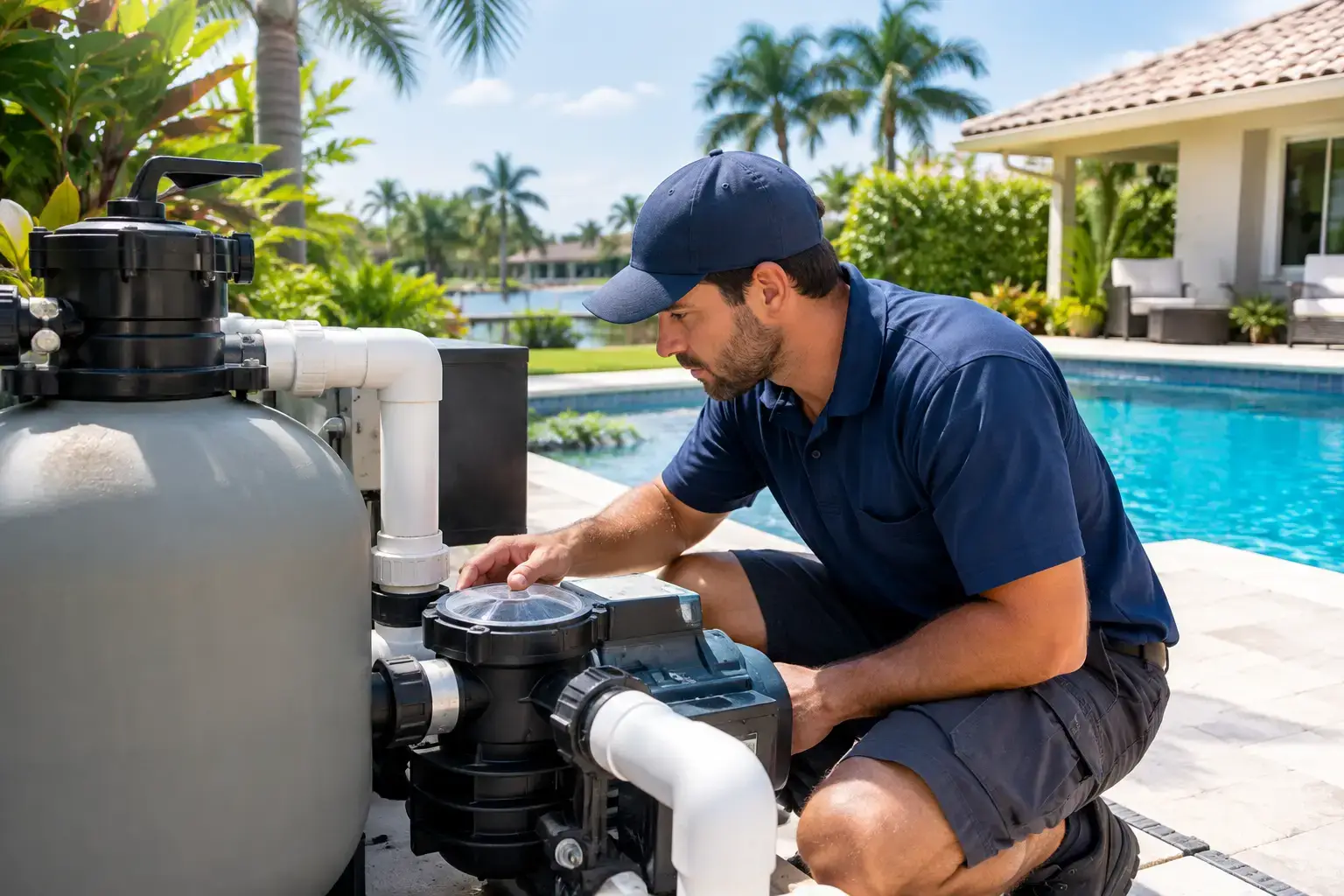
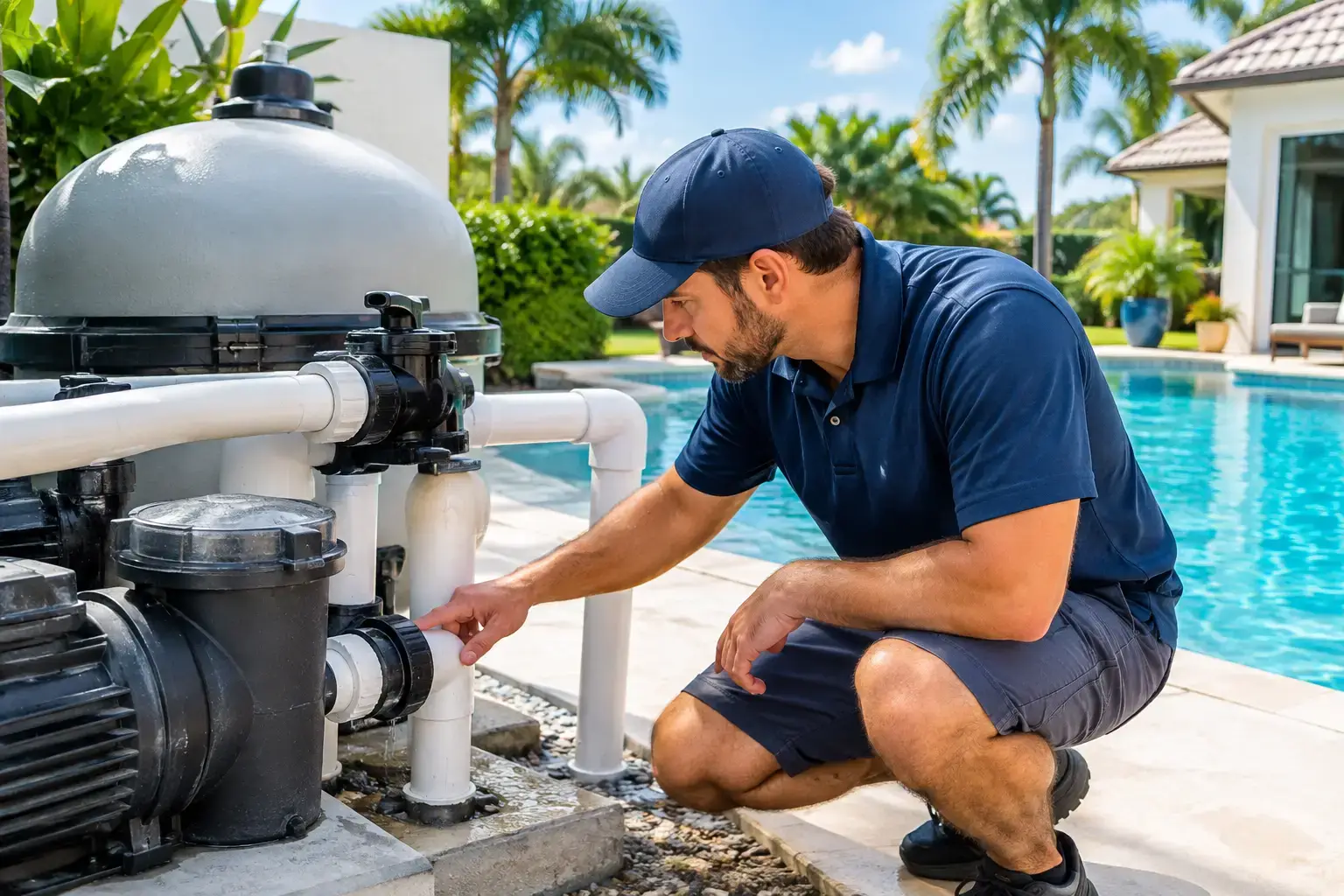
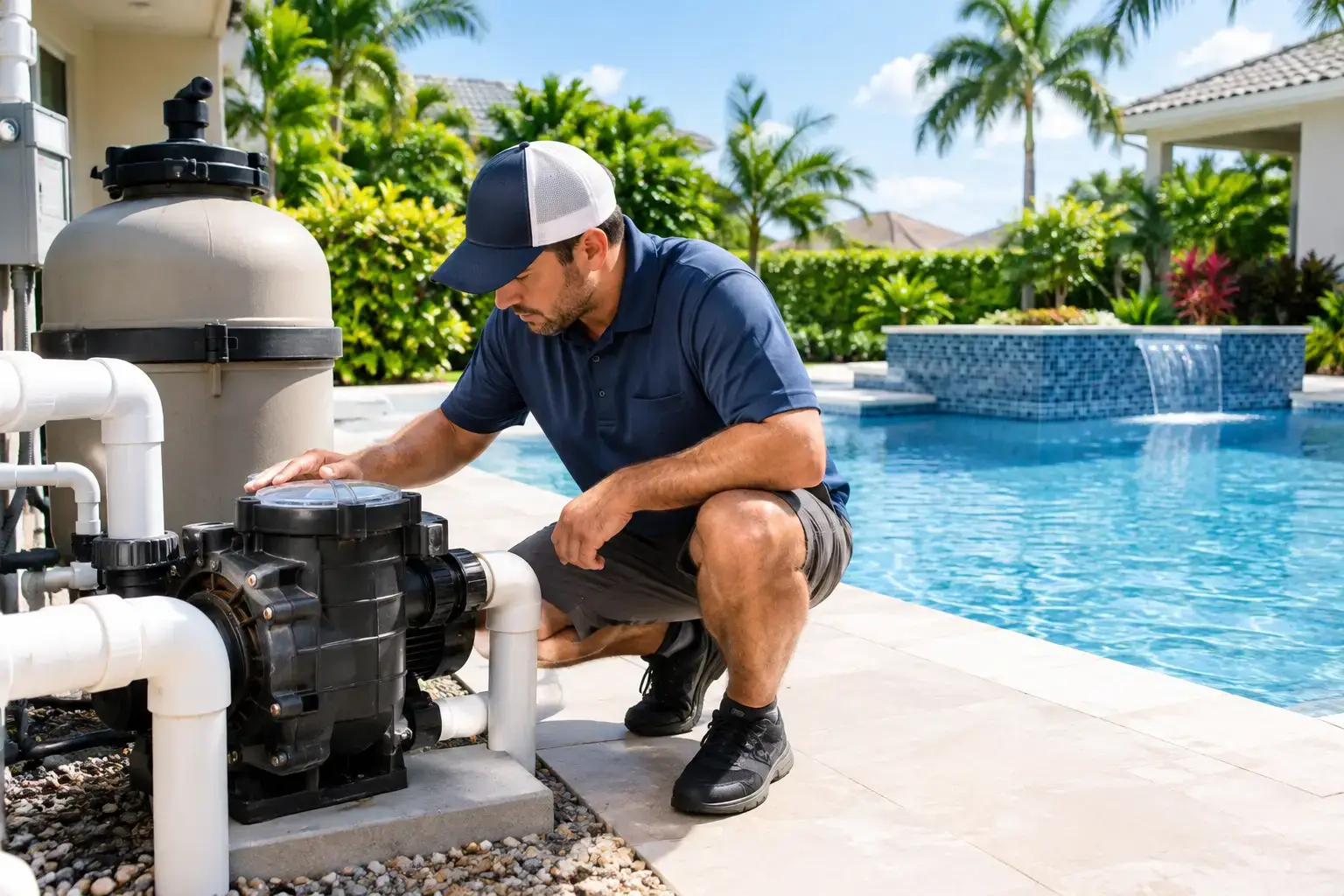
Pool circulation repair is often the missing answer when a pool looks a little off even though it is being cleaned and treated regularly. Maybe the water has lost its sparkle, debris keeps returning to the surface, the cleaner moves weakly, or the pump sounds different than it used to. Those are not always cosmetic concerns. They can be early signs that water is not moving through the system as it should.
For a residential pool, circulation is what carries water to the filter, distributes chemicals, helps prevent algae, and keeps heating or cooling equipment operating efficiently. When that movement is restricted or interrupted, small problems can become expensive ones. The good news is that many circulation issues can be identified early with a careful equipment inspection and a practical repair plan.
Why Pool Circulation Matters More Than It Seems
A pool can only stay safe and perfectly balanced when its water is continually moving through the equipment system. The pump pulls water from the skimmer and main drain, pushes it through the filter, and returns cleaner water through the pool jets. Along the way, the water may also travel through a heater, heat pump, saltwater system, cleaner line, or automation-controlled valves.
If one part of that path is underperforming, the effect reaches the whole pool. Poor movement leaves areas where debris settles and sanitizer does not circulate well. It can make chemistry harder to maintain, contribute to cloudy water, and give algae a better chance to take hold in warm Florida weather.
Circulation problems can also place unnecessary strain on equipment. A pump that is fighting a blockage, pulling air, or operating with a dirty filter may work harder while moving less water. That is not a situation to ignore simply because the pump is still running.
Signs You May Need Pool Circulation Repair
Most homeowners notice the results of a circulation issue before they can identify the cause. Water quality is often the first clue, but the equipment pad can tell an equally useful story.
A weak return flow is a common warning sign. Hold your hand near a return jet while the system is running. The water should have a clear, consistent push. If flow feels weak at every return, a dirty filter, blocked basket, pump issue, or plumbing restriction may be involved. If only one return is weak, a valve setting or localized obstruction could be part of the problem.
Air bubbles in the pump basket or blowing from the return jets deserve attention too. A few bubbles after cleaning the skimmer basket may be normal, but ongoing air in the system can point to a suction-side air leak. A loose pump lid, worn lid O-ring, cracked fitting, or low pool water level can allow air into the circulation line.
Pay attention to new sounds. A pump that suddenly whines, rattles, grinds, surges, or loses its prime is asking for a closer look. These sounds do not automatically mean the pump needs replacement. Sometimes the cause is a clogged impeller, air leak, failing seal, or restriction elsewhere in the system. The right repair depends on the actual diagnosis.
Other signs include a pressure gauge that reads abnormally high or low, a skimmer that barely pulls surface debris, cloudy water that returns soon after treatment, or a heater that stops operating because flow is insufficient. A pool cleaner that no longer travels properly may also be affected by circulation, although the cleaner itself could be the issue.
What Causes Circulation Problems?
The cause can be simple, such as a full skimmer basket or filter that needs service. It can also be more involved, including a failing pump component, plumbing leak, valve problem, or equipment mismatch. That range is why guessing can lead to unnecessary replacements.
Dirty Filters and Blocked Baskets
Your filter is designed to capture debris, but it eventually needs cleaning or maintenance. As debris builds up, water has a harder time passing through. A cartridge filter may need cleaning, a sand filter may need backwashing when appropriate, and a DE filter needs service that follows the equipment’s requirements.
The pump basket and skimmer baskets matter just as much. Leaves, seed pods, palm debris, and even small toys can reduce flow quickly. Keeping these areas clear supports circulation, but repeated clogging may mean the pool needs more frequent attention or that a larger issue is bringing debris into the system.
Air Leaks on the Suction Side
Unlike a visible water leak, a suction leak may pull air into the system without leaving an obvious wet spot. The pump may struggle to maintain a full basket of water, and the returns may send bubbles into the pool.
A worn pump lid O-ring or loose fitting can sometimes be the source. However, suction leaks can also occur at underground plumbing connections or valves. Because the system is under suction before water reaches the pump, finding the leak requires a methodical inspection rather than a quick assumption.
Pump and Impeller Issues
The pump is the heart of pool circulation. If it cannot move water effectively, the rest of the system cannot perform properly. A clogged impeller can reduce flow, while worn internal parts, a damaged seal, electrical issues, or motor problems can affect how the pump runs.
Repair versus replacement depends on the pump’s condition, age, and the specific failed component. Replacing a seal or clearing an obstruction is very different from replacing a failing motor or upgrading an inefficient pump. A good recommendation should explain what is wrong, what the repair addresses, and whether replacement is likely to be the more sensible long-term choice.
Plumbing, Valves, and Equipment Restrictions
Pool circulation follows a route set by pipes and valves. A valve in the wrong position can limit skimmer suction, reduce flow to a feature, or bypass equipment that should be operating. Debris or damage in a line can also restrict movement.
Heaters, salt cells, and other equipment can add resistance to the circulation path when they are dirty, scaled, or malfunctioning. The issue may not be the pump at all. That is why the equipment pad should be evaluated as a complete system.
A Careful Approach to Pool Circulation Repair
Effective pool circulation repair starts with observing the pool, not immediately replacing parts. Water level, skimmer pull, pump basket condition, filter pressure, return strength, valve positions, and equipment sounds all provide useful clues. Testing the water also matters because recurring cloudy or green water can help reveal whether circulation is keeping up with the pool’s needs.
A technician can then inspect the pump, filter, plumbing connections, seals, valves, and connected equipment to narrow down the cause. In some cases, the fix is straightforward maintenance. In others, a component repair, equipment upgrade, or further plumbing investigation is needed.
Homeowners can help by keeping the water level near the middle of the skimmer opening, emptying accessible baskets when needed, and noting when symptoms began. Avoid opening electrical equipment, dismantling pump components, or adding chemicals to compensate for an unresolved mechanical problem. Stronger chemicals cannot correct water that is not circulating properly, and electrical or equipment repairs should be handled safely.
Preventing Repeat Problems
Weekly pool service is one of the most practical ways to catch circulation concerns before they become a recovery project. During a regular visit, visual equipment checks can reveal leaks, unusual noise, low pressure, high pressure, poor flow, or developing water-quality issues. Brushing, skimming, vacuuming as needed, and balanced chemistry also reduce the debris and algae pressure placed on the circulation system.
A detailed service report is useful here. It gives homeowners a clear record of what was checked, what was completed, and whether equipment needs follow-up. Turtle Pool Care combines that hands-on attention with digital visit reports and photo documentation, so pool owners are not left wondering what happened at their equipment pad.
Pump run time also matters, particularly during hotter months, heavy pool use, or after storms. There is no single setting that fits every pool. The ideal schedule depends on pool size, pump type, bather load, trees around the pool, water temperature, and connected equipment. A variable-speed pump may offer more flexibility and efficiency, but it still needs the right programming and adequate flow for the filter, heater, and sanitation system.
When to Schedule an Inspection
Do not wait for a complete pump failure if the pool has weak returns, persistent air bubbles, repeated cloudy water, unusual equipment noise, or a heater that reports low-flow trouble. Prompt attention can protect water quality and may prevent a smaller repair from becoming a larger equipment expense.
A clear pool should feel easy to own, not like a weekly mystery at the equipment pad. When the water is moving properly, chemistry is easier to manage, cleaning is more effective, and every swim feels a little more turtly clean.