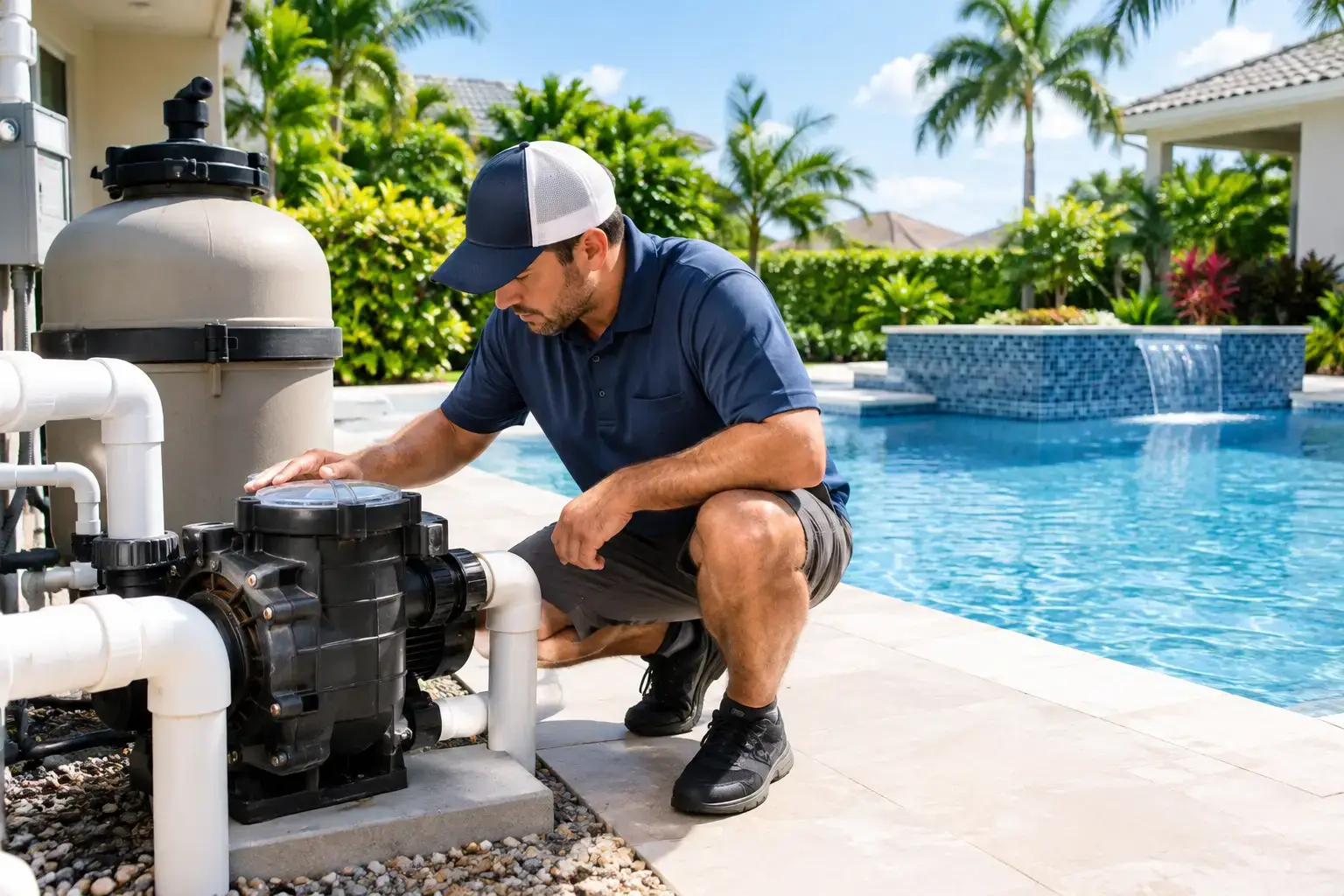
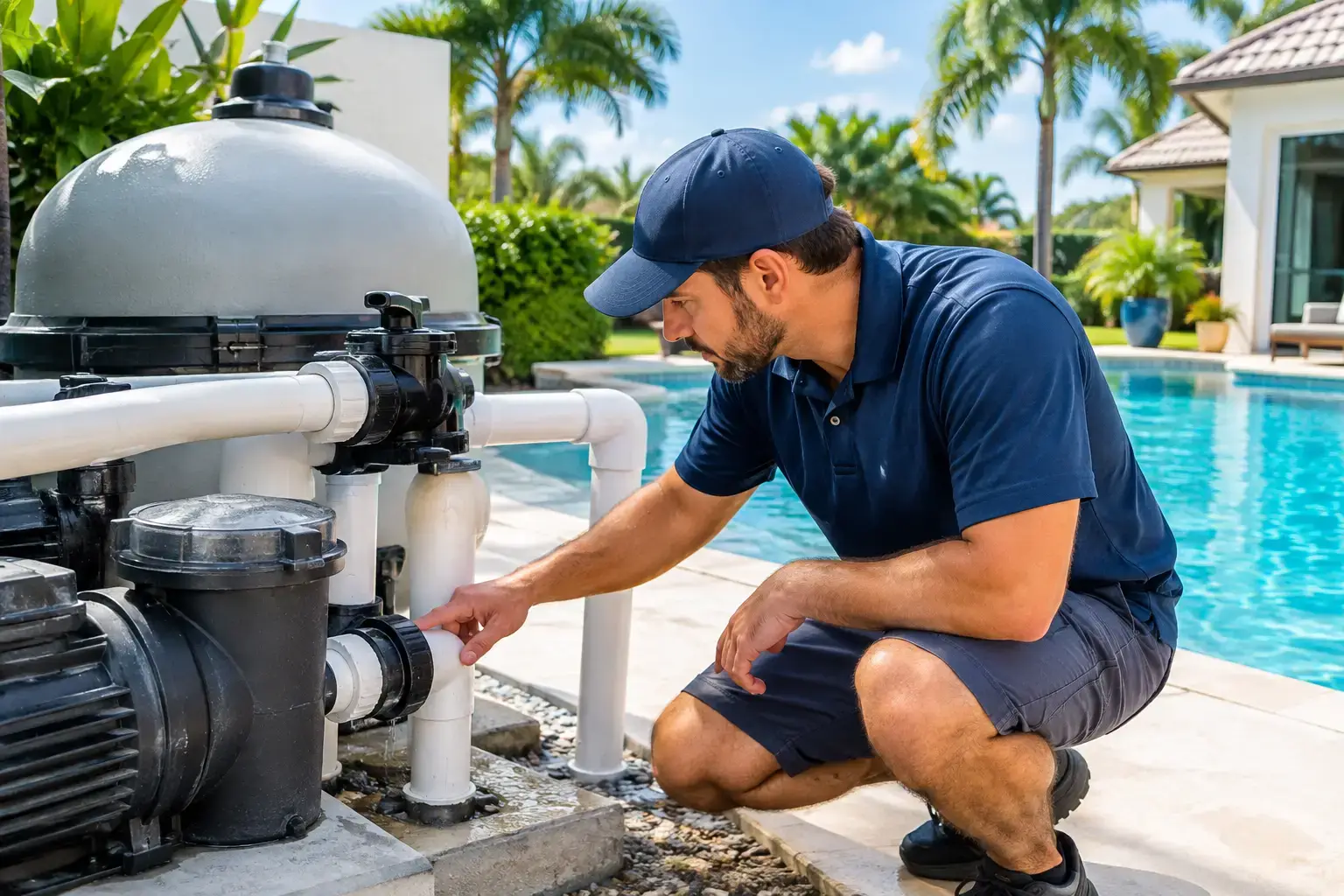
A pool pump that suddenly revs, loses force, pulses, or seems to turn on and off is not simply being temperamental. Homeowners asking why pool pump surges are usually noticing an early warning that involves water flow, the pump itself, or its electrical supply. The sooner the pattern is identified, the better the chance of avoiding a burned-out motor, damaged plumbing, or a pool that quickly loses circulation.
A healthy pump should sound and behave fairly steady once it has primed. There can be a brief change in sound when a variable-speed pump changes its programmed speed, when a heater starts, or when an automated valve moves. Those are normal operating events. Repeated surging, however, deserves attention.
What a Pool Pump Surge Can Look Like
“Surging” can describe several different symptoms, and the details matter. The pump may grow louder and quieter in a repeating cycle. Water returning through the pool jets may spit, weaken, then strengthen. The clear pump lid may show a large air pocket or frothy water. In other cases, the motor may hum, stop, restart, or trip a breaker.
These symptoms do not all have the same cause. A pulsing water-flow issue is often related to air entering the suction side of the system or a restriction before the pump. A motor that repeatedly starts and stops can point to overheating, a control issue, or an electrical concern. A careful inspection separates those situations instead of treating every surge as a pump replacement problem.
Why Pool Pump Surges: The Most Common Causes
Air entering the suction line
A pump creates suction to pull water from the skimmer and main drain. If air enters anywhere on that suction side, the pump can lose its solid column of water and struggle to maintain prime. The result may be a fluctuating pump sound, bubbles at the return jets, and a visible air pocket under the pump lid.
A loose or worn pump-lid O-ring is a common source. So are low pool water levels, a cracked fitting, deteriorated valve seals, or a suction-side plumbing leak. Because these leaks can pull in air without dripping water, they are not always obvious from the equipment pad.
Homeowners can safely check whether the pool water is at an appropriate level, generally around the middle of the skimmer opening, and look for leaves or debris holding the pump lid open. Beyond that, leak diagnosis is best left to a pool professional. Trying to force fittings tighter or disassemble plumbing can create a larger leak.
A clogged basket, filter, or impeller
Restricted water flow makes a pump work harder. A packed skimmer basket, a full pump basket, or a dirty filter can lower the available water supply and cause weak or inconsistent circulation. After storms, heavy leaf drop, or a period of poor water conditions, debris can reach the pump quickly.
A blockage at the impeller can be more stubborn. Small debris may pass the basket and collect near the impeller, reducing performance even when the basket looks clean. A technician can assess the system safely and determine whether the restriction is in the baskets, filter, plumbing, or pump.
Filter pressure also provides a useful clue. If the pressure is higher than the system’s normal clean reading and return flow is weak, the filter may need attention. If pressure is unusually low along with poor flow, the problem may be a suction-side air leak, low water level, or a blockage before the pump. The normal pressure varies by pool, so the most useful comparison is the reading your own system shows when it is clean and running properly.
Low water level or a skimmer vortex
In Florida, evaporation, splashing, and a busy weekend in the pool can lower water faster than expected. When the water falls too low, the skimmer may draw air in a whirlpool-like vortex. The pump then receives a mix of air and water instead of the consistent flow it needs.
This is one of the simpler causes to correct, but it should not be ignored. Running a pump without reliable water flow can damage seals and cause overheating. If the water level repeatedly drops, that may also warrant a closer look for a leak.
Variable-speed programming and automation changes
Not every change in pump sound is a problem. Variable-speed pumps are designed to run at different speeds for filtration, heating, water features, cleaning modes, and other programmed functions. A pump may become noticeably louder as it ramps up for a spa spillway or heater cycle, then quiet down again when it returns to a low-speed filtration setting.
The key question is whether the changes happen predictably. A smooth transition at the same times each day is likely programming. Erratic speed changes, error messages, loss of prime, or reduced circulation are not normal. Automation systems, relays, and pump schedules sometimes need adjustment, particularly after a power outage or equipment update.
Motor overheating or an internal pump issue
A single-speed pump that shuts down and restarts after cooling may be overheating. Poor ventilation around the motor, a failing capacitor, worn bearings, excessive load from a restriction, or an aging motor can all contribute. The pump may also make a grinding, squealing, or unusually loud humming sound before it fails.
This is not a do-it-yourself electrical repair. Pool equipment combines water, high-voltage connections, and sensitive controls. Turn the system off if you notice smoke, a burning odor, repeated breaker trips, or a hot motor housing, then arrange for qualified service. Continuing to reset a breaker or repeatedly restarting the pump can increase the risk of equipment damage.
Electrical supply or control problems
If the pump cycles on and off, loses power, or behaves differently after storms, the cause may be outside the pump. A failing timer, relay, automation controller, loose electrical connection, or voltage issue can produce symptoms that seem like a pump problem.
Electrical concerns require professional diagnosis. The visible symptom may be a surging pump, but the right repair could involve the controller, timer, wiring, or the pump motor. Replacing the pump without identifying the source can leave the underlying issue unresolved.
What to Check Before Scheduling Service
A few observations can help make a service visit more efficient without requiring you to take equipment apart. Note whether the pump is surging continuously or only at certain scheduled times. Look through the pump lid for air, check the pool water level, and observe whether the return jets are blowing bubbles or losing strength.
It is also helpful to record the filter pressure and any messages displayed on a variable-speed pump or automation panel. If the pump is safe to operate, notice whether the issue changes when a water feature, heater, or cleaner is active. These details help distinguish a normal programmed change from a developing equipment issue.
Do not open electrical panels, remove motor covers, or bypass safety switches. If the pump is leaking heavily, tripping a breaker, making harsh mechanical noise, or failing to move water, switch it off and avoid running it until it is evaluated.
When a Surge Needs Prompt Attention
Some flow problems can wait for a scheduled maintenance visit, especially if they are tied to a full basket or slightly low water level. Others should be addressed sooner. Prompt attention is wise when you see persistent air in the pump, a significant water leak at the equipment pad, repeated loss of prime, weak circulation during normal run time, or a pump that is shutting down unexpectedly.
Fast action also protects water quality. Without consistent circulation and filtration, sanitizer is distributed less effectively, debris accumulates, and algae can take hold more easily in warm weather. A small equipment issue can become both a repair issue and a green-pool recovery issue if it is left too long.
For homeowners in Wellington, Westlake, Royal Palm Beach, Loxahatchee and nearby communities, local conditions add another reason to stay alert. Summer storms, frequent pool use, blowing debris, and high water temperatures can all put added pressure on a pool’s circulation system.
A Steady Pump Supports a Turtly Clean Pool
A pump does more than move water. It carries sanitizer through the pool, delivers water to the filter, supports heating and saltwater systems, and helps keep the whole pool safe and perfectly balanced. When its performance becomes inconsistent, a detailed inspection can identify whether the answer is simple maintenance, a plumbing repair, a programming correction, or a larger equipment decision.
A dependable pool-care routine catches many of these changes early, before they interrupt family pool time. If your pump sounds different, loses prime, or cannot hold a steady flow, treating that change as useful information is the best next step toward restoring peace of mind.