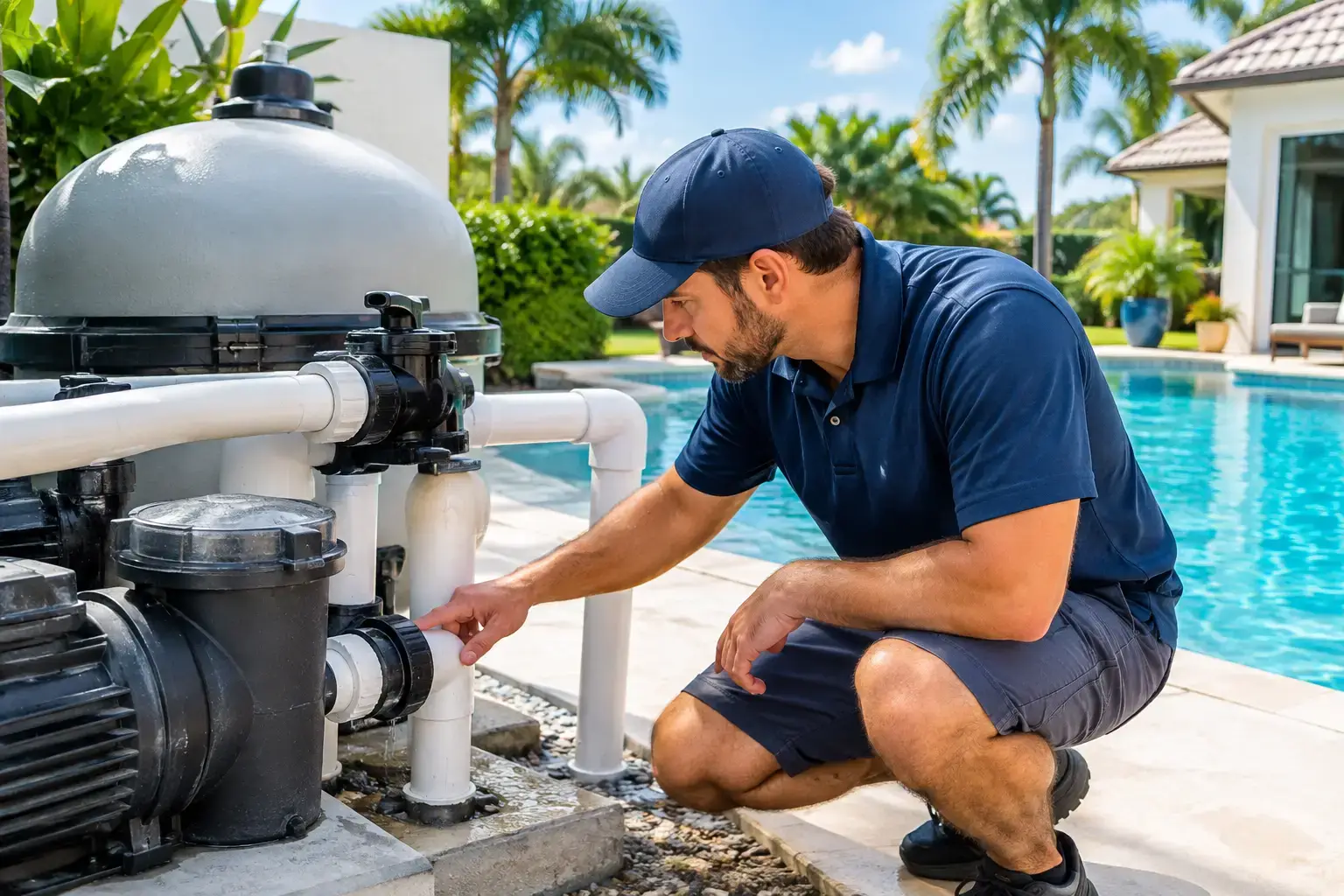
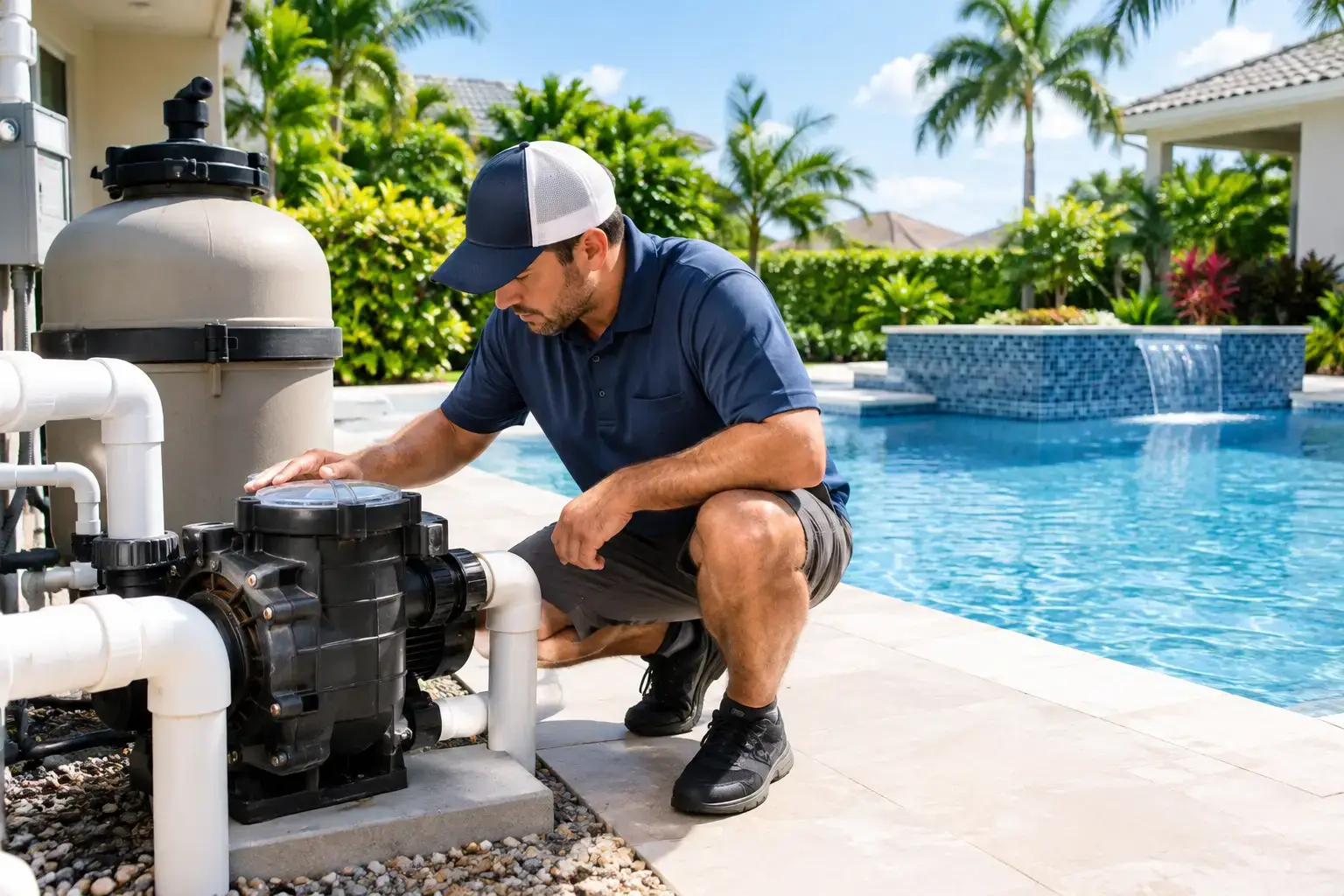
A pump that suddenly sounds rough, loses prime, or sends a steady stream of bubbles back through the returns is asking for attention. Learning how to identify pool suction leaks can help you explain the problem clearly and protect your pump from running under strain. The good news is that many clues are visible around the equipment pad. The catch is that a suction-side leak may pull air in without ever leaving a puddle behind.
What Is a Pool Suction Leak?
Your pool plumbing has two basic sides. The suction side runs from the skimmer, main drain, and any dedicated vacuum line to the inlet of the pool pump. The pressure side begins after the pump and carries filtered water back through the filter, heater, chlorinator, and return lines.
A suction leak is an opening, failed seal, loose fitting, cracked pipe, or worn valve on the plumbing before the pump. When the pump is running, it creates negative pressure in this section of the system. Instead of pushing water out through the weak point, it can pull air inward.
That difference matters. A pressure-side plumbing leak often leaves wet soil, dripping equipment, or a noticeable water loss. A suction-side leak may be dry at the equipment pad while the pump struggles with air in the system. It can also be intermittent, appearing only when a certain valve is open or when the water level falls below the skimmer opening.
Signs That Help Identify Pool Suction Leaks
No single symptom proves there is a leak. A dirty filter, low pool water, a worn pump lid O-ring, or a blocked skimmer basket can create similar behavior. Looking at the pattern of symptoms is much more useful than reacting to one air bubble.
Air Bubbles at the Pump and Return Jets
Start with the clear pump lid while the circulation system is running. A properly primed pump basket should be mostly full of water, with little to no persistent air pocket under the lid. Some brief air after cleaning baskets or restarting equipment is normal. Air that continues to circulate through the pump is not.
You may also see bubbles blowing from the pool's return fittings. A few bubbles at startup can be harmless, especially after a cleaner line has been used. Ongoing bubbles during normal operation suggest air is entering somewhere before the pump. The more pronounced the bubbles and the lower the pump water level, the more urgent the issue becomes.
The Pump Loses Prime or Runs Loudly
A pump with adequate water flow usually has a consistent, smooth sound. When it pulls in too much air, it may surge, rattle, sound unusually high-pitched, or repeatedly lose prime. You might notice the pump basket filling, then partially emptying, even though the pool water level is adequate.
Do not let a pump repeatedly run with little water moving through it. Water helps cool and lubricate the pump seal. If the pump is struggling to prime, turn it off and arrange an inspection rather than hoping the issue clears on its own.
Weak Circulation and Changing Filter Pressure
Air in the suction line can reduce the amount of water reaching the pump. That may show up as weak return flow, poor skimming, a heater that will not stay running, or a filter pressure reading that is lower than usual. The exact pressure varies by pool, so the useful comparison is your pool's normal clean-filter reading.
Lower pressure is not automatically a suction leak. A variable-speed pump running at a lower setting, a clogged skimmer basket, or a valve position change can produce the same result. Still, weak circulation paired with visible air is a strong reason to investigate.
The Problem Changes With a Valve Position
Many pools have separate suction valves for the skimmer, main drain, spa, vacuum line, or water feature. If air appears only when one line is opened, that observation narrows the search considerably. For example, a pump that runs normally on the main drain but pulls air when the skimmer line is fully open may point to low water, a skimmer issue, or a problem in that line.
Take note of which features are operating when the problem occurs. This is especially helpful for a technician because it avoids testing every line from scratch.
Safe Checks Homeowners Can Make
A careful visual check can uncover common causes without disassembling plumbing or handling electrical equipment. Begin with the pump turned off whenever you open the pump basket lid or touch equipment fittings.
First, check the pool water level. It should generally sit around the midpoint of the skimmer opening. If it is too low, the skimmer can draw in air like a straw at the bottom of a drink. Add water, allow the system to circulate, and see whether the bubbles disappear.
Next, empty the skimmer and pump baskets. Leaves, small toys, or a clogged basket can starve the pump of water and mimic a suction issue. Inspect the pump lid for cracks, warping, or debris on its sealing surface. Check the lid O-ring for flattening, nicks, dryness, or stretching. A clean, properly seated O-ring in good condition is essential for keeping the pump airtight.
With the pump running and the equipment area dry, look closely at accessible suction-side unions, valve lids, drain plugs, and fittings leading into the pump. Do not force a fitting or overtighten a union. Plastic components can crack, and a minor air leak can become a water leak. If you see a fitting that is obviously loose, or a valve lid that appears damaged, document it and schedule service.
It is also worth checking the skimmer weir door. This floating flap should move freely. If it sticks closed, debris can restrict flow. If it is missing or damaged, the skimmer may be more likely to pull air when the water level moves.
Why Water Loss Does Not Always Tell the Story
Homeowners often assume a plumbing leak must make the pool water level drop quickly. That is not always true with suction leaks. Because the pump can draw air inward, the water may stay close to its normal level while circulation suffers.
On the other hand, a pool losing water may have a completely different issue: evaporation, splash-out, an autofill concern, a leaking light niche, a shell leak, or a pressure-side plumbing leak. Warm, sunny conditions and active swimmers can make evaporation noticeable in Florida, so it is best not to diagnose a suction leak based on water level alone.
A useful observation is whether the air problem occurs only when the pump is on. Air that disappears when the system is off is more consistent with a suction-side issue. Water that continues to leak while the pump is off may point elsewhere, although plumbing diagnosis is rarely that simple in every case.
When It Is Time for Professional Leak Detection
Call for professional help when the pump will not maintain prime, bubbles continue after basic checks, equipment makes abnormal noise, or a particular suction line consistently causes trouble. A technician can inspect the pump seal and lid assembly, isolate individual lines, assess valve operation, and use pressure or vacuum testing to confirm where air is entering.
This process matters because replacing parts by guesswork can be expensive and frustrating. A cracked valve body, a failing three-way valve seal, an underground plumbing break, and a worn pump lid O-ring can all look similar from across the pool deck. Proper testing separates the simple repair from the hidden one.
For homeowners in Wellington, Westlake, Royal Palm Beach, Loxahatchee and nearby service areas, detailed observations make the service visit more efficient. Note when the issue started, whether it happens at a particular pump speed, which valves are open, and whether you see bubbles at the returns. Photos or short videos of the pump basket while the issue is occurring can be useful too.
Preventing Repeat Suction Problems
Routine pool care helps catch small air leaks before they affect water quality or equipment life. Keep the water level stable, empty baskets regularly, and pay attention to changes in pump sound and return flow. During weekly service, a visual equipment inspection can reveal worn seals, drips, valve concerns, and circulation changes that deserve a closer look.
Modern variable-speed pumps can make symptoms less obvious because the amount of air drawn in may change at different speeds. A pump may appear fine at a low speed but struggle when programmed for higher circulation, heating, or cleaning. Recording the schedule and speed at which the problem occurs gives a repair technician valuable context.
A quiet, fully primed pump and clear, steady return flow are two of the simplest signs that your circulation system is doing its job. When something changes, addressing it early is the best path back to safe, balanced, turtly clean water - and the peace of mind that comes with it.