A pool should feel like the easiest part of the back garden - not a place where you have to wonder whether a light, pump, or outlet is safe. This pool electrical safety guide helps homeowners recognize the warning signs that deserve attention, understand which habits reduce risk, and know when to stop using equipment until a qualified professional can inspect it.
Electricity and water are an unforgiving combination. Most pool electrical problems do not begin with a dramatic event. They start with a cracked outlet cover, a tripping breaker, corrosion inside equipment, or a pump that has been getting noisier for weeks. Catching those small clues early protects swimmers, equipment, and your peace of mind.
Pool Electrical Safety Guide: Start With the Safety Basics
Every pool owner should know where the electrical panel and pool equipment shutoff are located. In an emergency, the goal is not to troubleshoot the cause yourself. It is to get people out of the water, keep them away from the equipment area, and shut off power only if you can do so safely from a dry location.
Never touch pool equipment, cords, switches, or a metal handrail if you suspect an electrical problem while you are wet or standing on a wet surface. Keep everyone out of the pool, including pets. If someone experiences a tingling sensation, shock, or unusual muscle cramping in the water, treat it as an emergency and call 911. Do not enter the water to investigate.
Ground-fault circuit interrupters, commonly called GFCIs, are a key layer of protection around pools. They are designed to cut power quickly when they detect an imbalance in electrical current. Pool lighting, nearby receptacles, and certain equipment circuits may require GFCI protection, depending on the installation and applicable code. A GFCI that trips is not simply being inconvenient. It is telling you that something needs to be checked.
Resetting it once may be appropriate after a known temporary event, such as a storm-related interruption. If it trips again, leave it off and arrange for a qualified electrician or pool equipment professional to diagnose the issue. Repeated resets can turn a useful warning into a dangerous habit.
Warning Signs You Should Never Ignore
Pool equipment is exposed to heat, humidity, rain, irrigation overspray, and chemical vapours. In Wellington, Royal Palm Beach, Loxahatchee, and other nearby communities, summer storms and year-round equipment use can be especially hard on electrical components. Routine observation matters.
Watch for these signs, particularly after heavy rain, a power outage, or equipment work:
- A breaker or GFCI trips repeatedly, even after the pool is dry.
- The pool light flickers, fails to turn on, or behaves differently than usual.
- You notice a buzzing sound, hot plastic smell, scorch marks, sparking, or melted insulation.
- The pump starts slowly, stops unexpectedly, runs louder than normal, or hums without moving water.
- An outlet cover is cracked, missing, loose, or filled with moisture or debris.
- Metal equipment, rails, ladders, or nearby fixtures create a tingling sensation when touched.
Some of these symptoms can stem from a failing pump motor, damaged wiring, water intrusion, a loose connection, or a problem elsewhere in the electrical system. The exact cause depends on the equipment and installation. What does not depend on the cause is the response: stop using the affected feature and have it evaluated.
Keep Portable Electrical Items Away From the Water
The simplest pool safety rule is also one of the most useful: portable electrical devices do not belong near the water. That includes extension cords, mobile phone chargers, speakers, fans, power tools, and plugged-in patio appliances.
A weather-resistant outlet does not make it safe to run a cord across a wet deck or use an appliance beside the pool. Outdoor-rated equipment offers added protection from normal weather exposure, but it is not a substitute for distance, dry conditions, and appropriate GFCI protection.
Be especially mindful during parties. A temporary music setup, outdoor projector, or mobile phone charging station can quietly introduce cords where children are playing and adults are walking with wet feet. Set those items well away from the pool edge and keep cords out of traffic paths. Battery-powered options can be a sensible alternative for occasional backyard use.
Pool Lights Need Professional Attention
Underwater pool lighting deserves extra caution because it is directly connected to the water environment. A dim or failed light may be a simple lamp issue, but it can also involve the fixture, wiring, transformer, junction box, conduit, or electrical connection.
Do not attempt to open, replace, or repair a pool light while it is energised. Turning off a wall switch is not enough assurance that power has been properly isolated. A qualified professional can determine the appropriate way to test the system and identify whether the issue is in the light itself or elsewhere in the circuit.
If a pool light is flickering or behaving unpredictably, do not allow nighttime swimming until it has been addressed. The same goes for landscape lighting installed close to the pool, spa, deck, or equipment pad. Low-voltage systems can be safer by design, but damaged wiring, wet connections, and poorly maintained components still require proper repair.
Protect the Equipment Pad From Water and Corrosion
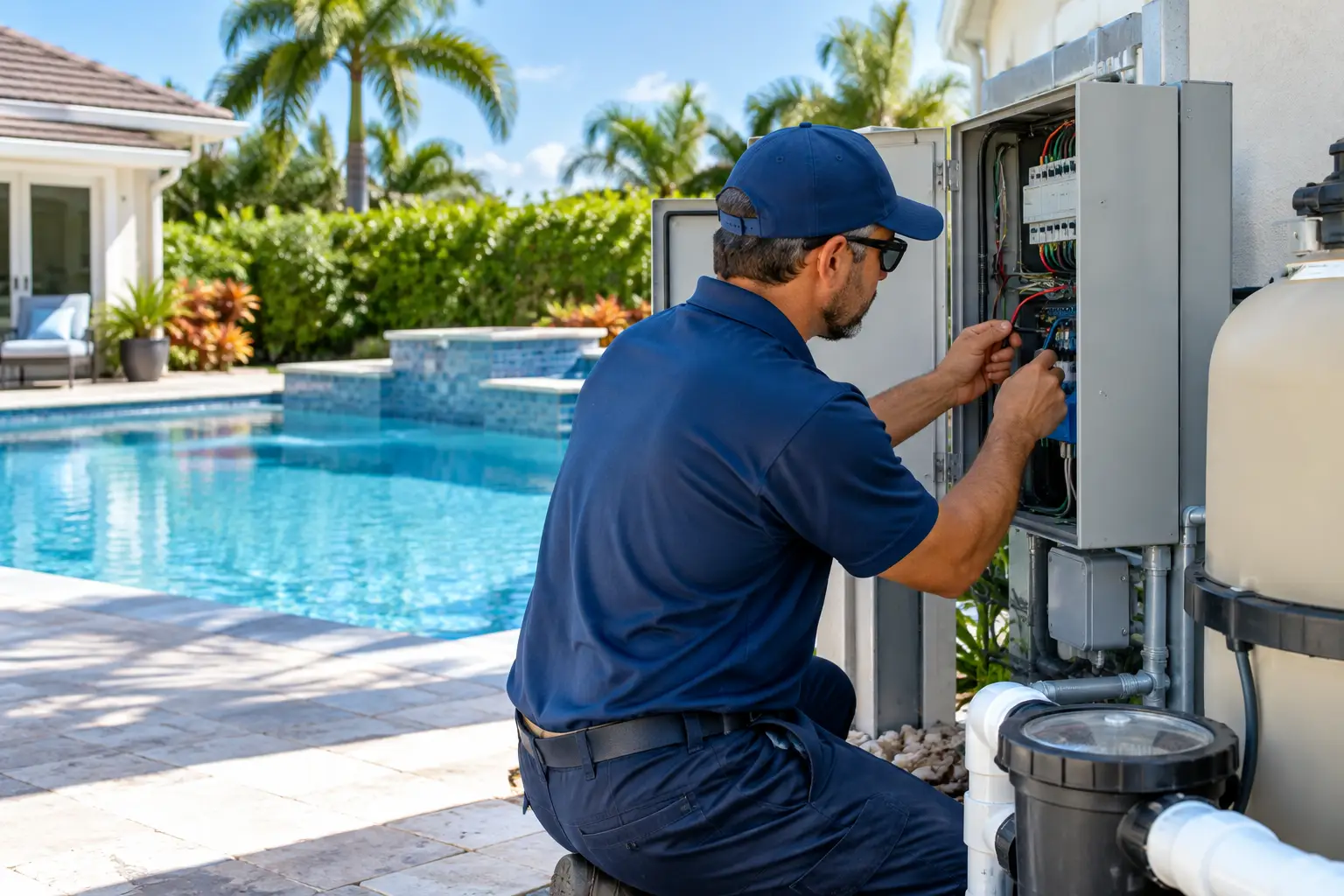
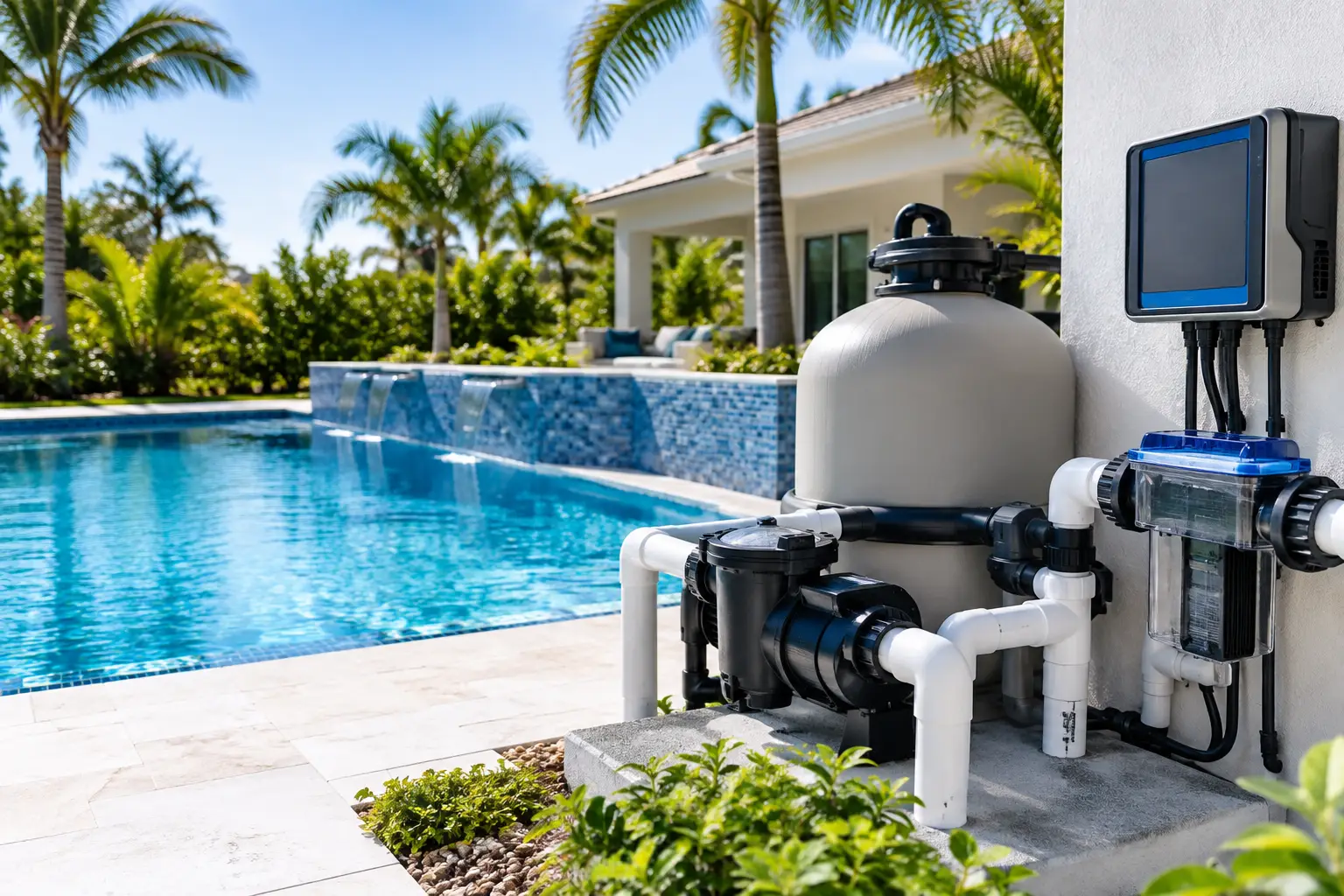
The equipment pad is where small maintenance issues can become electrical problems if left unattended. Pump motors, timers, automation controls, heaters, heat pumps, saltwater systems, and wiring connections all need a dry, accessible environment.
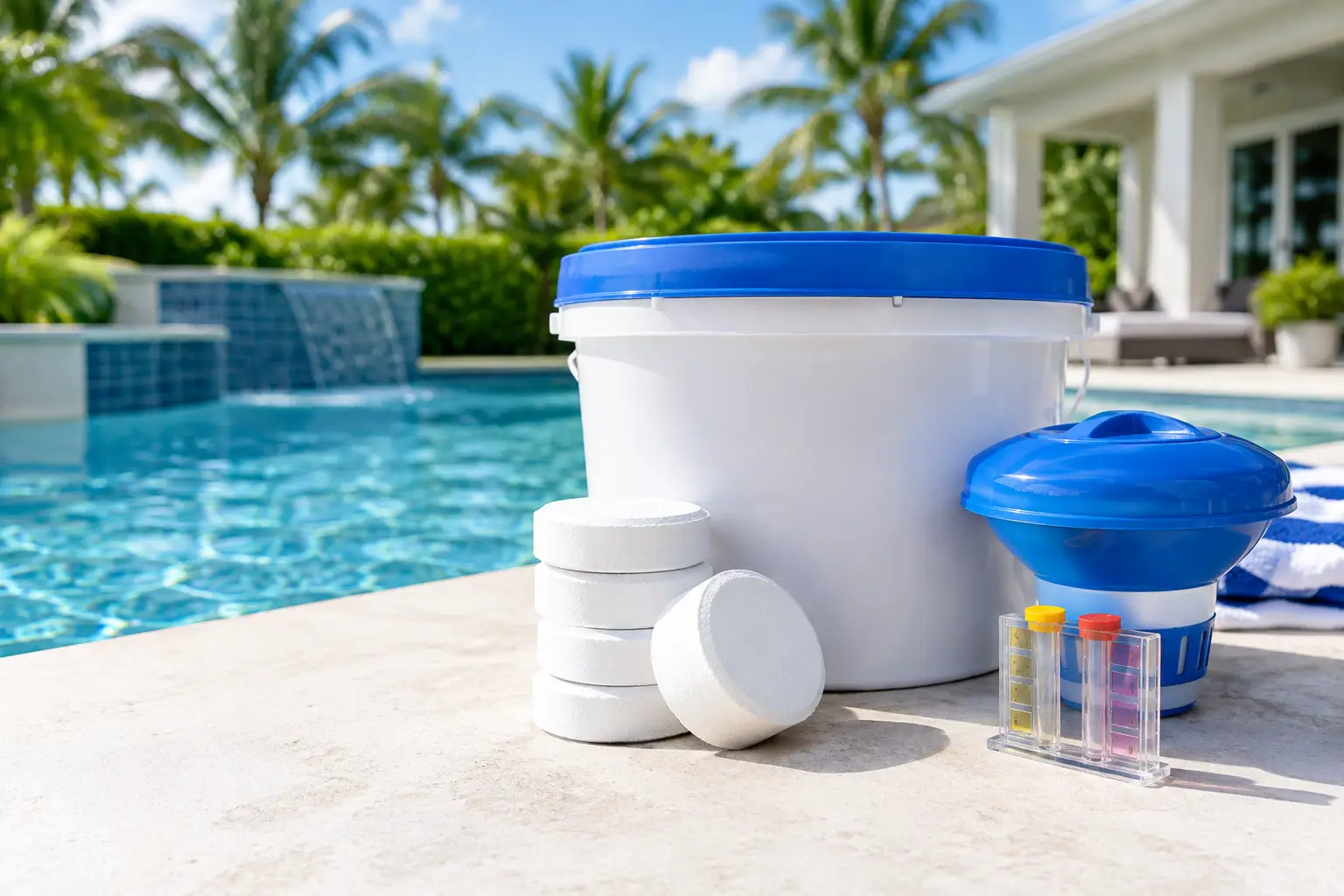
Keep the area clear of stored furniture, garden tools, leaves, and chemicals. Pool chemicals should never be stored beside electrical equipment. Their fumes can accelerate corrosion, and a spill can create hazards for both people and equipment. Store products upright in a cool, dry, well-ventilated location that is separate from the equipment pad.
Also pay attention to drainage. Water should not routinely pool around the pump or electrical controls after rain or irrigation. If it does, the solution may involve redirecting irrigation, improving drainage, or having the installation reviewed. Simply placing equipment on blocks or covering it tightly can create different problems, including restricted ventilation and trapped moisture.
A loose equipment lid, cracked conduit, rusted bonding connection, or deteriorated seal may look minor, but it can expose components to moisture over time. These are worthwhile items to point out during a service visit or professional equipment evaluation.
Understand the Difference Between Bonding and Grounding
Homeowners often hear the terms “bonding” and “grounding” used together, but they are not interchangeable. Both are important around a pool, and neither is a do-it-yourself project.
Grounding provides a path for fault current to return to the electrical system so protective devices can operate as intended. Bonding connects conductive pool components so they remain at the same electrical potential. This can include metal rails, ladders, certain equipment, and other components depending on the pool’s construction.
Why does this matter? Because a pool can appear to be operating normally while an unseen bonding or grounding issue exists. A professional inspection is the right path when you are buying a home with a pool, completing a remodel, replacing major equipment, adding automation, or responding to a suspected electrical concern. Older pools may not reflect current practices, which makes an informed evaluation especially valuable.
Make Electrical Awareness Part of Regular Pool Care
Weekly pool service is an excellent time to notice visible changes around equipment, but a routine service visit is not a replacement for a licensed electrical inspection. Think of it as another set of attentive eyes on your pool system.
During normal care, homeowners can look for standing water, unusual pump noise, damaged covers, loose-looking connections, and changes in how equipment runs. Keep a simple record of when breakers trip or when a light begins flickering. Details such as the time of day, recent rainfall, which equipment was operating, and whether the issue repeats can help the right professional diagnose the problem more efficiently.
At Turtle Pool Care, careful visual observation is part of maintaining a turtly clean pool environment. When equipment behaviour changes, clear documentation and timely communication help homeowners decide whether a pool repair, equipment adjustment, or electrical evaluation is the next sensible step.
When to Call for Help Right Away
Call emergency services immediately if a person has been shocked, if you see arcing or smoke, or if you believe electricity may be entering the pool water. Keep everyone away from the water and equipment area.
For non-emergency concerns, arrange prompt professional help when a breaker repeatedly trips, a pump will not run correctly, a pool light fails, an outlet is damaged, or you see signs of heat or corrosion. A pool professional can assess pool equipment concerns and help identify when an electrician should take over. Electrical repairs, panel work, wiring changes, and bonding or grounding corrections should be handled by qualified electrical professionals.
The best pool safety habit is not knowing how to fix every issue. It is recognizing when something has changed, pausing before anyone gets back in the water, and getting the right help so your garden can return to being the relaxing place it is meant to be.