A bottle of liquid chlorine that sat through a Florida summer can look perfectly normal and still leave your pool short on sanitizer. That is the frustrating truth behind pool chlorine expiration: chemicals do not always announce that they have weakened. Understanding what you have, when you bought it, and how it was stored helps prevent cloudy water, algae growth, and wasted treatment time.
For most homeowners, the goal is not to build a chemical warehouse. It is to keep a sensible supply of fresh products that will perform when your pool needs them.
Does Pool Chlorine Actually Expire?
Yes, but the answer depends on the chlorine product. Some forms gradually lose strength, while others remain usable for years if they stay dry, sealed, and uncontaminated. Heat, moisture, sunlight, and poor storage can shorten the useful life dramatically.
Liquid chlorine has the shortest and least predictable shelf life. Chlorine tablets and granular products tend to last longer, but only when stored correctly. A product past its best date is not automatically dangerous or useless. It may simply be too weak to provide the sanitizing level you expect, leading to repeated dosing and uneven water chemistry.
The date printed on a container can also mean different things. It may be a manufacture date, a lot code, or a best-by date. If the label is unclear, assume that older liquid chlorine has lost some potency, especially if it has been kept in a hot garage, shed, or pool equipment area.
How Long Different Pool Chlorine Products Last
Liquid chlorine
Liquid chlorine, usually sodium hypochlorite, degrades faster than other common pool sanitizers. A fresh bottle can begin losing strength within weeks, and Florida heat speeds up the process. Higher-strength liquid chlorine may lose potency particularly quickly when it is stored warm.
As a practical rule, buy liquid chlorine in quantities you expect to use fairly soon. Store it in its original, tightly closed container in a cool, shaded, well-ventilated place. Avoid buying a large supply simply because the price is attractive. A cheaper bottle is not a bargain if it takes twice as much product to make a difference in the water.
Chlorine tablets
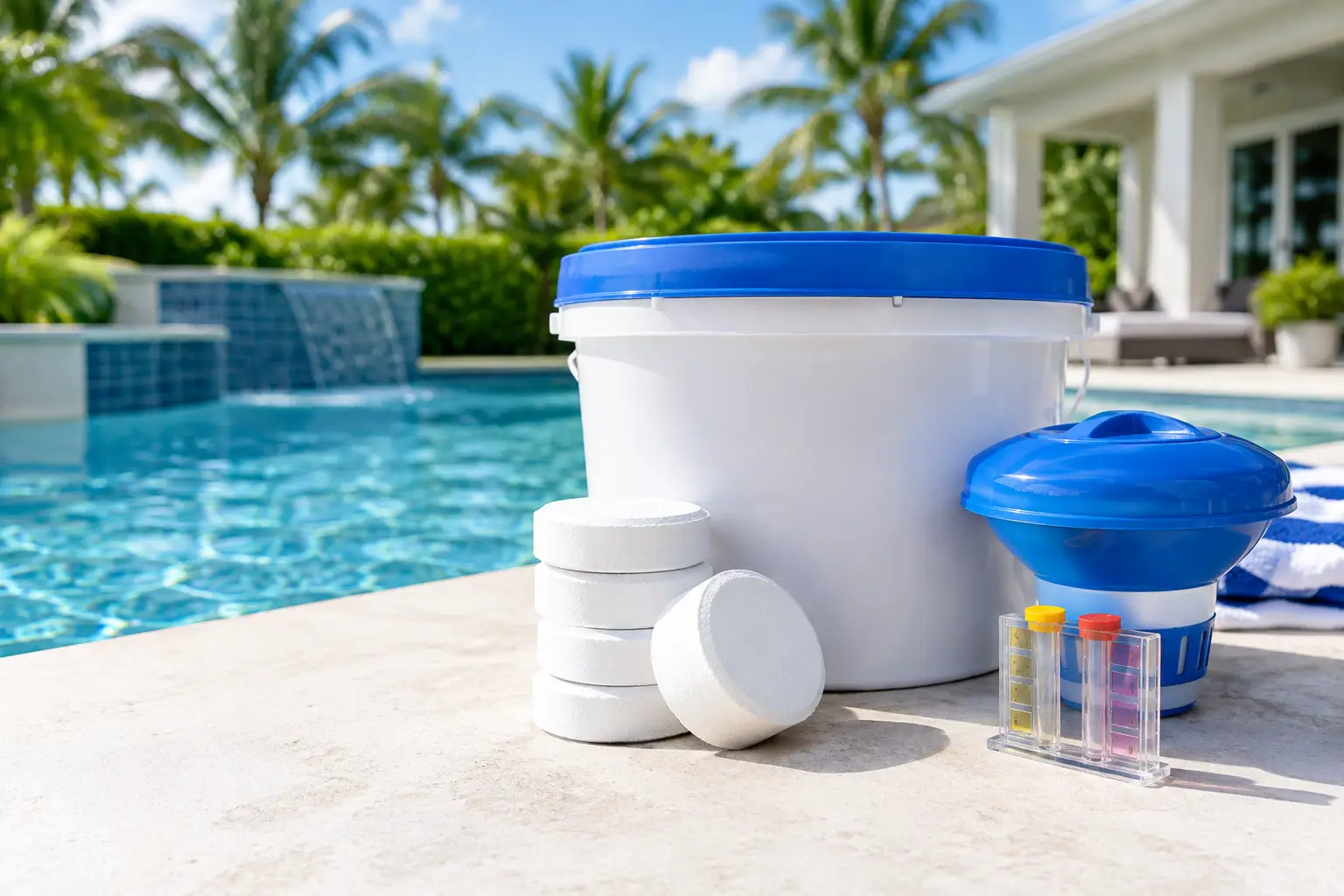
Trichlor tablets are generally much more shelf-stable than liquid chlorine. Kept dry in a sealed original bucket, they can remain effective for several years. Moisture is the major enemy. Tablets that have fused into a solid mass, look unusually wet, or have been exposed to incompatible chemicals should not be treated as normal stock.
Tablets are convenient, but they are not a one-size-fits-all answer for every pool. They add chlorine slowly and also add cyanuric acid, commonly called stabilizer. Over time, relying on tablets alone can raise stabilizer beyond the range where chlorine works efficiently. Fresh tablets cannot solve a chemistry imbalance created by using too many tablets.
Granular shock
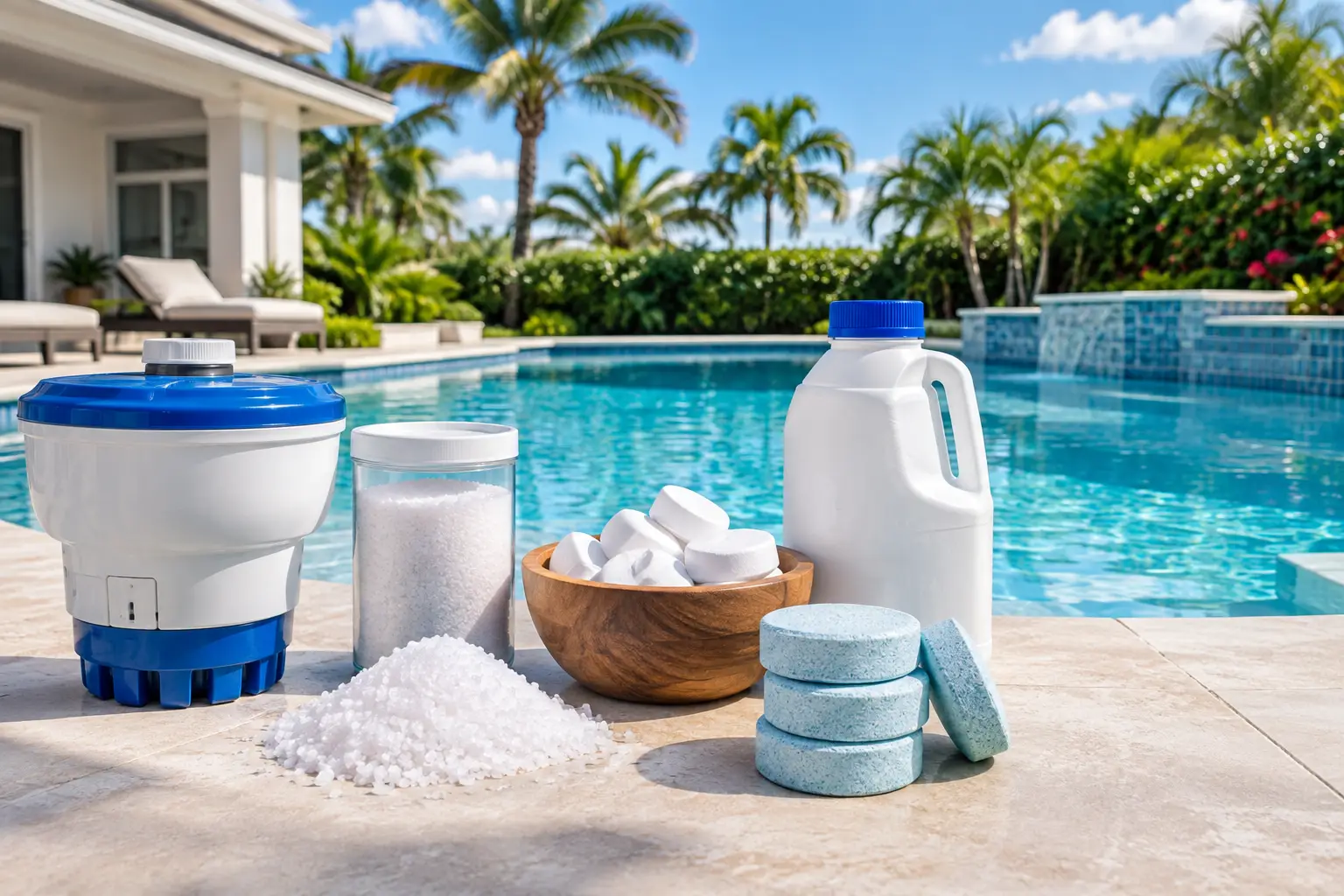
The shelf life of shock depends on its active ingredient. Calcium hypochlorite, often called cal-hypo, can last for years when kept completely dry and sealed. Dichlor shock is also relatively stable when stored properly. Once moisture gets inside a container, however, granular chlorine can clump, lose strength, or become unsafe to handle.
Never assume one type of shock can be stored with another pool chemical just because both are labeled chlorine. Different formulations can react dangerously if they mix. Keep every product in its original container, with its label intact.
Storage Has More Impact Than the Calendar
In Wellington, Royal Palm Beach, and nearby communities, summer heat makes smart chemical storage especially worthwhile. Pool chemicals should be kept out of direct sun and away from heat sources, fuel, paint, fertilizers, and household cleaners. A shaded, dry, ventilated storage space is better than a damp corner near pool equipment.
Keep containers closed whenever they are not being used. Do not transfer chlorine into drink bottles, food containers, or unmarked jugs. Do not reuse a chlorine container for another product. Even a small residue of an incompatible chemical can cause a serious reaction.
A safe storage routine comes down to a few habits: keep chemicals dry, keep them separated, keep labels readable, and keep them beyond the reach of children and pets. It is also wise to purchase what you can use within a reasonable period rather than accumulating leftover containers year after year.
Signs Your Chlorine May Be Too Old to Rely On
Appearance alone is not a perfect test. Liquid chlorine can lose much of its strength without changing color or producing an obvious smell. Still, a few warning signs deserve attention.
Do not use a container that is leaking, badly damaged, swollen, unusually hot, or showing signs of pressure. Do not try to open a compromised container to investigate it. Contact your local household hazardous waste program or a qualified pool professional for guidance on safe disposal.
With granular products, excessive clumping, dampness, discoloration, or contamination can indicate that the product has not been stored well. Tablets that have become wet or merged into a hardened mass should also be handled cautiously. Do not crush tablets or force apart hardened chemicals.
For a product that appears normal but is old, water testing gives the clearest answer. If you add the expected amount of chlorine and the free chlorine level barely changes, weak product may be part of the problem. That said, rapid chlorine loss can also point to algae, high bather load, debris, poor circulation, or an underlying balance issue. Repeatedly adding more chlorine without testing can create a more complicated problem.
Why Weak Chlorine Can Turn Into a Pool Problem
When chlorine is weaker than expected, homeowners often respond by adding extra product. That can work if the only issue is reduced potency, but it is easy to lose track of what has actually been added. With tablets, for example, the pool may receive more stabilizer along with more chlorine. With cal-hypo, repeated use can affect calcium hardness.
The bigger concern is that a pool can spend too long under-sanitized. In warm weather, low chlorine levels give algae an opportunity to gain ground quickly. What began as a few old bottles in storage can turn into cloudy water, green walls, extra chemical demand, and more time needed to restore the pool.
Consistent testing prevents guesswork. A professional weekly visit checks sanitizer levels alongside pH, alkalinity, stabilizer, and other conditions that affect how chlorine performs. That full picture matters more than whether a single container is a month or two past a printed date.
A Practical Buying and Rotation Plan
For most residential pools, buy liquid chlorine in smaller quantities and use the oldest container first. Check manufacture dates when available, particularly at the height of summer. Keep a quick note of purchase dates on containers if the label does not make the age obvious.
For tablets and dry shock, purchase only enough for the season or your normal treatment needs. Seal containers promptly after use and do not leave lids loose during a stormy or humid stretch. If you have several products, organize them so the oldest unopened container is used first, but never mix products together to save space.
If your pool is maintained weekly, you may not need to keep much backup chlorine at all. A properly balanced pool with reliable circulation and routine care is less likely to need an emergency chemical rescue. For homeowners who prefer complete peace of mind, Turtle Pool Care documents each visit and water-treatment work so you can see what was checked and what was added.
Fresh chlorine is only one part of keeping water safe and perfectly balanced. Store what you have carefully, test before reacting, and treat unexplained chlorine loss as a reason to look at the pool’s overall chemistry. That approach keeps the water clearer, the equipment happier, and your pool turtly clean when it is time to enjoy it.