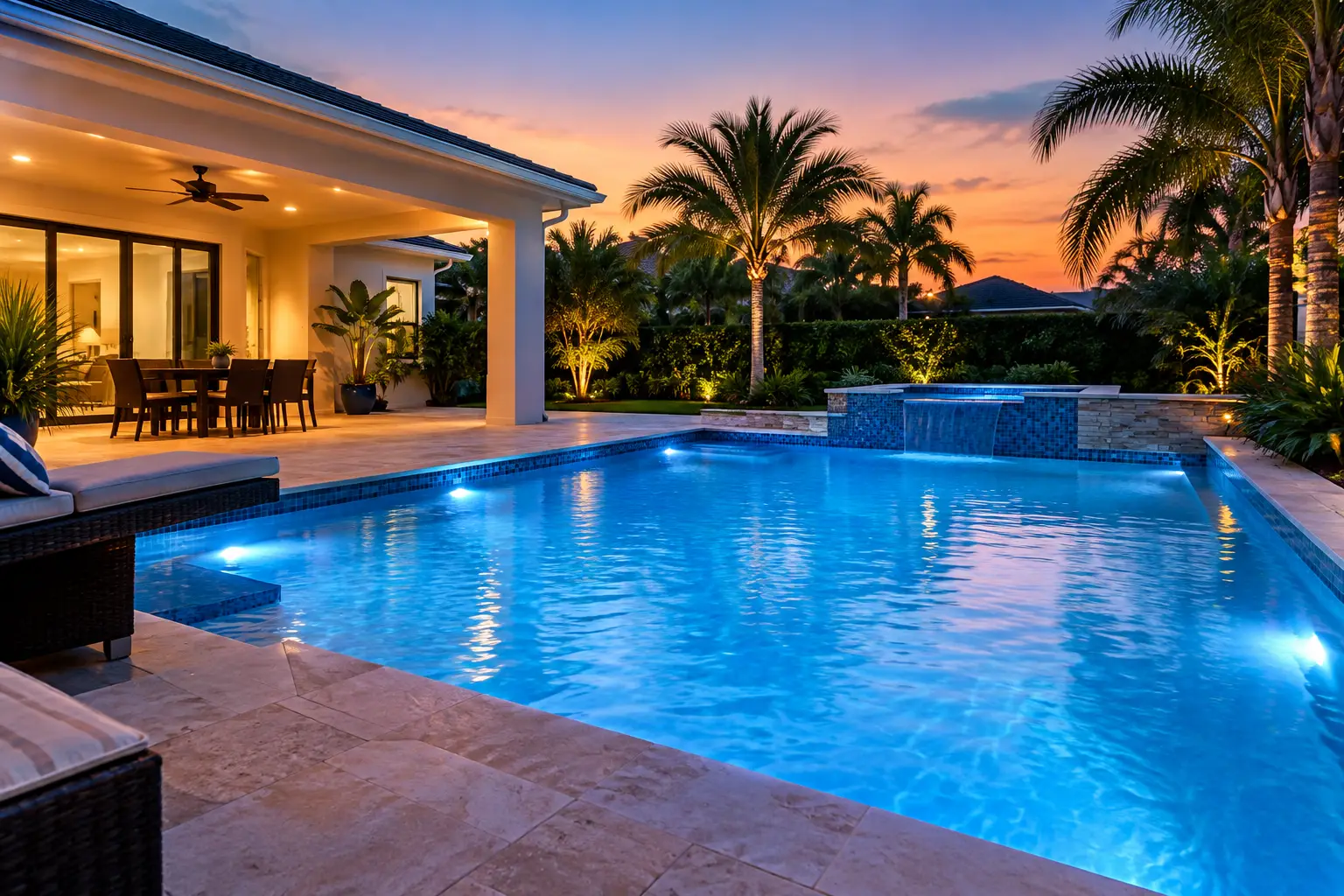
A pool can look perfectly clear in the afternoon and feel like a different space after sunset. Reliable pool lights change that. They help swimmers see steps, ledges, toys, and one another, while making a casual evening outside feel more welcoming. For Florida families who use their pools well beyond daylight hours, lighting is a practical safety feature first and a beautiful upgrade second.
The right lighting setup is not simply about making the pool brighter. It needs to suit the pool’s size, finish, depth changes, surrounding landscape, and how the family actually uses the space. It should also be supported by sound electrical equipment and routine attention when something does not look quite right.
What good pool lights should do
A well-lit pool should make the waterline, stairs, shallow end, and changes in depth easy to see without creating harsh glare. One light may be sufficient for a compact pool, while a longer or freeform pool may need multiple fixtures positioned to limit dark corners.
Light placement matters as much as brightness. Fixtures are typically aimed away from the main seating or viewing area so people can enjoy the pool rather than stare into the beam. The pool finish also makes a difference. Light-colored plaster reflects more light, while darker finishes absorb it and often benefit from thoughtful fixture placement or a higher-output LED option.
Good lighting also makes routine pool care easier. It is much simpler to spot leaves, debris, cloudy water, or a developing stain when the pool is illuminated. That does not replace regular daytime inspection, but it helps homeowners notice changes early.
LED pool lights versus older bulbs
Many older pools still use incandescent or halogen-style lights. These systems can work, but LEDs are now the more common choice when a fixture needs replacement or a homeowner is planning an upgrade.
LED pool lights use far less electricity and generally have a much longer service life than traditional bulbs. They also produce less heat, which can be helpful in Florida’s long swimming season. Most provide crisp white illumination, while some offer color programs that can shift the mood for a gathering, holiday, or quiet night swim.
Color-changing lights are fun, but white light is often the most useful everyday setting. It shows the water clearly and gives the pool a clean, polished look. If color is a priority, choose a system with controls that are simple enough for everyone in the household to use. A feature is only helpful when it does not become frustrating after the first week.
There can be compatibility considerations with an LED upgrade. Older fixtures, transformers, wiring, and automation controls may not all be suited to every replacement light. In some cases, replacing a bulb is possible. In others, upgrading the fixture or related electrical components is the safer and more dependable path.
Signs your pool lighting needs attention
Pool lights tend to get ignored until they stop working completely. A few smaller changes can signal that it is time to have the system checked before an evening swim is interrupted.
A light that flickers, dims, changes color unexpectedly, or works only occasionally may have an issue with the bulb, fixture, transformer, wiring, control, or automation programming. Water visible inside a light fixture is another concern. Pool lights are designed to operate safely under water when correctly installed and sealed, but moisture inside the fixture should be inspected by a qualified pool professional or licensed electrical professional as appropriate.
A breaker or ground-fault circuit interrupter that trips repeatedly is never something to work around. Do not keep resetting it to get the lights back on, and do not attempt to open underwater fixtures, repair wiring, or handle electrical components yourself. Turn the lighting system off and arrange for professional diagnosis. Electricity and water deserve a careful, no-shortcuts approach.
It is also worth paying attention to lights that appear much less bright than usual. A dirty lens, aging bulb, failing transformer, or electrical issue can affect output. The cause is not always obvious from the pool deck, which is why a proper inspection is more useful than guessing.
Lighting and pool equipment work together
Pool lighting does not operate in isolation. Depending on the setup, it may be connected to a transformer, timer, automation panel, remote control, or mobile app. A lighting problem can sometimes be a control problem rather than a failed fixture.
For homeowners updating pumps, heaters, or automation, lighting is worth discussing at the same time. Bringing controls together can make it easier to schedule lights, select color programs, and avoid leaving them on longer than intended. It can also reduce the collection of separate timers and switches around the equipment pad.
That said, not every pool needs a full automation upgrade to enjoy dependable lights. A simple, properly functioning switch and timer may be all that is needed. The best option depends on the age of the pool, existing equipment, desired features, and whether other upgrades are already planned.
Keep pool lights looking their best
The light fixture itself needs to remain in good condition, but clear, balanced water is what lets it do its job. Cloudy water scatters light and can make even a bright fixture look weak. Algae, suspended debris, and poor circulation can create shadows or make the pool look dull after dark.
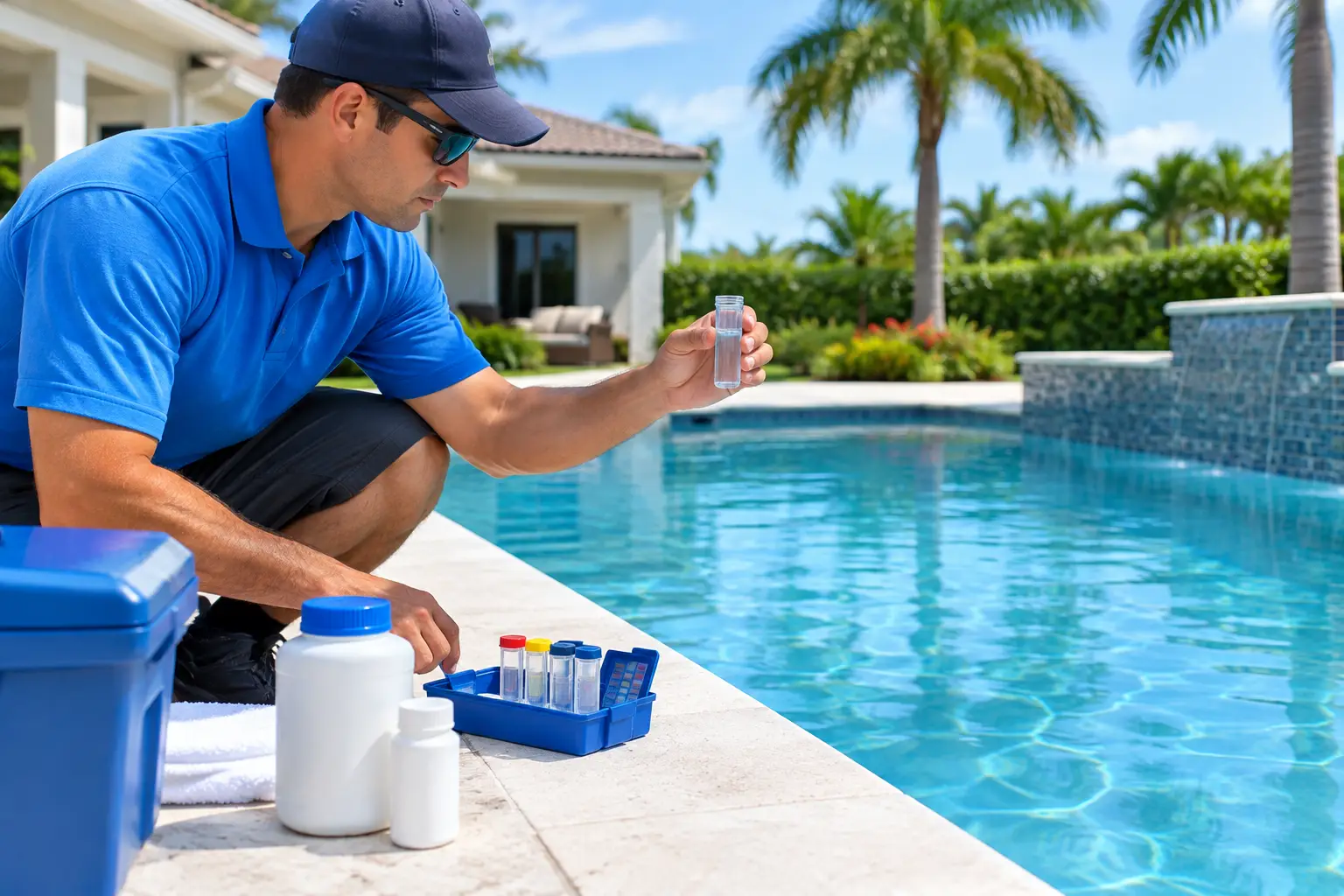
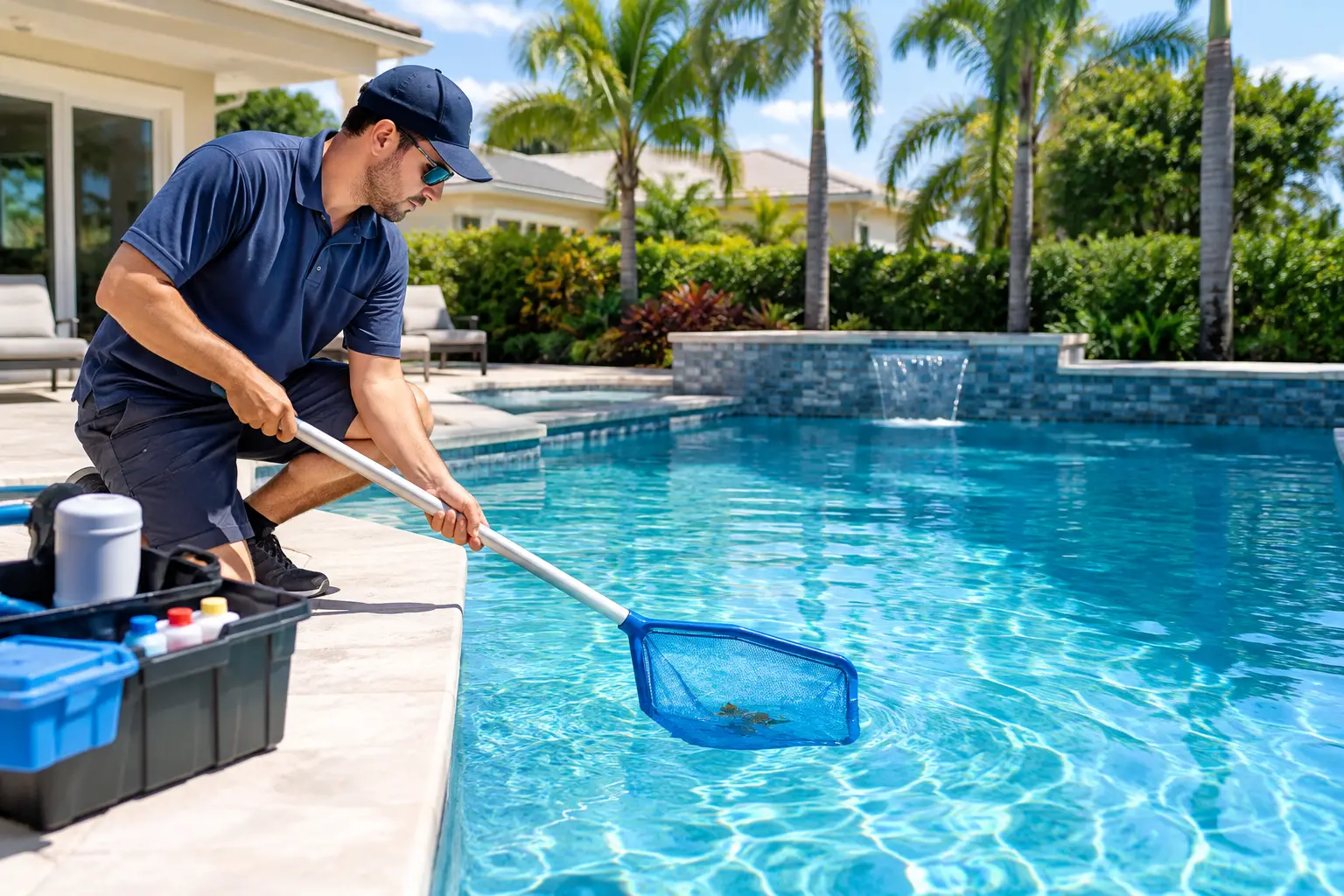
Weekly service supports better visibility by keeping the water clean, properly balanced, and free of the debris that settles around steps and walls. Brushing, skimming, vacuuming as needed, water testing, and careful chemical balancing all contribute to a pool that looks turtly clean in daylight and at night.
Chemical balance also protects the broader pool environment. Water that is consistently out of balance can be tough on surfaces, equipment, and metal components over time. While chemistry will not fix an electrical fault, reliable maintenance helps preserve the conditions around fixtures and keeps the water clear enough for lighting to be effective.
During a routine equipment check, it is helpful to look for obvious concerns around the pool area, such as damaged switches, cracked junction-box covers, or controls exposed to weather. These observations should lead to proper service, not a homeowner repair project. Small problems are usually easier to address before they become a no-light, no-swim situation.
Choosing lighting for how you use the pool
Before replacing or adding pool lights, think about the moments that matter most. A family that swims after dinner may value bright, clear white light and easy on-off control. Homeowners who entertain may want color options and automation that coordinates with landscape lighting or water features. A pool used mainly for exercise may benefit most from evenly lit lanes and clearly visible steps.
Avoid choosing solely by the number of colors or the highest advertised brightness. An overly bright fixture can create uncomfortable glare, particularly in a smaller pool or from a nearby patio. A lower-cost replacement can also become expensive if it is not compatible with the existing fixture, transformer, or controls.
For older pools, an inspection before ordering equipment can prevent surprises. The condition of the niche, conduit, wiring, transformer, and control system helps determine whether a straightforward replacement is realistic or whether the project should include additional updates. Clear expectations at the start make for a better result at the finish.
A safer way to enjoy the water after dark
Even with excellent pool lights, nighttime swimming calls for sensible habits. Keep the deck clear of hoses, toys, and furniture that can become trip hazards. Make sure children are actively supervised, and avoid swimming during thunderstorms or when electrical equipment is behaving abnormally. Lighting improves visibility, but it cannot replace attention around the water.
If your lights are dim, unreliable, or simply no longer match the way you enjoy your backyard, treat that as a worthwhile maintenance conversation rather than an inconvenience to live with. A clear, well-lit pool brings more peace of mind to every evening swim and makes the backyard feel ready whenever the family is.