A pool can look fine on Monday and become cloudy, unbalanced, or algae-prone by the weekend. In Royal Palm Beach, heat, afternoon rain, windblown debris, and frequent use put steady pressure on water chemistry and equipment. Reliable Royal Palm Beach pool care is less about reacting to a problem and more about preventing the small changes that cause bigger ones.
For homeowners, that means having a pool that is clean, safe, and ready when the family wants to use it - without spending Saturday morning skimming leaves, testing water, or trying to work out why the pump sounds different.
Why weekly pool care matters here
A swimming pool is a working system, not a static feature in the garden. Water chemistry shifts as sunshine consumes sanitizer, rain dilutes chemicals, swimmers introduce contaminants, and organic debris breaks down in the water. Even a few missed details can make the water less comfortable, less clear, and harder to correct.
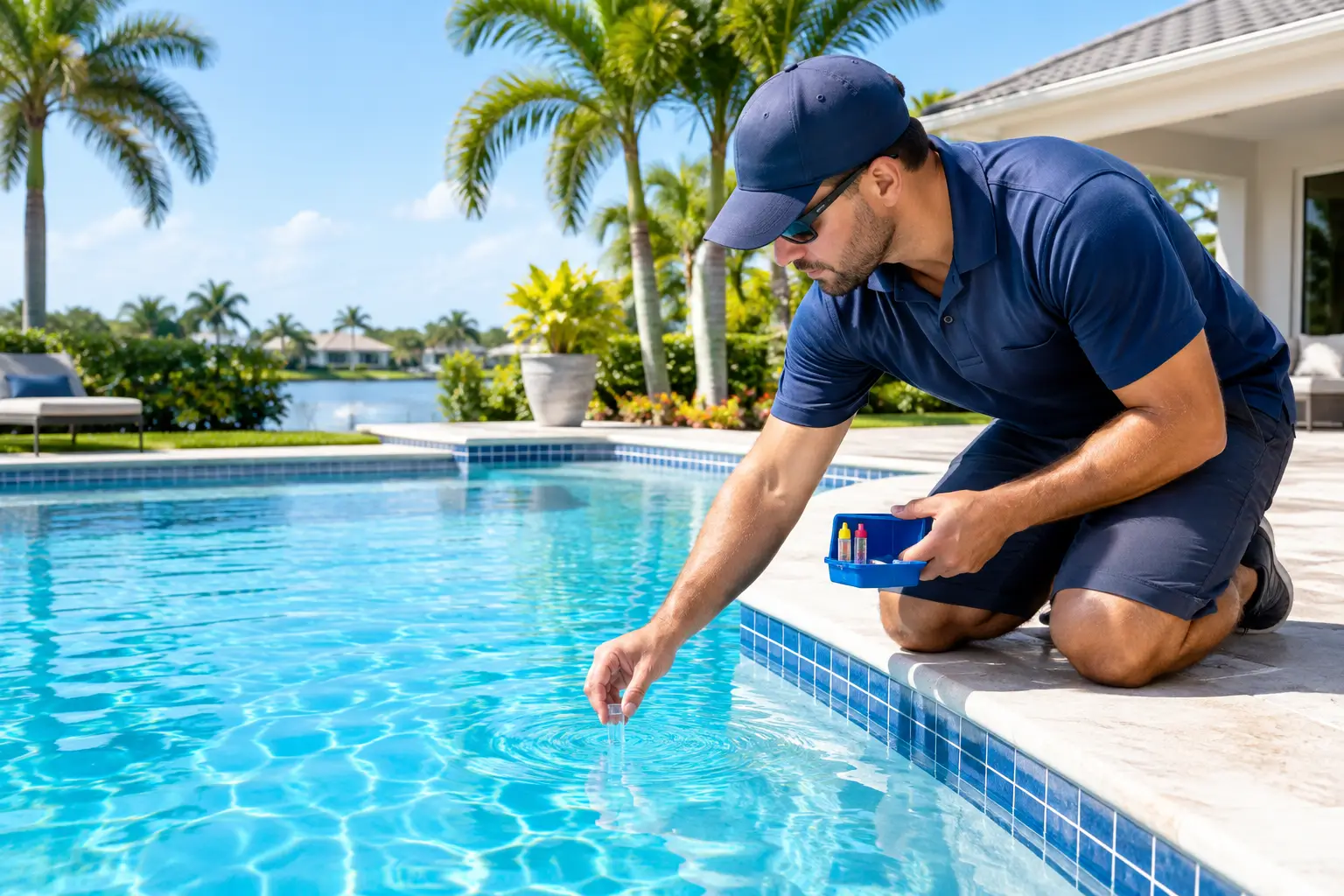
Weekly service creates a consistent baseline. A technician can remove surface debris, brush areas where algae tends to begin, vacuum when needed, empty baskets, test the water, and make measured chemical adjustments. Routine visual checks also help catch signs of trouble around the pump, filter, heater, plumbing, or automation equipment before a minor concern becomes an inconvenient breakdown.
The exact needs of each pool vary. A screened pool with light use may collect less debris than an open pool beneath mature trees. A saltwater pool still needs regular testing and balancing, while a heavily used pool may need closer attention after a busy weekend. The right service is not a one-size-fits-all chemical dose. It is a regular process guided by what the pool is actually doing.
What dependable Royal Palm Beach pool care includes
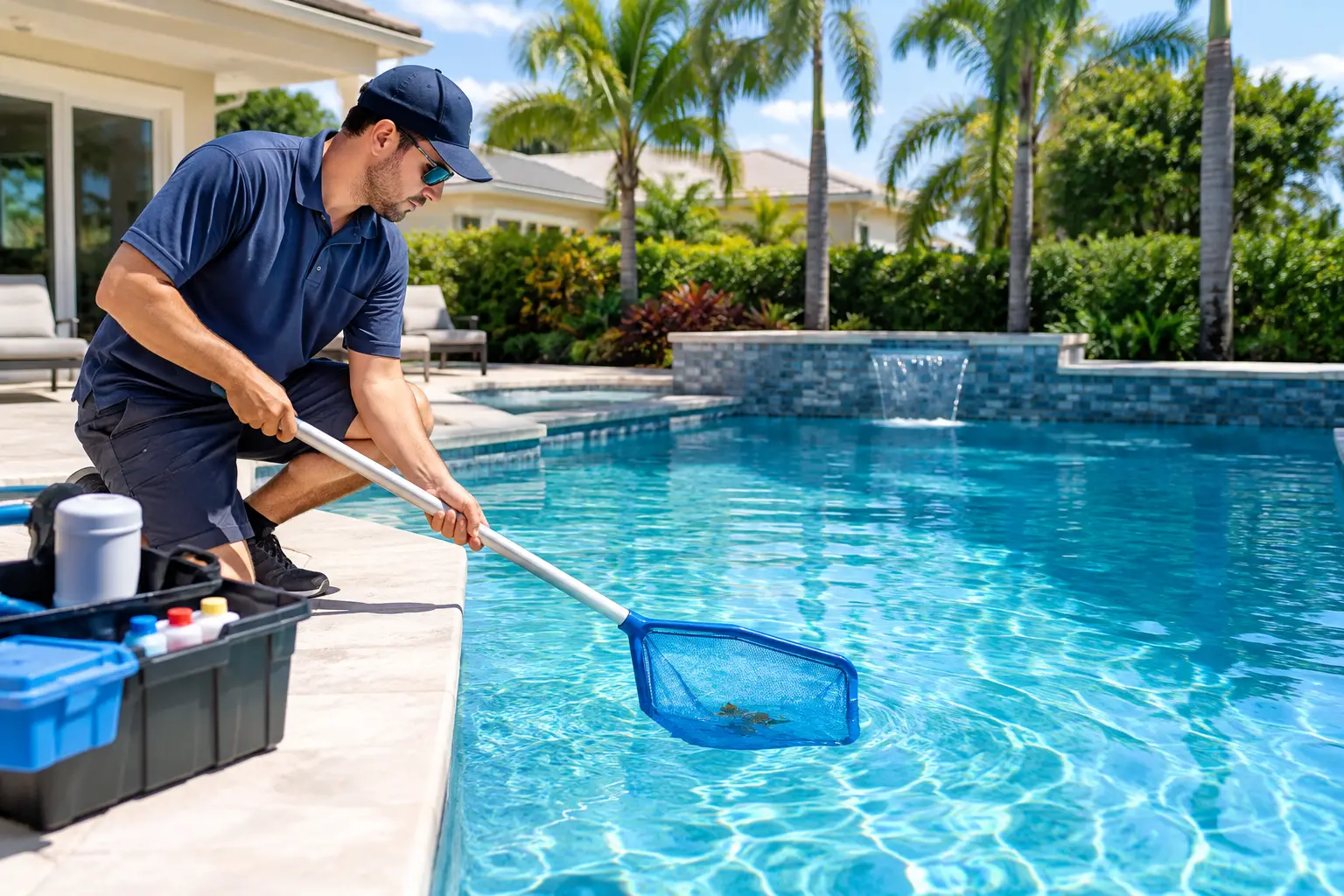
Good weekly care should address both appearance and performance. Skimming is the most visible task, but it is only one part of keeping a pool turtly clean. Brushing walls, steps, tile lines, and other surfaces helps prevent buildup from getting established. Vacuuming removes settled debris that a skimmer cannot reach, particularly after storms or windy days.
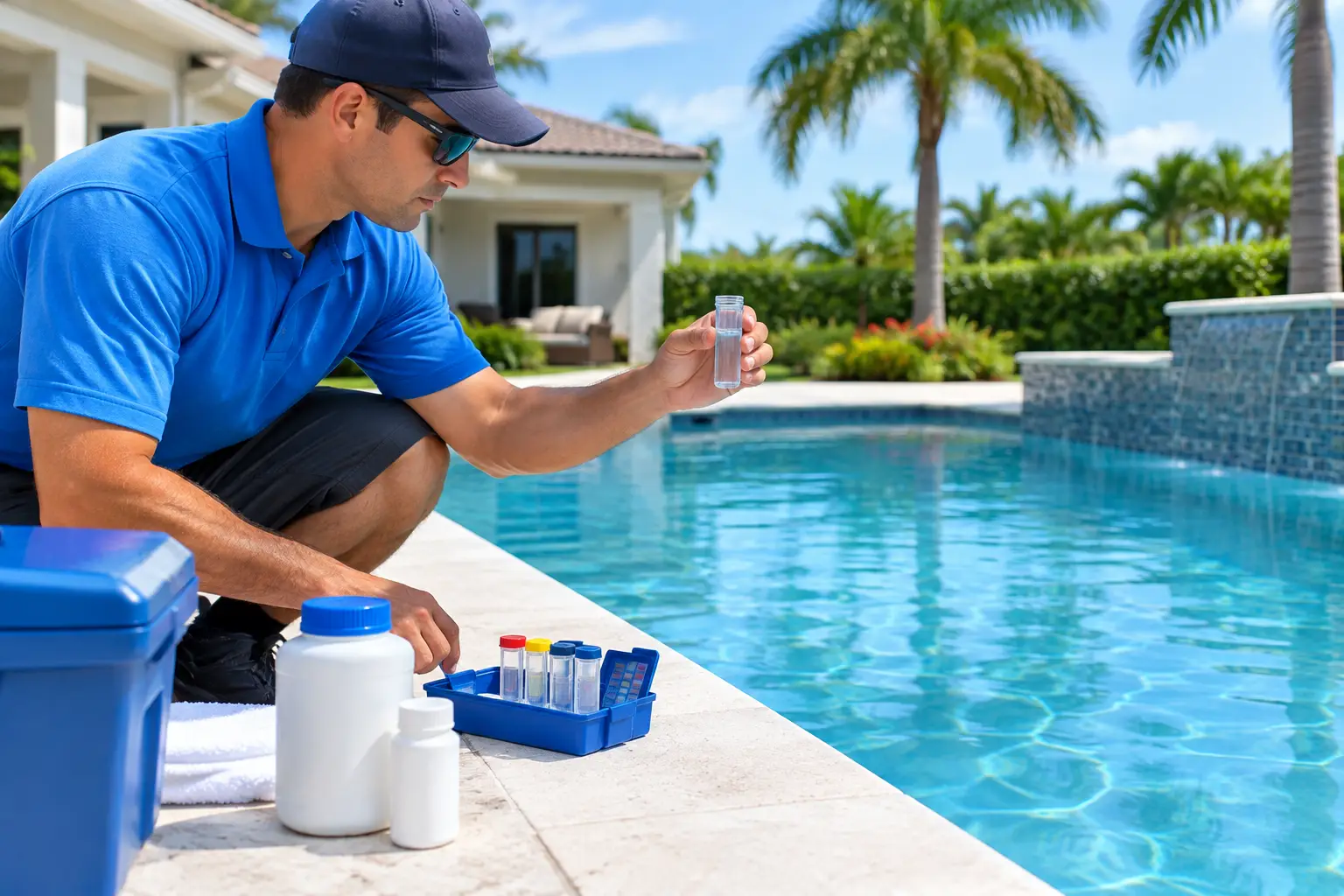
Water testing is where the less visible work happens. Sanitizer, pH, alkalinity, stabiliser, and other water-balance factors all affect one another. When chemistry is kept within an appropriate range, the pool is more comfortable to use, sanitizer can work effectively, and surfaces and equipment are better protected from avoidable stress.
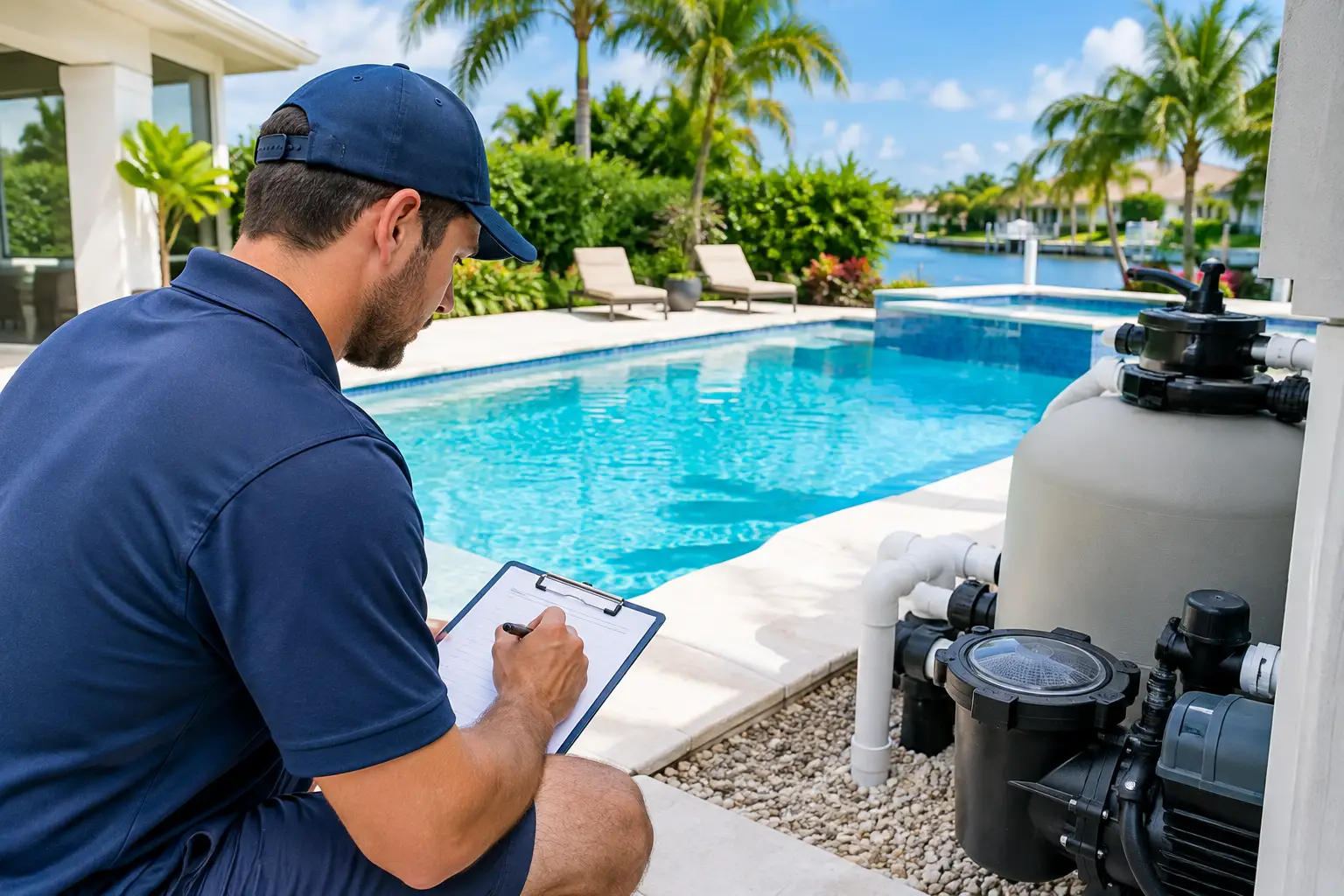
A careful service visit should also include a practical look at circulation. Is water moving as it should? Are baskets filling unusually quickly? Is the pump louder than normal? Is there a visible leak, an error message, or a change in return flow? A weekly visual inspection cannot predict every repair, but it can identify clues early.
Just as important, homeowners should not be left guessing whether service happened or what was found. Visit notifications, detailed digital reports, and photographs of completed work provide a clear record. That transparency is especially useful for seasonal residents, busy families, and anyone who wants confidence that their pool received the attention it needs.
Clear water is not always balanced water
A pool can look clear while still having chemistry that needs correction. Water that is too acidic or too alkaline may be uncomfortable for swimmers and can contribute to scaling, staining, or unnecessary wear over time. Low sanitizer may not be visible immediately, while excessively strong chemical levels can also create problems.
This is why color alone is not a reliable measure of pool health. Regular professional testing provides better information than a quick glance across the water. It also supports smaller, more deliberate adjustments rather than dramatic corrections after the chemistry has drifted too far.
Homeowners can help between visits by keeping the water level where it should be, watching for sudden changes in clarity, and reporting unusual equipment noise or leaks promptly. Chemical handling should be left to trained pool professionals, particularly when a pool is green, severely unbalanced, or has a persistent water-quality issue. Combining products or making large unsupervised adjustments can create a more difficult and less safe situation.
When green water needs more than a weekly visit
Algae does not always begin as bright green water. It can start as a slight haze, a slippery feeling on steps, or patches that return soon after brushing. Once algae takes hold, standard weekly maintenance may not be enough to restore the pool quickly. The cause could be depleted sanitizer, poor circulation, an equipment problem, heavy rain, organic debris, or several factors at once.
A green-to-clean recovery should begin with an assessment of the water and the pool system. The water needs to be treated in a controlled way, surfaces brushed thoroughly, and filtration supported so it can capture what is being removed from the water. In some cases, the filter, pump runtime, or circulation pattern is part of the underlying issue and needs attention too.
Stains and surface discoloration require the same careful approach. Not every stain has the same cause, and aggressive treatment is not always the right answer. Acid washing and stain removal can be appropriate for certain conditions, but they should be assessed professionally to protect the pool surface.
Equipment care protects the whole pool
The pool equipment pad is the engine room of the system. A pump that loses prime, a filter that is struggling, a heater that will not start, or a leaking fitting can affect water quality as well as convenience. Ignoring equipment concerns often makes chemistry harder to maintain because the pool is not circulating or filtering correctly.
Repair versus replacement depends on the age and condition of the equipment, the type of failure, and the homeowner's longer-term plans. A straightforward pump repair may make sense in one situation. In another, replacing an inefficient or repeatedly failing unit may be the more practical option. The same thinking applies to heaters, heat pumps, saltwater systems, automation controls, and pool cooling solutions.
Modern automation can be particularly useful for homeowners who want clearer control over schedules and pool features. It does not replace hands-on service, but it can make daily operation easier and provide better visibility into how the system is running. The best upgrade is the one that fits the pool, the household, and how the family actually uses the water.
Homeowners should never attempt electrical repairs or open equipment that they are not qualified to service. A prompt professional inspection is the safer choice when equipment trips, leaks, makes unfamiliar noises, displays faults, or stops working.
New and resurfaced pools need a deliberate start
A newly built or resurfaced pool is exciting, but the first weeks are not business as usual. Fresh surfaces need a structured startup process, with close attention to water balance, brushing, and the developing condition of the finish. Skipping steps early can lead to cosmetic or performance concerns that are harder to address later.
A planned 28-day startup gives the pool the careful attention it needs during this sensitive period. The schedule may include frequent brushing, targeted chemistry management, and equipment checks based on the surface and pool configuration. It is detailed work, but it helps establish a cleaner, more stable foundation for the years ahead.
A service relationship built on visibility
Pool care should make life easier, not leave another item on the homeowner's to-do list. The value of professional maintenance is not only the clean water on service day. It is the reassurance that someone is watching the details, communicating clearly, and responding with practical expertise when the pool needs more than routine care.
Turtle Pool Care brings family-owned accountability to weekly maintenance, repairs, recoveries, and equipment support for homeowners in Royal Palm Beach and selected nearby communities. Each visit is an opportunity to protect the pool, not just make it look good for the afternoon.
A well-maintained pool should feel simple from the homeowner's side: clear water, dependable equipment, useful updates, and more time to enjoy the space. With consistent attention, small issues stay small and your pool stays ready for the moments that matter.