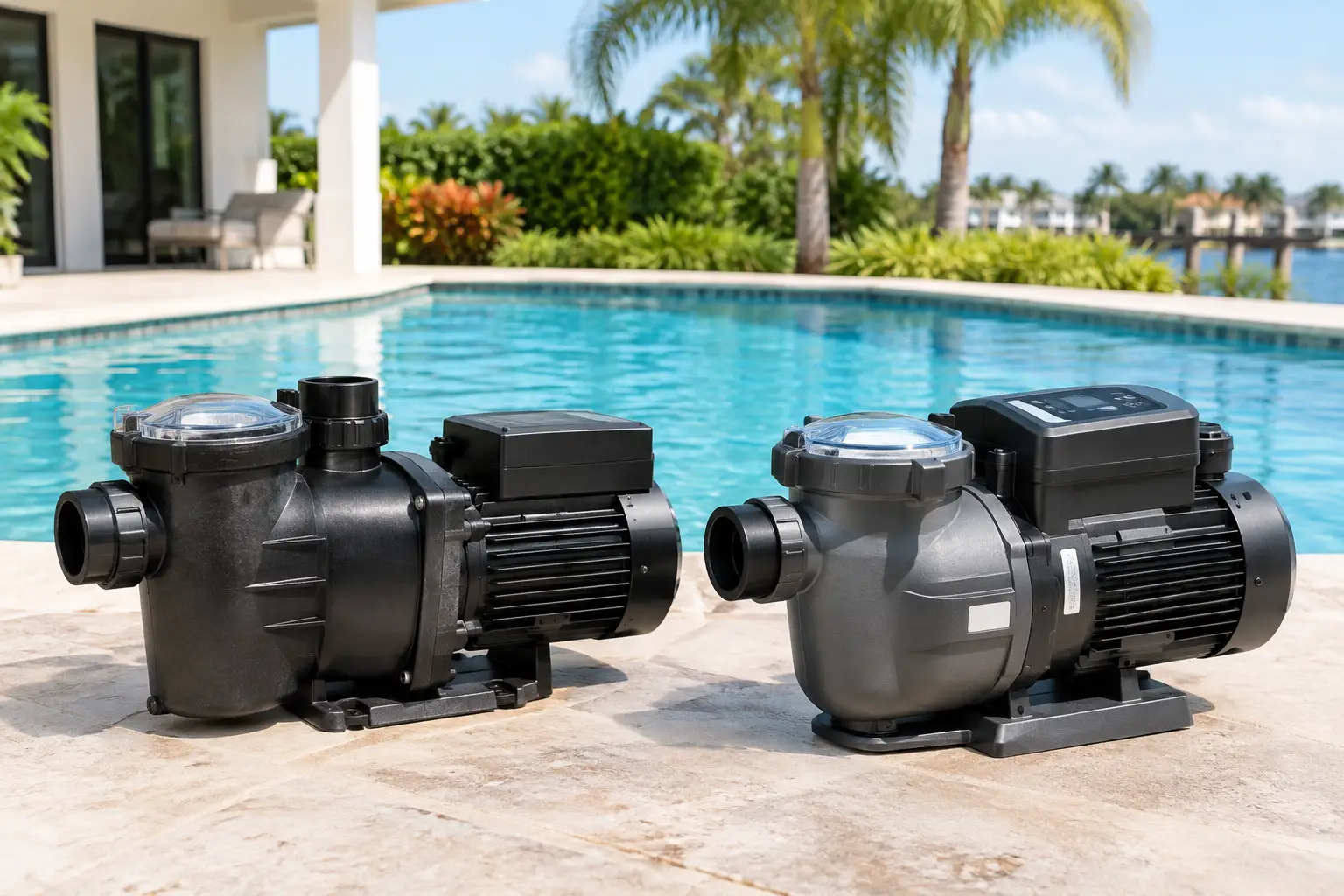
A pool pump can be the hardest-working piece of equipment on the pad, and it can also be one of the biggest contributors to a home’s electricity use. This variable speed pump comparison is designed to help homeowners look past the label and choose a pump that fits their pool, plumbing, and daily routine - not simply the largest motor available.
For many homes in Wellington, Westlake, Royal Palm Beach, and nearby communities, a variable speed pump is a practical upgrade when an older single-speed unit is nearing the end of its life. The right choice can improve circulation, lower operating costs, reduce noise, and give you better control over how your pool runs. But the best pump depends on more than horsepower.
Variable Speed Pump Comparison: What Actually Changes?
A traditional single-speed pump runs at one high speed whenever it is switched on. It moves a large volume of water quickly, whether the pool needs that flow or not. A variable speed pump uses a programmable motor that can run at different speeds for different jobs.
That matters because filtration does not usually require maximum speed all day. Pool water can be filtered effectively at a lower, steady speed when the plumbing and equipment are properly matched. Lower speeds use considerably less electricity than running a motor flat out, while longer run times can keep water circulating more consistently.
Variable speed pumps also make less noise at normal filtration speeds. For a pump located near a patio, bedroom wall, or neighbor’s property line, that quieter operation can be as valuable as the energy savings.
The trade-off is upfront cost and set-up. Variable speed pumps generally cost more than basic single-speed models, and their programming should be tailored to the pool. A pump set too low may not provide enough flow for certain equipment. One set too high loses much of the benefit of upgrading.
Single-Speed, Two-Speed, and Variable Speed Pumps
Single-speed pumps are straightforward. They have one setting, are familiar to many homeowners, and may still be appropriate in limited replacement situations where compatible equipment and budget are the deciding factors. Their drawback is efficiency: every cleaning cycle, filtration cycle, and heating cycle occurs at the same high speed.
Two-speed pumps offer a high and low setting. They can provide a modest improvement over single-speed operation, especially when the pool can filter on low and reserve high speed for vacuuming or water features. However, they do not offer the same level of scheduling and fine adjustment as a variable speed model.
Variable speed pumps provide the widest operating range. Homeowners can schedule lower speeds for everyday circulation, then program higher speeds for tasks that demand them, such as operating a spa, running a booster-dependent feature, priming after service, or improving skimmer action after a windy day. In a residential setting, this flexibility is usually the key advantage.
Why lower speed can cost less
Pump energy use does not decrease in a simple one-to-one ratio with speed. When pump speed is reduced, the power required can fall dramatically. That is why a properly programmed variable speed pump can make a meaningful difference compared with a single-speed pump running at full output for several hours each day.
Savings vary. Pool size, circulation needs, electricity rates, plumbing design, water features, heater operation, and run schedule all matter. A pool with a raised spa, multiple water features, or a pressure-side cleaner may need high-speed periods that a simple pool does not. A realistic comparison looks at the entire system rather than promising one universal savings number.
Start With Your Pool’s Real Circulation Needs
Horsepower is useful, but it is not the whole story. The pump must move enough water through the pool, filter, heater, sanitizing system, and plumbing without creating excessive pressure or flow. Oversizing a pump can cause unnecessary energy use, noisy operation, and avoidable strain on equipment.
Pool volume is a starting point. Larger pools generally require more total circulation, but pool shape, pipe size, equipment location, elevation changes, and the number of returns all affect the resistance the pump must overcome. A compact pool with restrictive plumbing can need a different solution than a larger pool with efficient plumbing.
The filter matters, too. A dirty filter restricts flow, which may lead a homeowner to increase pump speed when filter cleaning is actually the better answer. During routine service, checking pressure, water movement, and equipment condition helps separate a programming issue from a maintenance issue.
Features that require more flow
Many pools need different speeds during the day because different equipment has different flow requirements. Heaters and heat pumps need sufficient water flow to operate correctly. Saltwater systems need circulation while they are generating chlorine. Water features, spa jets, and some cleaners may require higher speeds than basic filtration.
A variable speed pump handles this well when its schedule is built around those requirements. For example, a pool may run at a quiet low speed for most of the day, increase speed during a heating window, and briefly run faster for a feature or cleaning cycle. The exact schedule should be based on the equipment installed and the condition of the water.
Controls and Automation Make a Difference
Most variable speed pumps include onboard controls and a display that allow schedules and speed settings to be adjusted at the pump. This may be enough for a simple pool, especially when the goal is dependable daily filtration with one or two higher-speed periods.
For pools with automation systems, integrated control can be more convenient. The system may change pump speed when the spa is turned on, when a heater calls for circulation, or when a water feature is activated. The value is not just convenience. Correct coordination can help equipment operate as intended without requiring the homeowner to remember multiple settings.
Compatibility deserves attention before a replacement is selected. Existing timers, relays, automation panels, heaters, salt systems, and wiring may affect the installation approach. Electrical work and pump installation should be handled by qualified professionals. Pool equipment combines water, high-voltage connections, and manufacturer-specific setup requirements, so this is not a do-it-yourself shortcut worth taking.
Noise, Reliability, and Daily Use
A quieter pool pad changes how a back garden feels. At lower speeds, variable speed pumps are often noticeably less intrusive than older single-speed pumps. Still, unusual noise is not always a pump-speed issue. Air leaks, worn bearings, loose plumbing, a clogged impeller, and vibration against the equipment pad can all contribute.
Reliability depends on selecting the correct pump and maintaining the system around it. A well-sized pump cannot compensate for a failing filter, a damaged valve, or persistent air entering the suction line. Regular visual equipment checks help catch those concerns before they become a no-flow situation or leave the pool water looking less than turtly clean.
Questions to Ask Before Replacing a Pool Pump
Before deciding on a pump, it helps to document what the current system is doing well and where it struggles. Consider the pool’s approximate volume, the existing pump size, whether the pool includes a spa or features, current filter type, heater or heat pump, saltwater system, cleaner, and automation controls.
Also pay attention to the symptoms behind the replacement. Is the pump leaking, loud, losing prime, tripping a breaker, or simply expensive to run? A repair may make sense when the issue is isolated and the pump is otherwise suitable. Replacement becomes more compelling when the motor is failing, the pump is outdated, or the system needs a better match for upgraded equipment.
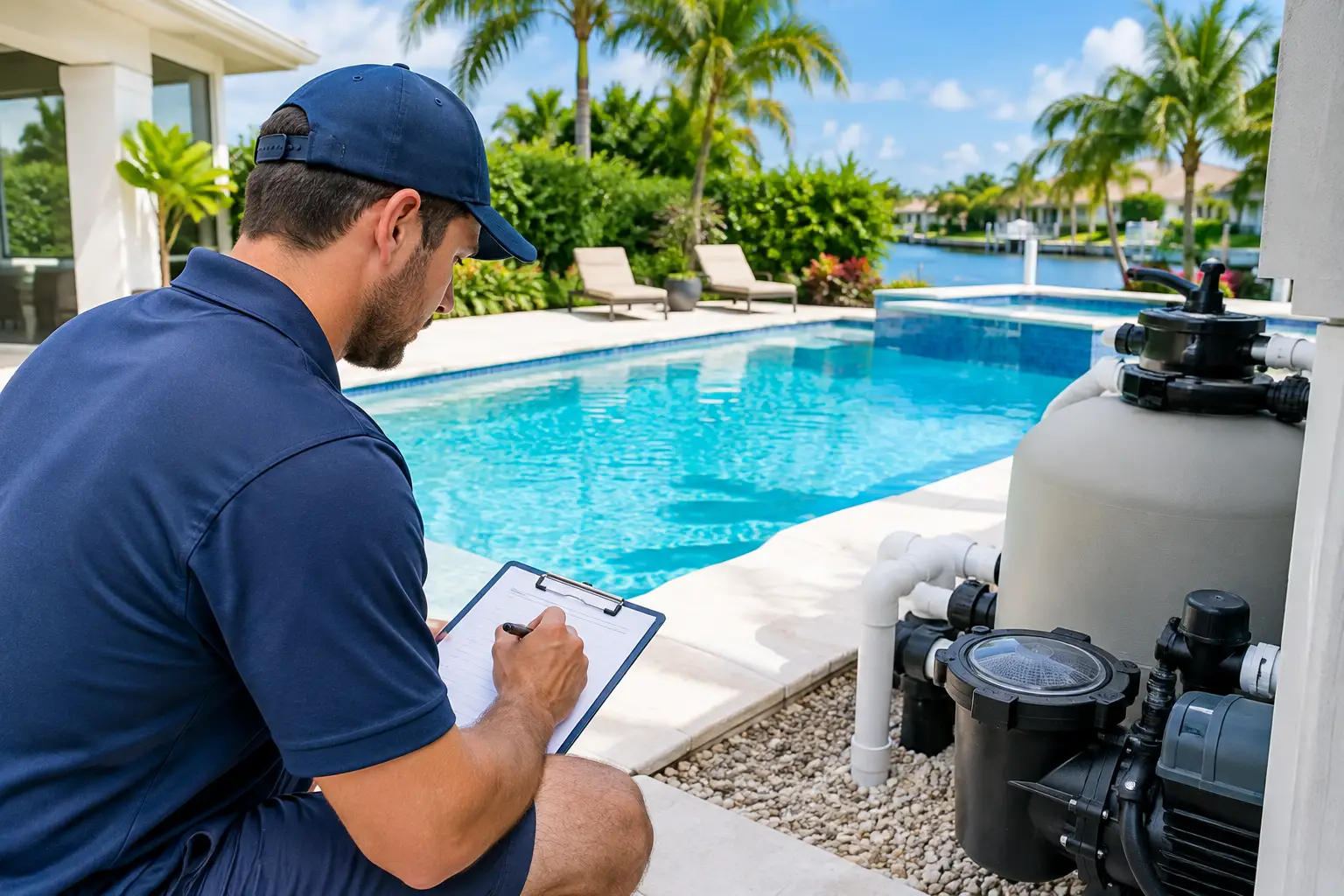
A professional equipment assessment should include plumbing connections, filter condition, electrical requirements, flow needs, and the practical schedule for the household. That produces a recommendation based on the pool in front of you, not a generic horsepower chart.
A variable speed pump is most valuable when it is treated as part of a complete circulation system. The next helpful step is to have the current equipment evaluated, then choose settings that keep the water moving, the chemistry supported, and pool ownership pleasantly simple. Turtle Pool Care can help homeowners make that decision with clear recommendations and the same careful attention used in weekly pool service.