A pool can look clear on Monday and develop a cloudy tint, rough-feeling surfaces, or a growing equipment problem before the weekend. Reliable pool service is not simply a quick skim of the water. It is a consistent plan for keeping the pool clean, safe, balanced, and ready for the people who use it.
For homeowners, the difference is peace of mind. Instead of wondering whether the chlorine level is right, whether the pump is running as it should, or why leaves keep collecting in one corner, you should know what was checked and what needs attention. That is especially valuable in Florida, where heat, rain, wind, and frequent pool use can change water conditions quickly.
Pool service starts with a dependable weekly routine
Weekly care is the foundation of a healthy residential pool. Skipping a visit may not immediately turn the water green, but small issues can build up fast. Leaves and debris consume sanitizer as they break down. Rain can dilute chemicals. High temperatures encourage algae growth. A weak circulation system can leave certain areas of the pool under-treated.
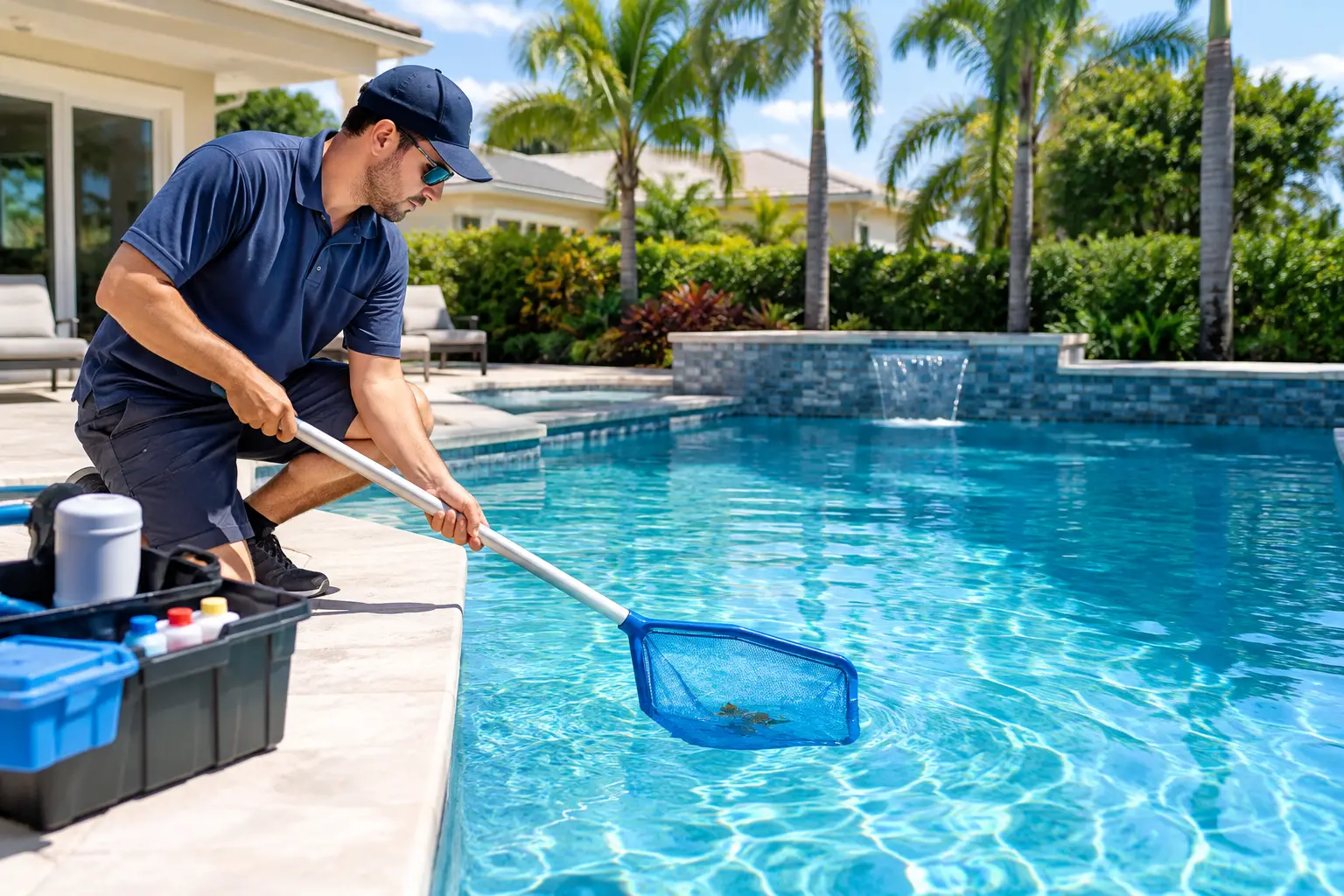
A thorough weekly visit should address the visible condition of the pool and the chemistry working behind the scenes. That typically includes skimming the surface, emptying baskets as needed, brushing walls and steps, and vacuuming when the pool needs it. Brushing matters because algae and scale do not only appear in the centre of the water. They often begin along waterlines, steps, corners, and shaded surfaces where circulation is less active.
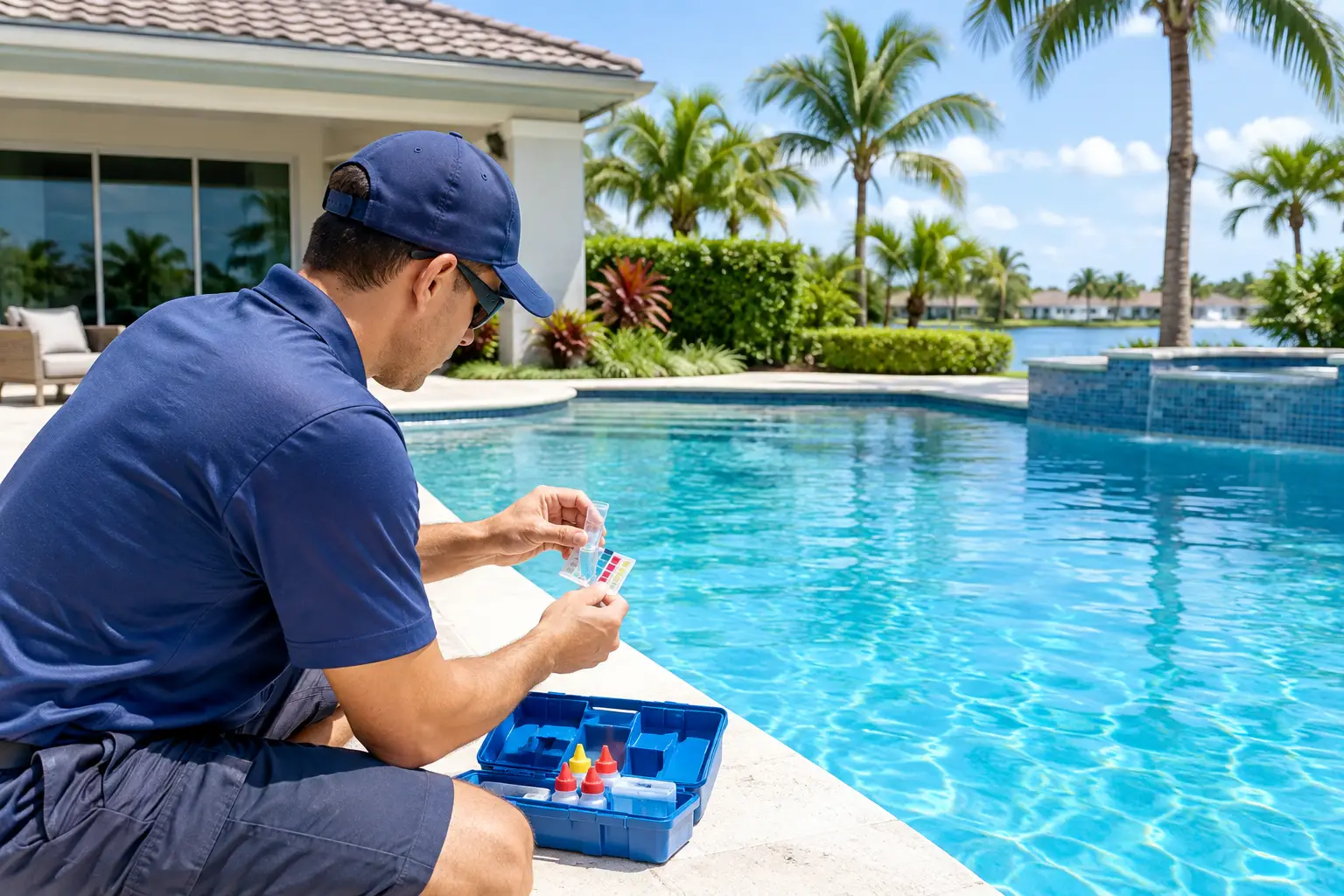
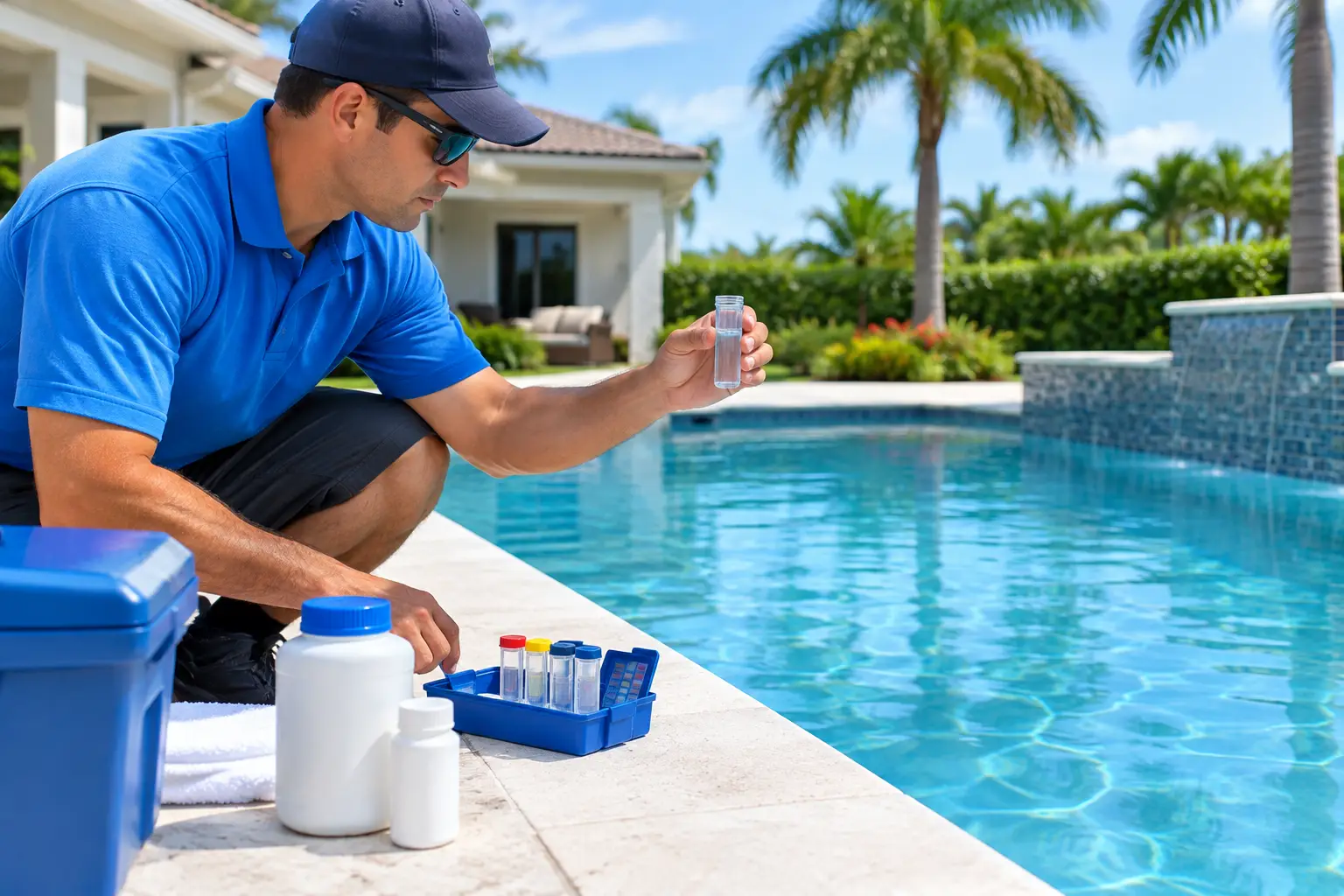
The service professional should also test the water and make measured adjustments. Chlorine or other sanitizer, pH, alkalinity, stabiliser, calcium hardness, and salt level for saltwater pools all affect one another. Treating one number without considering the rest can create a temporary fix rather than stable water.
There is no single chemical recipe that works for every pool. A screened pool in Wellington may collect less debris than an open pool in Loxahatchee or The Acreage, while a heavily used family pool may need a different approach than a pool used mainly on weekends. Good pool care responds to the pool in front of you, not a one-size-fits-all checklist.
Clear water is not always balanced water
One of the most frustrating pool-owner experiences is seeing crystal-clear water that still irritates eyes, damages equipment, or leaves scale on tile. Appearance is useful, but it does not tell the full story.
Balanced water protects swimmers, finishes, plumbing, heaters, and pumps. When pH is too high or too low, sanitizer may not perform efficiently and surfaces can become uncomfortable or vulnerable to damage. Improper calcium hardness can contribute to scaling or corrosive water. Low alkalinity can make pH difficult to control, while excessive stabiliser can reduce the effectiveness of chlorine.
A knowledgeable technician looks at how the readings work together, then makes careful adjustments. This is also why adding extra chemicals “just in case” is rarely a good plan. Overcorrection can lead to additional problems, wasted product, and more time spent bringing the water back into range.
Homeowners can help between visits by keeping an eye on the pool’s appearance, water level, and equipment operation. If the water suddenly changes color, the pump sounds unusual, or the return jets lose pressure, reporting it early can prevent a larger repair or recovery later.
Equipment checks catch small problems early
Your pool equipment does most of its work out of sight. The pump circulates water. The filter captures fine debris. The heater or heat pump helps maintain a comfortable temperature. Valves, timers, plumbing, and automation controls keep the system operating on schedule.
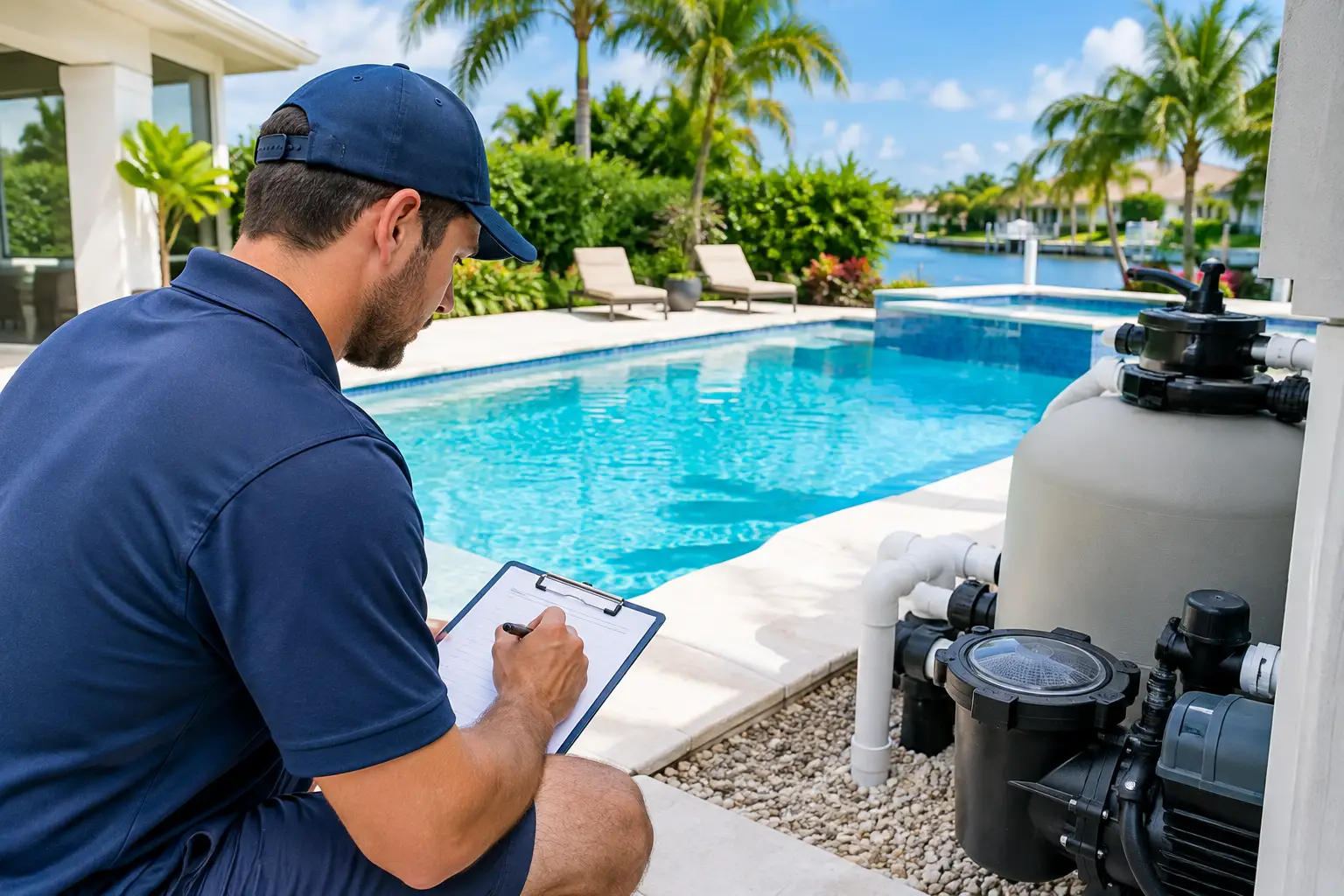
During regular service, a visual inspection of equipment can reveal warning signs such as leaks, air in the pump basket, unusual noise, poor circulation, damaged fittings, or error messages. Not every issue requires an immediate replacement. Sometimes the fix is a repair, an adjustment, or a closer evaluation of how the system is operating.
Prompt attention matters. A small leak may become a larger water-loss problem. A pump that is straining to prime can place stress on the motor. Restricted flow can affect heating, filtration, and sanitizer distribution. The goal is not to create alarm over every drip or sound. It is to identify what is normal, what should be monitored, and what deserves repair before it disrupts your pool time.
For equipment work involving electrical connections, motors, heaters, or automation, homeowners are best served by professional diagnosis and repair. Pool systems combine water, electricity, pressure, and chemistry. A careful inspection is far safer than trial-and-error repairs.
Communication is part of quality pool service
A pool visit should not feel like a mystery. When someone cares for your pool while you are at work, travelling, or busy with family life, clear communication helps you stay informed without having to oversee every detail.
Service notifications, detailed digital reports, and photos of completed work provide a useful record of what happened at each visit. They also make it easier to spot patterns over time. Perhaps leaves increase after a windy week, a water level is dropping, or a piece of equipment has begun showing repeated signs of wear. Good documentation turns vague concerns into useful information.
This level of visibility is particularly helpful for new pool owners. There is a learning curve to understanding circulation, filtration, chemistry, and seasonal changes. A service team that explains findings clearly can help a homeowner make decisions with confidence instead of relying on guesswork.
When routine care is not enough
Some pool conditions call for more than a normal weekly visit. Green water, stains, startup chemistry, aging equipment, and inconsistent heating each need a more focused response.
A green-to-clean recovery, for example, is not simply a matter of adding chlorine and hoping for the best. Algae treatment depends on the severity of the bloom, the condition of the filter, circulation, debris removal, and ongoing water testing. The water may look better before it is fully balanced and safe for normal use, so the recovery process should be managed carefully.
Stains and surface discoloration also need proper identification. Metal staining, organic debris, scale, and finish-related issues can look similar from a distance but require different solutions. Acid washing and stain removal can be effective in the right circumstances, but they should be approached with care because pool surfaces are not all the same.
New pools and newly resurfaced pools deserve structured attention as well. During the initial startup period, water chemistry and surface care are especially important. A disciplined process helps support the finish while the pool begins its regular operating life.
Equipment upgrades can make ownership easier when an older system no longer meets your needs. A variable-speed pump may improve energy efficiency and circulation. Automation can simplify scheduling and control. A saltwater system changes how sanitizer is generated, but it still requires balanced water and regular oversight. Heaters, heat pumps, and pool cooling solutions can improve comfort, though the right choice depends on how you use the pool, existing equipment, and household priorities.
How to recognize an attentive service provider
The best fit is not always the company that promises the fastest visit or the longest list of add-ons. Look for consistency, clear expectations, and practical knowledge. A provider should be able to explain what is included in weekly care, how they communicate after visits, and how they approach equipment concerns or water-quality changes.
It also helps to choose a team that treats your pool as part of your home. Gates should be secured, the equipment area should be respected, and questions should receive straightforward answers. Family-owned accountability can make a real difference when the same people are invested in building a long-term relationship rather than treating service as a quick transaction.
For homeowners in Wellington, Westlake, Greenacres, Royal Palm Beach, Loxahatchee, The Acreage, Avenir, and The Club at Ibis, Turtle Pool Care brings that approach to weekly maintenance, water care, repairs, and upgrades. The aim is simple: a pool that stays turtly clean, properly balanced, and ready when you are.
The next time you walk past your pool, take a moment to notice more than the color of the water. Listen to the equipment, look at the waterline, and think about whether you know what was done at the last visit. A well-cared-for pool should feel easy to enjoy because the important details are already being handled.