A pool can look fine from the patio and still be drifting toward an algae problem, an equipment issue, or water that is uncomfortable to swim in. The best pool service questions help you look beyond a promise of “weekly cleaning” and find out how a company actually cares for your water, equipment, and property.
For homeowners, the right questions are not about trying to catch a provider out. They are about setting clear expectations before someone takes responsibility for a major part of your home. A dependable service company should welcome them and answer plainly.
Best pool service questions for weekly care
What is included in every weekly visit?
“Pool service” can mean very different things. Ask for a clear explanation of the routine tasks completed each week. A thorough residential visit commonly includes skimming surface debris, brushing appropriate pool surfaces, vacuuming as needed, emptying baskets, testing the water, balancing chemicals, and visually checking equipment.
The details matter because pools do not stay clean by accident. Brushing helps prevent buildup in areas circulation may miss. Removing debris protects water quality and reduces the strain on baskets and equipment. Regular testing gives the technician a chance to correct changing conditions before swimmers notice cloudy water or irritation.
Also ask what “as needed” means for vacuuming and other tasks. A pool beneath mature trees may need a different approach than a screened pool with light use. Good service is consistent, but it should also respond to the real conditions at your home.
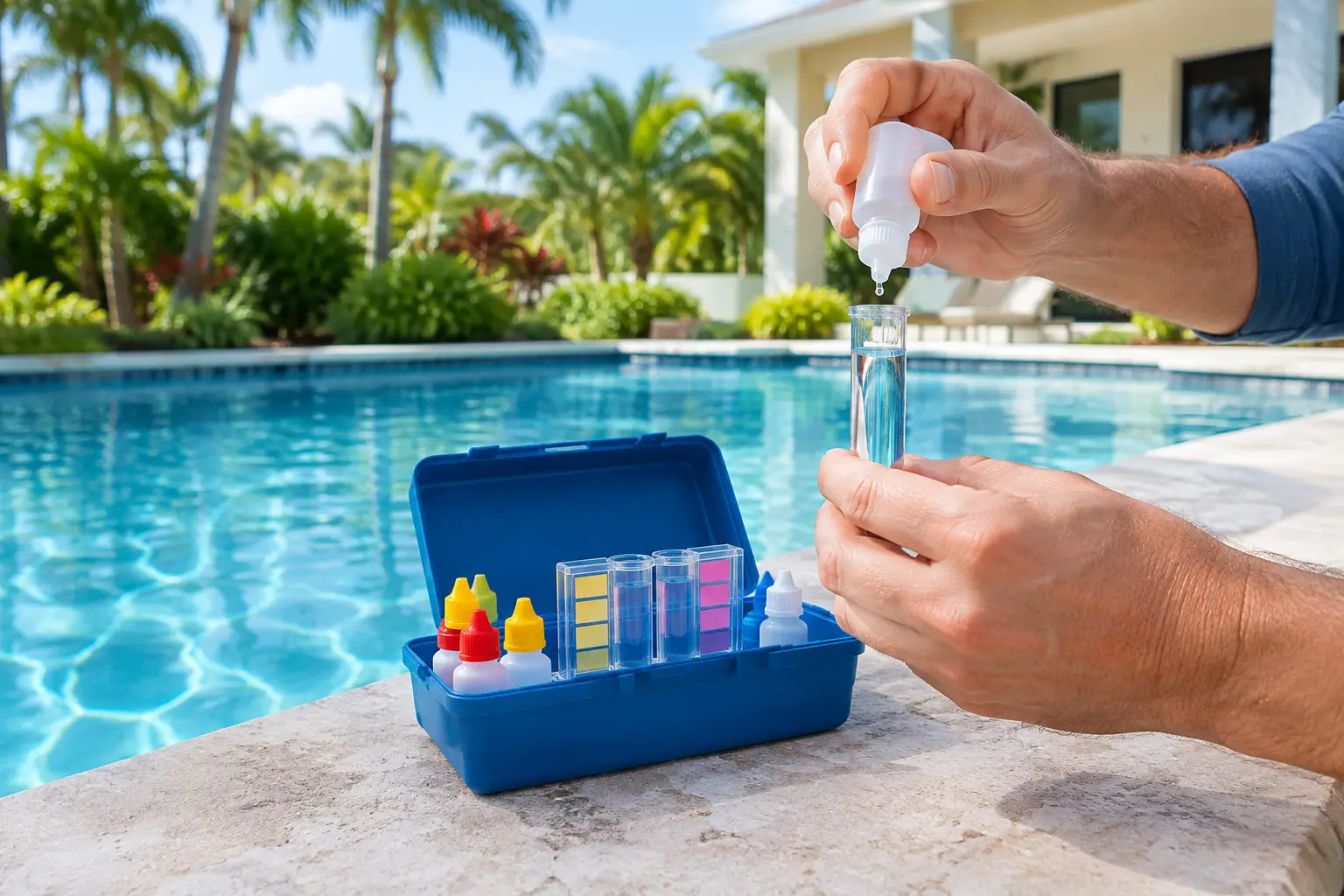
How do you test and manage water chemistry?
Water chemistry is where reliable pool care becomes more than a quick skim and empty basket. Ask how the company tests the water, what factors it monitors, and how it decides which adjustments are needed. The goal is water that is safe, comfortable, clear, and properly balanced for the pool’s surfaces and equipment.
A good answer should recognize that chemistry changes. Heavy rain, hot weather, frequent swimming, nearby landscaping, and an underperforming pump can all affect the water. There is no one-size-fits-all chemical routine that works perfectly for every pool every week.
You do not need to become a chemist to hire a pool professional. You should, however, expect a provider to explain unusual readings or recurring problems in terms you can understand. If the water turns green, becomes cloudy, or needs a more involved recovery, ask what the process will be and what may have caused the change.
Will I receive proof of completed service?
A weekly visit is easier to trust when you can see what was done. Ask whether the company sends service notifications, digital reports, water-test information, and photos after each visit. This is especially helpful if you are at work, travel often, or simply do not inspect the pool every day.
Documentation also creates a useful history. If a pump begins making noise or a recurring chemistry issue develops, past visit notes can help show when the condition first appeared. Clear reports turn pool care from a vague monthly expense into a visible service you can follow.
How will you communicate if something is wrong?
The best time to learn a company’s communication style is before an issue arises. Ask whether they contact you when they spot a leak, damaged equipment, unusual water loss, a heater concern, or a condition that needs additional work. Find out whether routine questions are handled by phone, text, email, or an online service system.
Fast communication is valuable, but clear communication is just as valuable. A homeowner should know what was observed, why it matters, what options are available, and what should happen next. No one wants to discover a preventable pool problem after it has become a larger repair.
Questions that reveal equipment expertise
What do you inspect beyond the water?
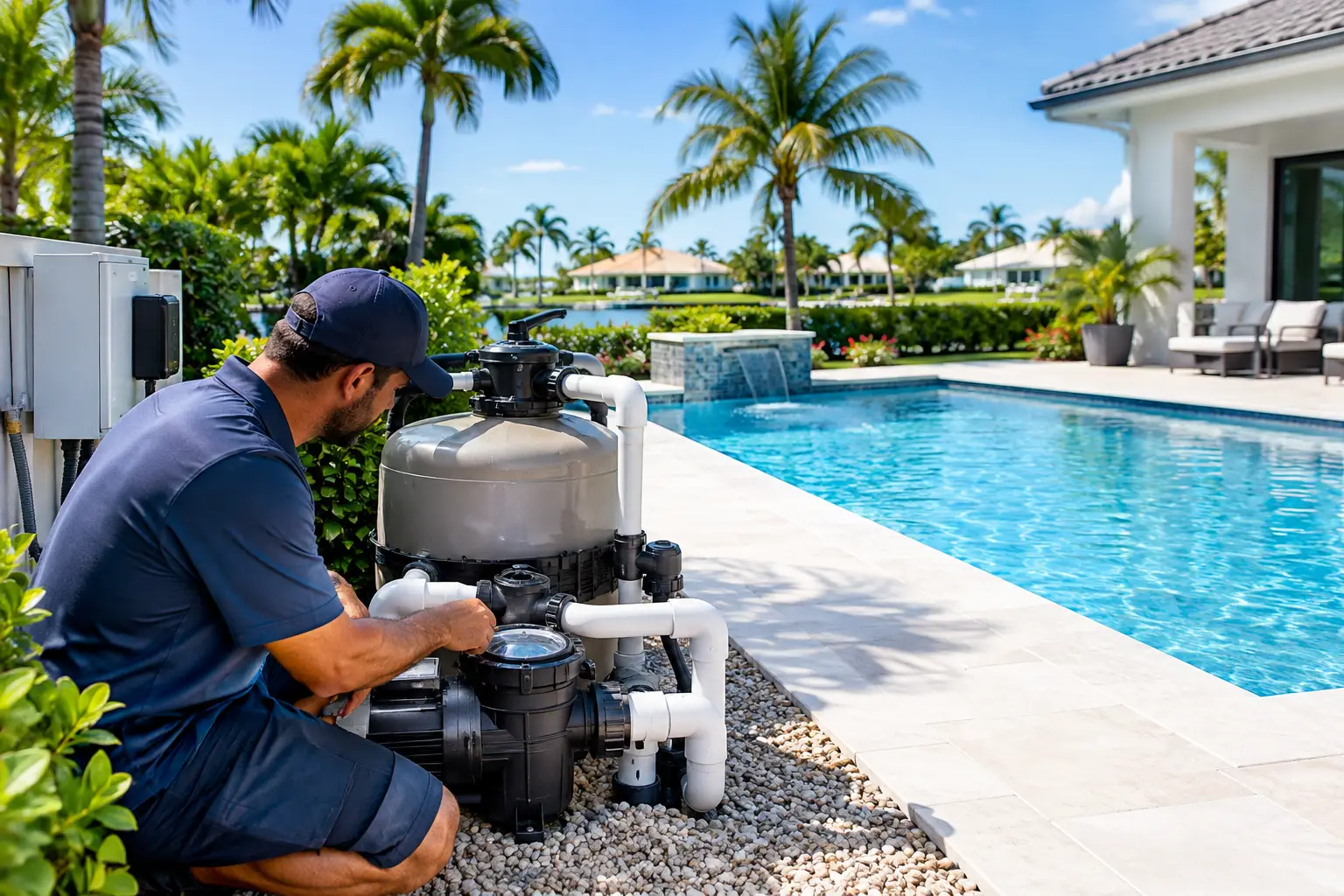
Your pump, filter, plumbing, heater, and control equipment all affect how well the pool stays clean. Ask what is included in the routine visual equipment inspection. A technician may spot signs such as poor circulation, unusual noises, leaks, air in the system, damaged fittings, or a problem with the timer or automation controls.
A visual inspection is not the same as a full repair diagnosis, and that distinction is worth understanding. Still, regular eyes on the equipment can catch warning signs early. That may give you more time to make a practical decision rather than facing an urgent failure on the first weekend your family wants to swim.
Can you handle repairs and upgrades if needed?
It is useful to know whether your service provider has hands-on experience with the systems around your pool. Ask about pump repair and replacement, heaters and heat pumps, automation, saltwater systems, cooling solutions, and other equipment upgrades relevant to your setup.
Not every problem calls for replacement. In some cases, a repair is sensible; in others, aging equipment, efficiency concerns, or repeated issues may make an upgrade worth considering. A knowledgeable provider should explain the trade-off without pressuring you into an answer before you understand the condition of your current equipment.
If you own a saltwater pool, ask how salt systems fit into routine chemistry management. Salt systems still need monitoring and balanced water. They can simplify chlorine generation, but they are not maintenance-free.
What happens when a pool turns green?
A green pool is stressful, particularly when guests are coming or the weather is finally perfect for swimming. Ask whether the company provides green-to-clean recovery and how it approaches the work. The answer should set realistic expectations rather than promise an instant transformation in every situation.
Recovery can depend on how severe the algae is, the pool’s circulation, filter condition, water chemistry, and whether equipment is operating properly. The right process may involve repeated attention and careful balancing. It also helps to ask what changes can reduce the chance of the problem returning once the water is clear.
Can you help with stains, startups, or a newly resurfaced pool?
These situations call for more than ordinary weekly care. Stains can have different causes, and the wrong treatment can worsen a surface issue. New pools and recently resurfaced pools also need a structured startup process while the finish cures and the water is brought into balance.
Ask whether the provider has experience with acid washing, stain removal, and startup care, as applicable to your pool. A company should evaluate the situation before recommending a course of action, since surface type, stain source, and the pool’s age all influence the right approach.
Questions about reliability and respect for your home
Who will be servicing my pool?
This question is particularly meaningful when you want a long-term relationship, not an anonymous rotation of unfamiliar people. Ask how the company manages technician consistency, scheduling, and quality control. There may be occasions when a regular technician is unavailable, but there should still be a clear process for maintaining service standards.
For households with pets, children, gates, or specific property instructions, share those details from the start. Reliable pool care includes treating the rest of the property with care, securing access as agreed, and leaving the area tidy after service.
What is not included in standard weekly service?
Clear boundaries prevent frustration later. Ask what falls outside regular maintenance, such as major debris cleanup after a storm, green-pool recovery, equipment repairs, filter service, stain treatment, or startup work. Then ask how approval is handled before extra work begins.
This is not a sign that a company is less helpful. It is a sign that it is being transparent. A dependable provider separates routine care from specialised work so you know what to expect and can make informed decisions for your pool.
Do you serve my neighborhood consistently?
For homeowners in Wellington, Westlake, Royal Palm Beach, Loxahatchee and The Acreage, Avenir, Greenacres, or The Club at Ibis, local routing can make a genuine difference. Ask whether the company regularly services your community and how it handles scheduling around weather or access challenges.
A provider familiar with the area understands the practical realities of Florida pools: intense sun, summer rain, heavy landscaping debris, and long swim seasons. Local knowledge does not replace good chemistry or equipment skills, but it helps service feel more responsive and grounded.
The right pool company should leave you feeling informed, not sold to. When a provider can explain its weekly process, document its work, communicate clearly, and offer practical help when equipment or water conditions change, you can spend less time second-guessing the pool and more time enjoying a turtly clean one.