A pool can look clear on the surface while a pool plumbing problem is developing out of sight. A small suction-side air leak, a slow drip at the equipment pad, or a return line with weak flow can gradually affect circulation, water chemistry, and the lifespan of expensive equipment. In Florida’s heat and frequent rain, those small issues rarely stay small for long.
The good news is that homeowners do not need to diagnose every valve, fitting, or pipe. Knowing what normal operation looks like - and recognising when it changes - helps you protect your pool and get the right help before a minor repair turns into a major interruption to swim time.
How pool plumbing keeps water moving
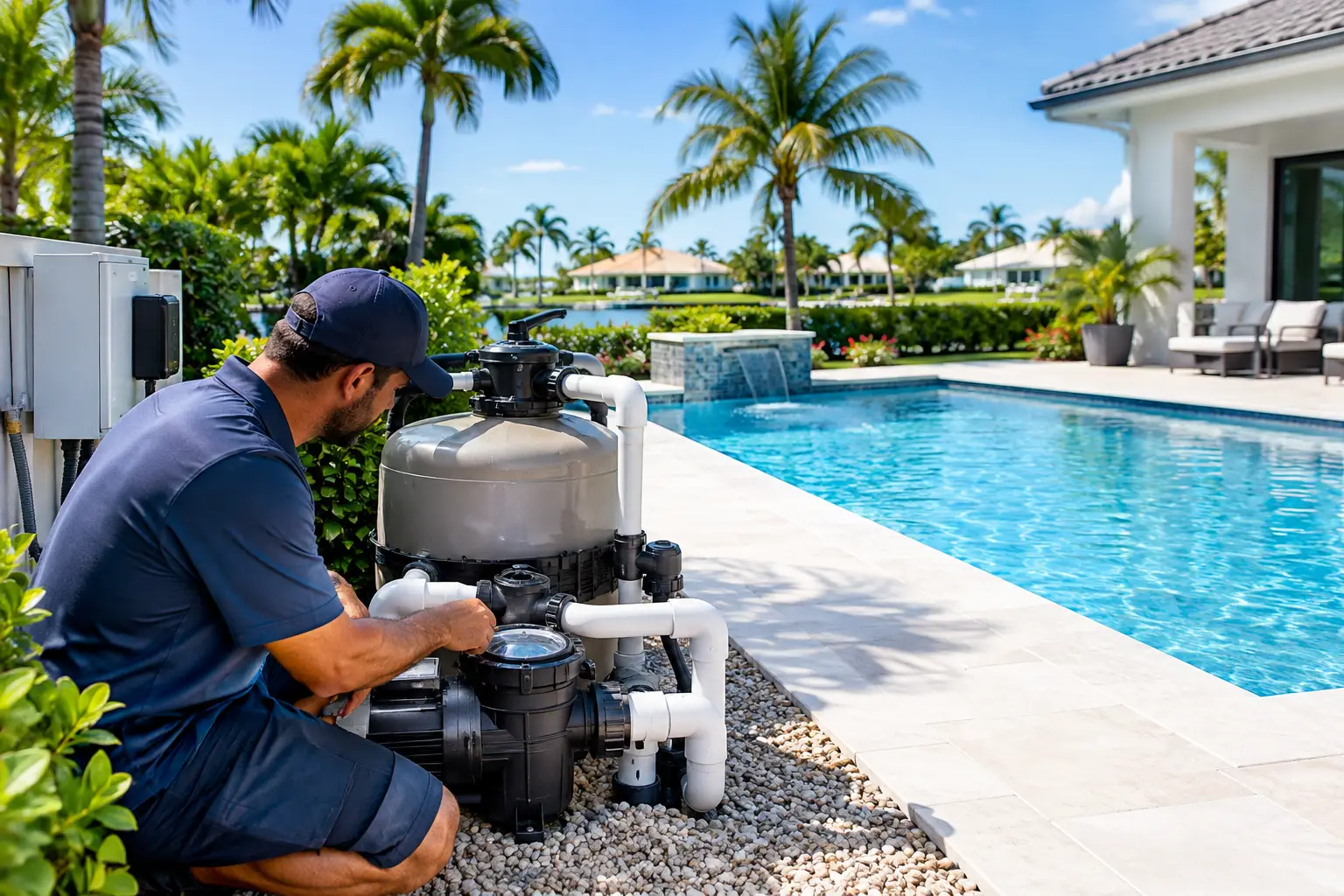
Your pool plumbing is the circulation route that carries water from the pool to the equipment and back again. The pump pulls water through skimmers and the main drain, sends it through the filter, heater or heat pump if installed, and any sanitation equipment, then returns clean, treated water through the wall fittings.
That movement does more than keep the water looking inviting. Proper circulation distributes sanitizer, supports balanced chemistry, helps the filter capture debris, and reduces the conditions algae prefer. When flow is restricted or air enters the system, water can become harder to manage even when the chemical readings initially seem close to normal.
Most residential systems include suction lines, return lines, skimmers, main drains, valves, unions, pump connections, a filter, and return fittings. Some pools also have separate lines for a spa, water feature, cleaner, solar heating, or automation-controlled features. The more features a pool has, the more important clear valve settings and regular equipment checks become.
Warning signs of pool plumbing trouble
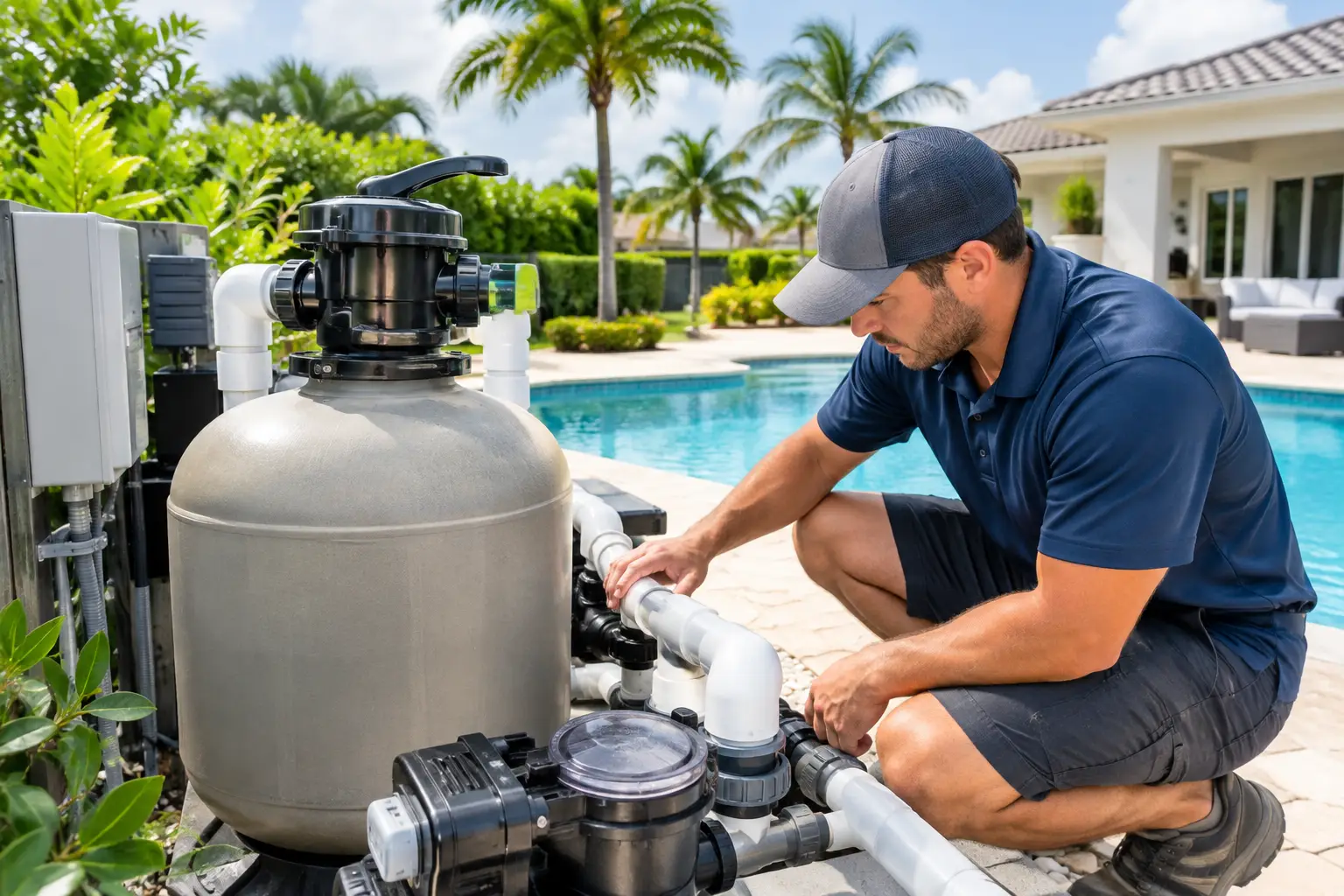
A plumbing concern does not always mean a broken underground pipe. Often, the first issue is at the equipment pad, where a worn O-ring, loose union, ageing valve, or cracked fitting can interfere with normal flow. These issues deserve attention because the pump and filter can only perform as well as the plumbing supplying them.
Air bubbles at the returns or pump basket
A few bubbles right after the pump starts may be normal. Persistent bubbles blowing from the return fittings, however, can point to air entering the suction side of the system. You may also see air collecting under the clear pump lid or notice that the pump basket does not stay fully flooded while the system is running.
Possible causes range from a dry, damaged, or improperly seated pump-lid O-ring to a loose fitting or valve issue. Because several components can produce similar symptoms, it is better to have the system assessed than to guess at the source.
Weak circulation and uneven return flow
Place a hand near each return while the pump is running. The water movement should feel reasonably consistent, unless a feature or valve setting is intentionally diverting flow elsewhere. A noticeable drop in pressure or a return that has gone quiet may indicate a clogged basket, a dirty filter, a valve issue, or a restriction in the plumbing.
Weak circulation also affects the parts of the pool that need it most. Corners, steps, and shaded areas can become more likely to collect debris or develop algae when treated water is not moving through the pool effectively.
Water loss beyond normal evaporation
Florida pools lose water to evaporation, especially during hot, dry, or windy weather. Splashing, active swimming, and backwashing can also lower the level. Still, a water level that repeatedly drops faster than expected, particularly when the pool is not being used, calls for closer attention.
Look around the equipment area for damp soil, dripping fittings, mineral buildup, or puddles. Also pay attention to whether the loss changes when the equipment is operating. That detail can help a pool professional narrow down whether the concern may involve a fitting, a component, or a line.
The pump is louder or harder to prime
A pump that suddenly sounds different is giving you useful information. Gurgling, surging, or a pump that struggles to maintain prime can be related to low water in the pool, a blocked skimmer basket, a dirty filter, or air entering the suction line.
Running a pump without proper water flow can create unnecessary stress and heat. If the pump will not prime, loses prime repeatedly, or has a significant change in sound, turn to professional guidance rather than allowing it to run unchecked.
Why plumbing issues can affect water quality
Pool care is not just a cleaning task and a chemistry task. It is a circulation task, too. If water is not moving through the filter efficiently, debris stays in the pool longer and chemicals do not circulate as intended. That can lead to cloudy water, stubborn algae growth, or readings that seem difficult to stabilise from one visit to the next.
A restriction can also raise pressure on the equipment side of the system, while an air leak may reduce the water reaching the pump. These are different problems with different clues, which is why a pressure reading alone does not tell the entire story. The equipment, plumbing layout, water level, filter condition, and valve positions all need to be considered together.
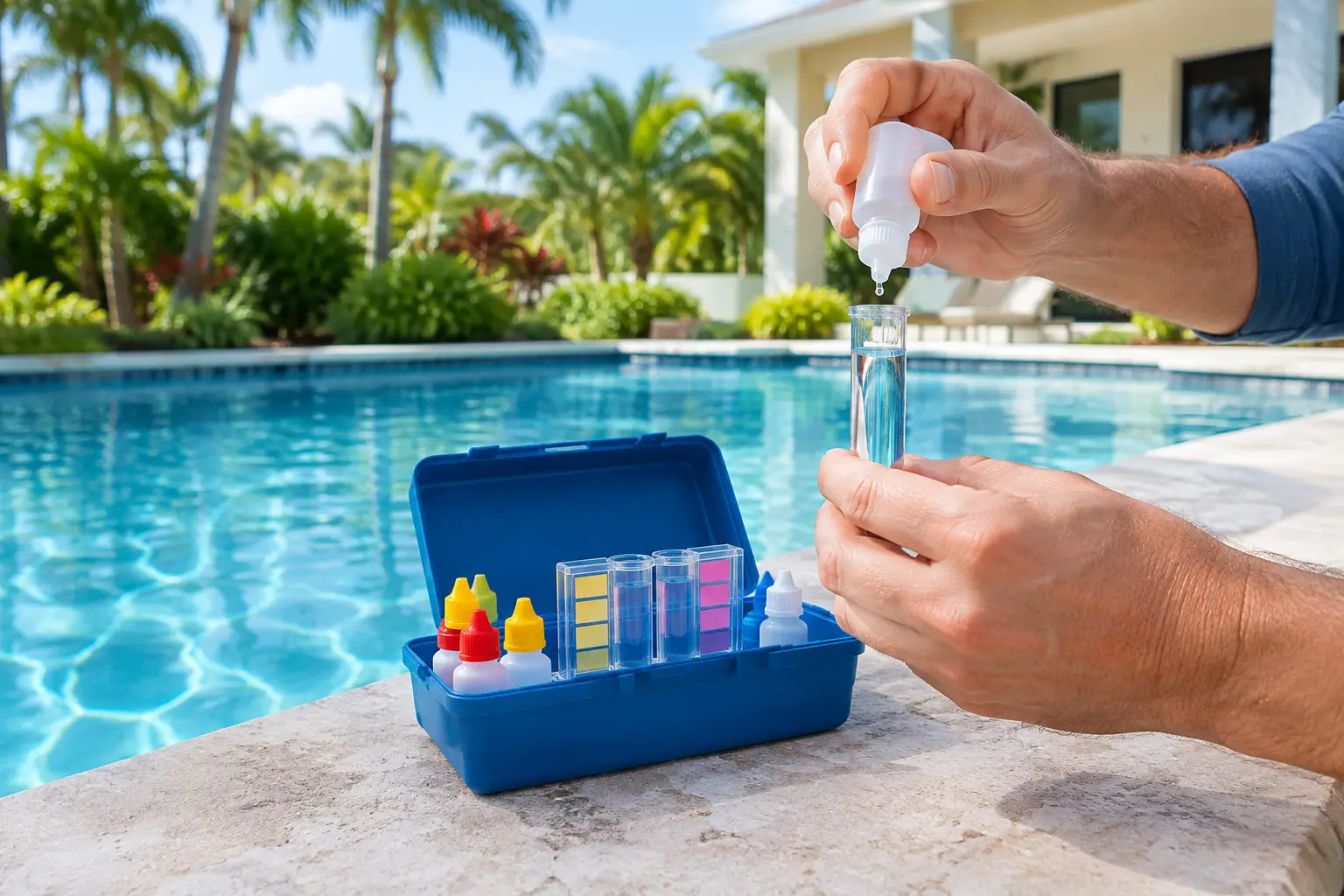
At Turtle Pool Care, routine service includes a visual check of pool equipment alongside water testing and cleaning. Catching unusual leaks, airflow symptoms, or changing circulation early supports a pool that stays turtly clean, safe, and easier to maintain.
What homeowners can safely check
There are a few simple observations that help without taking apart plumbing or handling electrical equipment. Keep the pool water at an appropriate level, typically around the middle of the skimmer opening unless your pool professional has advised otherwise. Empty skimmer and pump baskets only when the system is off, following your equipment instructions.
You can also note where you see moisture, whether bubbles appear only while the pump is running, and whether one return has less flow than the others. Photos and a brief record of when the symptom started can make a service visit more efficient.
Avoid tightening plumbing fittings aggressively, changing multiple valve positions without knowing their purpose, or attempting to repair electrical connections at the pad. PVC and threaded fittings can crack when overtightened, and an incorrect valve setting can leave equipment without adequate flow. A careful diagnosis is usually less costly than fixing a well-intended mistake.
When professional pool plumbing service makes sense
Prompt attention is wise when there is visible leaking at the equipment pad, repeated air in the pump basket, unexplained water loss, low return flow, or a pump that cannot hold prime. These symptoms may have a straightforward cause, but they can also signal a developing issue that will place extra strain on the pump, filter, heater, or saltwater system.
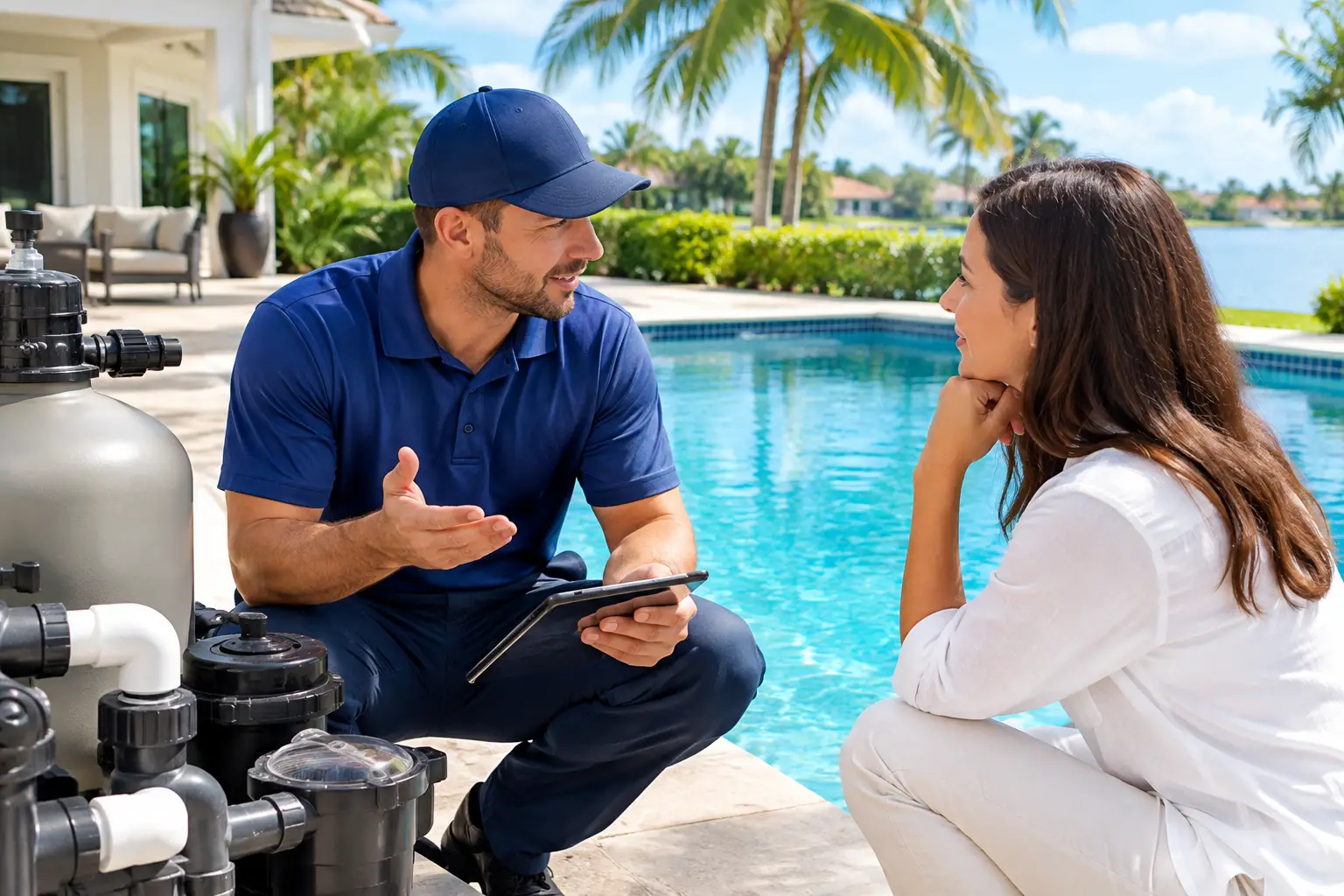
A proper assessment should look beyond the immediate symptom. The technician may inspect seals and fittings, confirm valve operation, review filter condition, check circulation, and consider how the issue changes with the system on or off. For pools with heaters, automation, water features, or salt systems, that broader view matters because every component depends on reliable flow.
Homeowners in Wellington, Royal Palm Beach, Westlake, and nearby communities often get the best result by addressing changes early, before busy weekends, holiday guests, or a stretch of hot weather makes the problem more disruptive. Clear service notes and photographs also give you a useful record of what was observed and what was done.
A well-maintained pool should feel uncomplicated: clear water, steady circulation, and equipment that runs without drama. If yours is bubbling, leaking, losing water, or simply not moving water as it once did, treating that change as an early maintenance signal can help keep every swim more enjoyable.