A pool can look crystal clear and still leave you wondering why pool water feels slippery. Sometimes the answer is harmless - water may simply feel soft or silky. Other times, that slick feeling is an early warning that algae, body oils, or unbalanced chemistry are beginning to affect the pool.
The key is to notice where you feel it. Water that feels pleasantly smooth is different from steps, walls, or a floor that feel slimy underfoot. The second situation deserves prompt attention, especially in Florida heat, where a small water-quality issue can develop quickly.
Why pool water feels slippery: water versus surfaces
Start by separating the feel of the water from the feel of the pool finish. If your hands feel a little silky when moving through the water, but the plaster, tile, steps, and handrails are clean and grippy, the sensation may be related to dissolved minerals, salt, or normal treatment products. Saltwater pools, in particular, can feel softer to some swimmers even though they contain far less salt than ocean water.
If the pool walls or steps feel slippery, however, assume there may be a film on the surface until testing and brushing prove otherwise. Algae can begin as a nearly invisible coating before it turns the water green. That coating is often most noticeable on shaded walls, around steps, behind ladders, and in corners with weaker circulation.
A slick surface is not just a cosmetic concern. It can create a slipping hazard and signal that the sanitizer is not fully keeping up with conditions in the pool.
The most common cause: early algae and biofilm
Algae is the usual reason a pool feels slimy. It does not always announce itself with cloudy or green water. In its early stages, algae may form a thin, clear-to-greenish layer that feels slick when you brush a hand along the wall.
Biofilm can create a similar sensation. This is a buildup of microorganisms and organic material that clings to pool surfaces, skimmer areas, fittings, and other places water does not move as vigorously. Once a film develops, chlorine has a harder time reaching and killing what is protected inside it.
Warm temperatures, strong sun, frequent swimming, storms, and heavy debris can all raise the chlorine demand. In Wellington, Royal Palm Beach, Westlake, and nearby communities, a pool can change noticeably between weekly visits when summer heat and afternoon rain are working against balanced water.
Brushing matters because it breaks up that protective layer and exposes it to properly balanced sanitizer. A pool cannot stay turtly clean on chemicals alone if the surfaces are never brushed.
Clues that algae may be the issue
Look for a slippery feel that is strongest on walls or steps, faint green or yellow dust in corners, cloudy water, or a need to use more chlorine than usual. You may also notice that the pool looks fine in bright daylight but appears slightly dull or hazy at night when the pool light is on.
These signs do not always mean the same treatment is needed. A professional test helps determine whether the cause is insufficient free chlorine, poor circulation, an overly stabilized pool, or a combination of factors.
Chemistry can make water feel different
Pool water should not feel oily, soapy, or persistently slick. Yet properly maintained water can feel noticeably different as its chemistry changes. The goal is not to chase a particular texture by adding products. The goal is safe, balanced water that protects swimmers, the pool finish, and equipment.
Salt, minerals, and balanced water
Dissolved salt and minerals can make water feel softer or smoother on the skin. This is often normal, particularly in a saltwater pool operating within its intended range. It does not mean the water has no chlorine. Saltwater systems still produce chlorine, and they still require regular testing and adjustment.
Calcium hardness also affects how water behaves. Water that is too low in calcium can become aggressive toward certain pool surfaces, while water that is too high can encourage scale formation. Scale usually feels rough rather than slippery, but imbalanced calcium can be part of a broader water-balance issue.
pH, alkalinity, and sanitizer effectiveness
pH and total alkalinity do not usually create a slime-like feeling by themselves. Their bigger role is helping sanitizer work effectively and keeping the water comfortable for swimmers. When pH climbs too high, chlorine becomes less effective. That can give algae an opportunity to establish itself, even when a test appears to show some chlorine present.
A high pH can also contribute to dull water and scaling, while a low pH may irritate eyes and skin or affect equipment and surfaces. This is why a single chlorine reading never tells the whole story. Good pool care looks at the chemistry as a connected system.
Stabilizer and a misleading chlorine reading
Cyanuric acid, often called stabilizer, helps protect chlorine from sunlight. In an outdoor Florida pool, some stabilizer is useful. Too much can reduce chlorine's active strength, making it harder to prevent algae even when the chlorine test result seems acceptable.
This is one reason clear water is not always balanced water. Routine, complete testing is more dependable than treating only what the pool looks like on a given day.
Swimmers, sunscreen, and treatment products
A busy weekend can leave behind sunscreen, lotions, hair products, cosmetics, sweat, and natural body oils. These contaminants can create a slight oily sensation at the waterline or on the surface. They also use up sanitizer, which can indirectly make a slippery wall problem worse.
Skimming alone will not remove everything that enters the water. Proper circulation, filtration, waterline cleaning, and balanced sanitizer all work together to manage swimmer load. If the water seems slick shortly after a gathering but the walls are not slimy, organics may be a more likely explanation than algae.
Treatment products can occasionally change the water's feel as well. Overusing certain clarifiers, algaecides, or other additives can create unwanted residues or complicate water balance. More product is not automatically better. Adding chemicals without accurate testing can turn a simple correction into a longer cleanup.
Circulation problems can hide behind slippery water
When only one area of the pool feels slick, look at circulation. Dead spots often occur around steps, tanning ledges, benches, deep corners, and behind ladders. Debris and algae settle where water movement is weak, and brushing may reveal a problem that was not obvious from the deck.
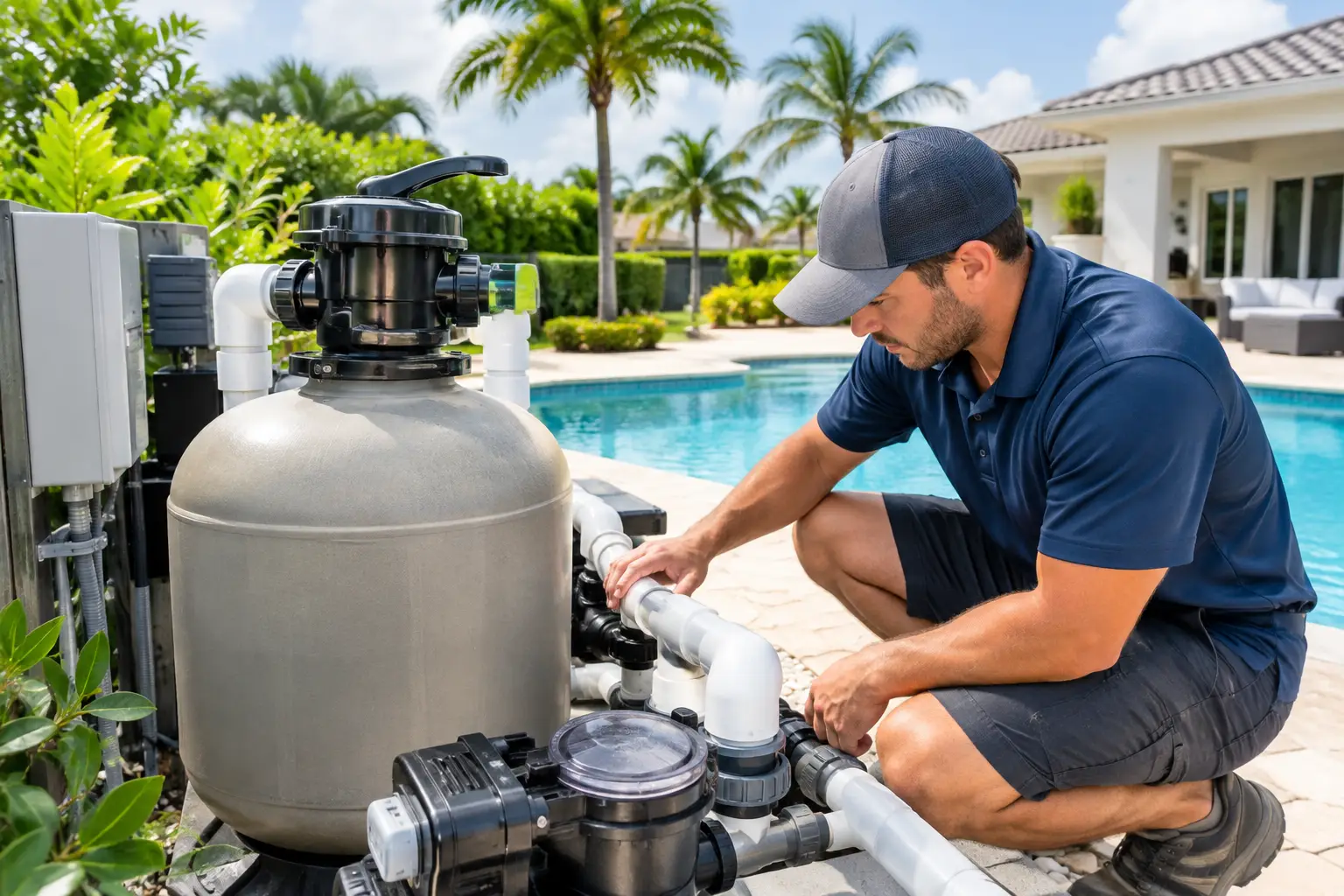
A clogged or undersized filter, a dirty filter element, a pump problem, closed or poorly positioned valves, or short run times can all reduce circulation. The right solution depends on the pool's equipment and condition. Homeowners can safely keep baskets clear and observe changes in water flow, but electrical or pump repairs should be handled by a qualified pool professional.
A visual equipment inspection during routine service can catch concerns before weak circulation becomes green water, staining, or a larger equipment repair.
What to do when your pool feels slippery
If the pool surface feels slimy, limit swimming until the water has been tested and the cause is addressed. Brush the walls, steps, and floor to loosen any developing film, remove visible debris, and make sure the circulation system is operating normally. Avoid mixing or adding several chemicals based on guesswork.
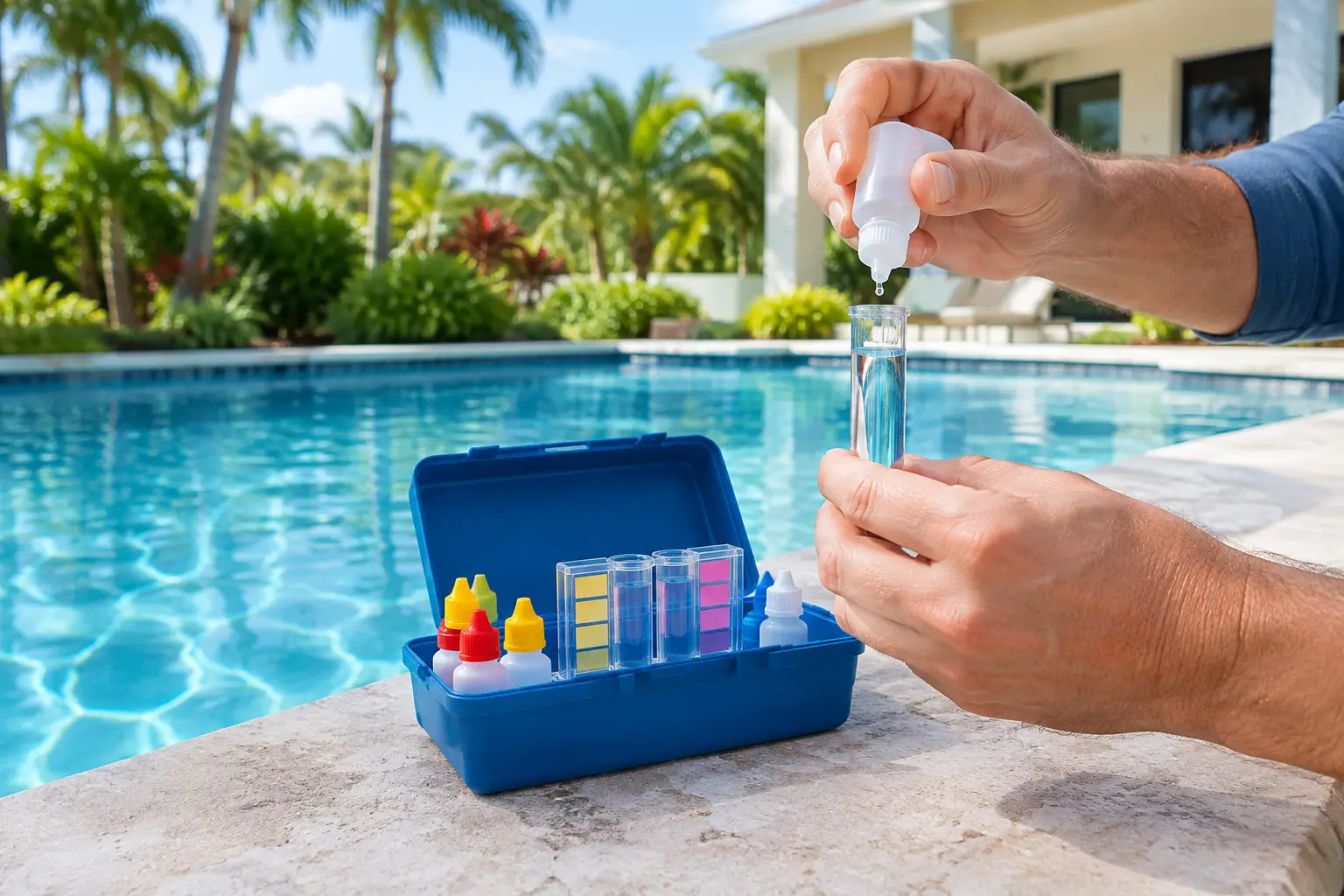
Then test the complete water balance, including sanitizer, pH, total alkalinity, stabilizer, calcium hardness, and salt level where applicable. The correct adjustment depends on those results, the pool type, recent weather, swimmer load, and whether algae is present.
For a pool that repeatedly becomes slick, the answer may be more than a chemical adjustment. It may need better brushing coverage, filtration attention, equipment evaluation, or a structured algae recovery process. A detailed service record is useful here because it shows patterns over time rather than treating each issue as a one-off event.
A little silky softness in the water may be perfectly normal. Slick walls, steps, or floors are different - they are worth taking seriously before the pool turns cloudy or green. Consistent testing, brushing, circulation, and careful chemical balancing are what keep a pool inviting instead of questionable.
For homeowners who prefer clear communication alongside dependable weekly care, Turtle Pool Care documents the work completed and watches for the small changes that help keep pool time safe, balanced, and turtly clean.